

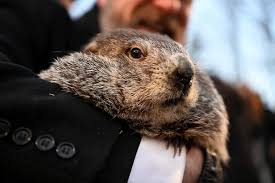
HOPE — A divide in long-range weather forecasting emerged Monday as Indiana’s own “Hope,” the groundhog, predicted an early spring, directly contradicting the forecast from Pennsylvania’s world-famous Punxsutawney Phil.
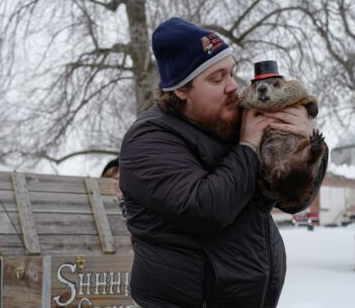
While Hope did not see her shadow during the 8:30 a.m. ceremony on the Hope Town Square, Phil emerged into a “frigid” 2-degree morning at Gobbler’s Knob to find his shadow, signaling six more weeks of winter ahead.
A Tale of Two Rodents
The 13th annual celebration in northeastern Bartholomew County saw the groundhog Hope—a resident of Utopia Wildlife Rehabilitators—make her sixth career appearance. Despite snow in the local forecast, Hope’s lack of a shadow was met with cheers from residents hoping for a swift end to the cold.
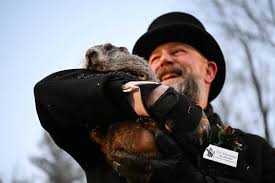
Meanwhile, in Punxsutawney, tens of thousands of spectators gathered in near-zero temperatures to witness Phil’s 140th prediction. The “Seer of Seers” reportedly selected a scroll confirming an extended winter, a call shared by other regional prognosticators like General Beauregard Lee in Georgia.
Accuracy and Scientific Outlook
Despite the fanfare, scientific data suggests these furry forecasters are better at entertainment than meteorology. According to the National Oceanic and Atmospheric Administration (NOAA):
- Phil’s Track Record: Over the last decade, Phil has only been right about 30-40% of the time.
- Mixed Forecasts: Other unconventional experts added to the confusion Monday, while Ohio’s Buckeye Chuck agreed with Hope’s early spring, New York’s “That Dog Named Gidget” sided with Phil’s winter outlook.
Professional meteorologists at the National Weather Service are currently predicting a “split” February. While the eastern U.S. is expected to remain colder than normal, warmer conditions—favoring an “early spring” environment—are projected for the West and Southern Plains. Regardless of the shadow, astronomical spring is set to begin on the vernal equinox at 10:46 a.m. ET on March 20, 2026.

