

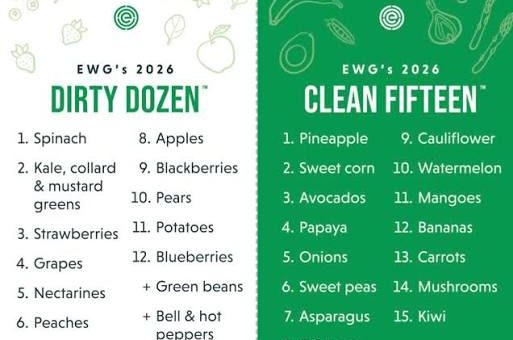
WASHINGTON, D.C. — Consumers looking to reduce their pesticide exposure without straining their grocery budgets have an updated guide for the produce aisle. The Environmental Working Group (EWG) has released its 2026 Shopper’s Guide to Pesticides in Produce, highlighting non-organic fruits and vegetables with the lowest—and highest—chemical residues.
The rankings are based on an analysis of U.S. Department of Agriculture (USDA) testing data from more than 54,000 samples of 47 popular produce items. Before testing, all samples were washed, peeled, or scrubbed to mimic home preparation.
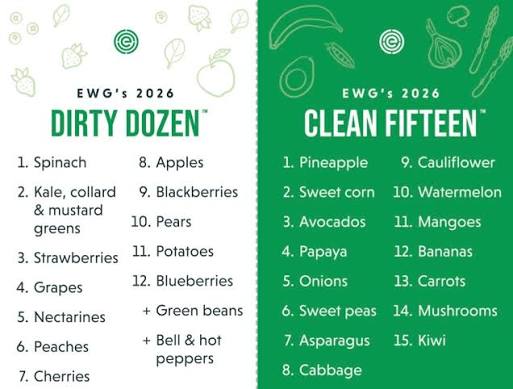
The ‘Clean Fifteen’: Low-Residue Picks
Nearly 60% of samples on this year’s “Clean Fifteen” list had no detectable pesticide residues. The low contamination levels are largely driven by physical characteristics, such as thick skins, husks, or short harvesting windows that protect the edible portions.
Top non-organic picks carrying the lowest pesticide residues for 2026 include:
- Pineapples, Sweet Corn, and Avocados: Occupy the top spots as the least contaminated produce tested. Husks, rinds, and thick skins form natural barriers against field sprays.
- Onions, Cabbage, and Cauliflower: Outer layers and leaves—which are removed during harvest or prep—take the brunt of chemical exposure. Additionally, natural sulfur compounds in onions and cruciferous veggies help deter pests naturally.
- Sweet Peas and Asparagus: Protective pods keep peas safe, while asparagus benefits from a brief 6- to 8-week harvest window that minimizes spraying exposure. An FDA analysis found 92% of sampled asparagus had no detectable residues.
- Bananas and Mushrooms: Bananas feature thick protective peels, while commercially grown mushrooms are cultivated in controlled indoor environments with minimal chemical exposure.
- Other Clean Fifteen Selections: Papayas, watermelons, mangoes, carrots, and kiwis also made the 2026 low-residue list.
The ‘Dirty Dozen’ and ‘Forever Chemicals’
At the opposite end of the spectrum, the 2026 “Dirty Dozen” identifies items with the highest chemical concentrations. Spinach, kale, strawberries, grapes, nectarines, peaches, cherries, apples, blackberries, pears, potatoes, and blueberries topped the list.
Every produce type on the Dirty Dozen averaged four or more distinct pesticides per sample, except potatoes, which averaged two. Furthermore, EWG found that over 60% of Dirty Dozen samples contained residues of perfluoroalkyl and polyfluoroalkyl substances (PFAS)—commonly known as “forever chemicals”—which are used as active ingredients in some farm sprays.
Industry groups, including the Alliance for Food and Farming, contend that the report creates unnecessary fear, emphasizing that more than 99% of tested produce falls well below safety thresholds established by the Environmental Protection Agency (EPA).
How to Reduce Exposure at Home
Health experts stress that the health benefits of eating fruits and vegetables far outweigh the risks of pesticide exposure, urging consumers not to cut fresh produce from their diets.
For those looking to minimize exposure, a companion study published by EWG in Frontiers in Environmental Health evaluated common household washing techniques:
- Water Rinsing or Soaking: Rinsing under tap water reduced pesticide residues by a median of 30.2%, while soaking in plain water yielded a 33.7% reduction.
- Baking Soda Soak: Soaking produce in a mild baking soda solution achieved a median reduction of 50.9%.
- Vinegar Soak: Soaking in a diluted vinegar (acetic acid) solution proved most effective overall, achieving a median residue reduction of 54.2%.
EWG recommends buying organic versions of “Dirty Dozen” items when feasible, relying on “Clean Fifteen” options for conventional purchases, and thoroughly washing all produce before consumption.

