

INDIANA — Scammers are always looking for new ways to take advantage of people, and residents are being reminded to slow down, ask questions and protect their personal information before handing over money or sensitive details.
The Indiana Department of Homeland Security (IDHS) has released safety information warning Hoosiers about common scams that can happen by phone, online, at the door or even in the aftermath of a disaster. According to IDHS, scammers often take advantage of confusion, fear and emergencies to trick people into giving away money, personal information or access to their accounts.
Watch for These Warning Signs
One of the easiest ways to avoid a scam is to recognize the warning signs. IDHS recommends that residents:
- Never provide personal or financial information unless they are certain who they are dealing with.
- Be suspicious of anyone pressuring them to act or pay immediately.
- Avoid requests for payment through gift cards, wire transfers or cryptocurrency.
- Verify the identity of callers, door-to-door visitors and online sellers.
- Watch for unusual links, spelling errors and urgent messages in emails and text messages.
- Research suspicious websites, businesses and offers before providing information or making a payment.
Disaster Scams Can Happen After Severe Weather
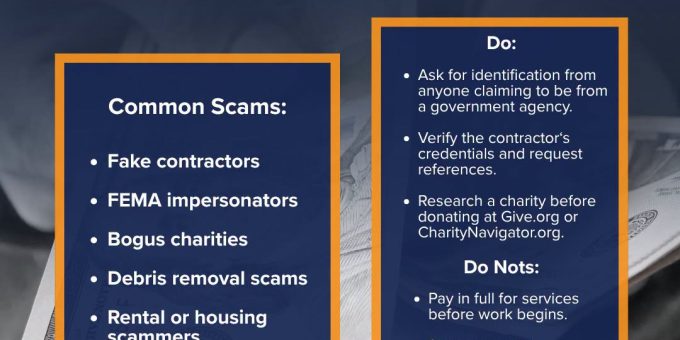
Scammers may become especially active after tornadoes, floods and other disasters. They may pose as government officials, contractors, charities or people offering cleanup services.
Fake contractors may go door-to-door offering quick repairs or tree removal while demanding money upfront. Other scams may involve fake FEMA representatives requesting Social Security numbers, bank information or payment in exchange for assistance.
Residents should also be cautious of fake charities and debris-removal services. IDHS recommends asking for identification from anyone claiming to represent a government agency and checking a contractor’s credentials and references before agreeing to work.
Online Scams Are Everywhere
Scams can also arrive through email, text messages, social media and websites.
Phishing messages may look like they came from a trusted company but contain links designed to steal information. Other common scams include fake online stores, romance scams, fraudulent job offers and tech-support scams.
Residents are encouraged to check where a link leads before clicking, use strong and unique passwords, enable multi-factor authentication when available and keep devices and security software updated.
Seniors Often Face Targeted Scams
Older adults can be targeted by scams that rely on fear or emotional pressure. These can include so-called grandparent scams, government impersonation, fake lottery winnings, home-repair scams and fraudulent health-care offers.
A caller claiming to be a family member in an emergency should not automatically be trusted. IDHS recommends taking time to verify the situation and never rushing to send money simply because someone says there is an emergency.
Protect Your Identity
Identity theft can happen when someone uses another person’s information to open accounts, make purchases or commit fraud.
Residents should regularly monitor financial accounts for suspicious activity, avoid reusing passwords and be careful about entering personal information online. Important documents should be stored securely, and sensitive paperwork such as old bank statements and medical records should be shredded rather than thrown away.
Lost or stolen identification and payment cards should also be reported to the issuing agency as soon as possible.
If something feels suspicious, stop before you send money or provide information. Taking a few extra minutes to verify a person, business or request could prevent a costly mistake.
Suspected scams can be reported to local law enforcement and the Federal Trade Commission. Residents can also find additional scam-prevention information through Indiana’s Department of Homeland Security scam safety resources.

