

INDIANAPOLIS — Purdue University is expanding its research presence in Indianapolis with the planned acquisition of a new laboratory facility designed to support advanced scientific research and strengthen collaboration between its Indianapolis and West Lafayette campuses.
The Purdue Research Foundation recently purchased the Northwest Indianapolis Research Building at 5735 W. 96th St. and plans to transfer ownership to the university at a later date. The 80,000-square-foot building will add approximately 50,000 square feet of laboratory space, significantly increasing Purdue’s research capacity in the state’s capital.
Located along Indianapolis’ Hard Tech Corridor, the two-story facility includes specialized biotechnology laboratories equipped with walk-in cold storage, darkrooms, autoclave rooms and other infrastructure needed for advanced research.
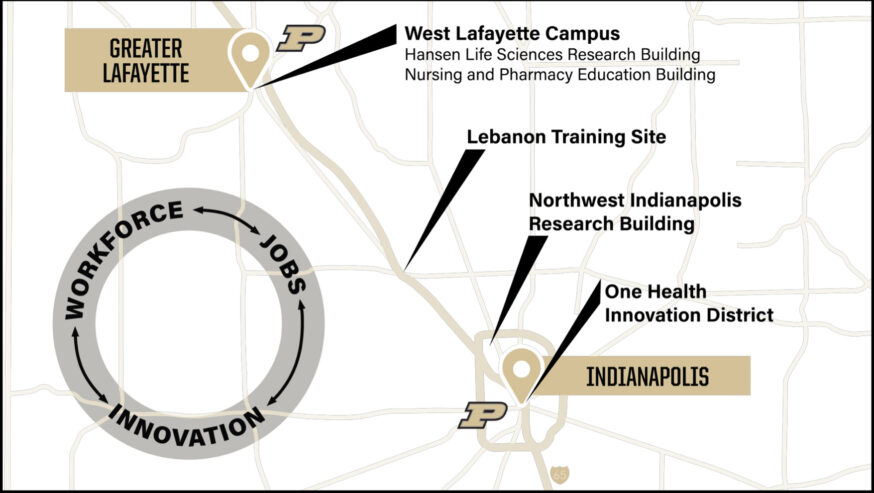
Photo by Purdue University
According to Purdue Research Foundation President and CEO Chad Pittman, the investment is intended to support innovation while creating new opportunities for collaboration between researchers and industry partners.
The addition of the facility will more than double Purdue’s wet laboratory space in Indianapolis, providing scientists and researchers with expanded resources to pursue projects in fields including biotechnology and the university’s One Health initiative, which focuses on the interconnected health of people, animals and plants.
University officials say the acquisition is part of Purdue’s broader effort to grow its research enterprise in Indianapolis through strategic investments, partnerships and expanded facilities. In recent years, Purdue has increased its presence in the city to create more opportunities for research, workforce development and experiential learning for students.
The new research building is expected to play a key role in advancing Purdue’s long-term vision of Indianapolis as a center for scientific discovery, innovation and collaboration while strengthening ties between the university’s two campuses.

