

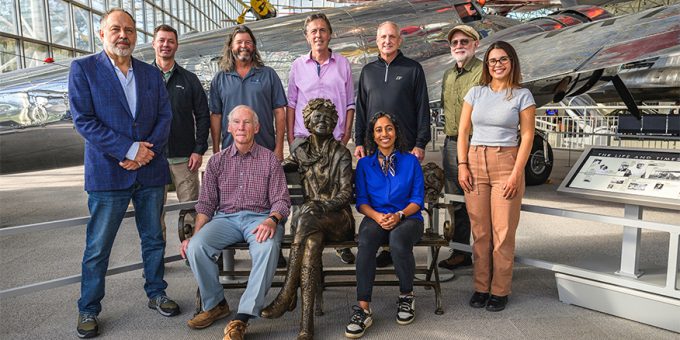
WEST LAFAYETTE — A team of researchers will head to the remote Pacific this fall in a renewed effort to locate the aircraft flown by pioneering aviator Amelia Earhart, whose disappearance nearly nine decades ago remains one of history’s greatest unsolved mysteries.
The Archaeological Legacy Institute, Purdue Research Foundation and Purdue University announced that the Taraia Object Expedition is scheduled to depart in early October after receiving final approval from the government of Kiribati. The project had originally been planned for 2025 but was delayed while organizers secured the necessary permissions.
The expedition will focus on investigating the Taraia Object, an anomaly discovered in a lagoon on Nikumaroro Island. Researchers hope the object could be the remains of Earhart’s Lockheed Electra 10-E, which vanished on July 2, 1937, while Earhart and navigator Fred Noonan attempted to fly around the world.
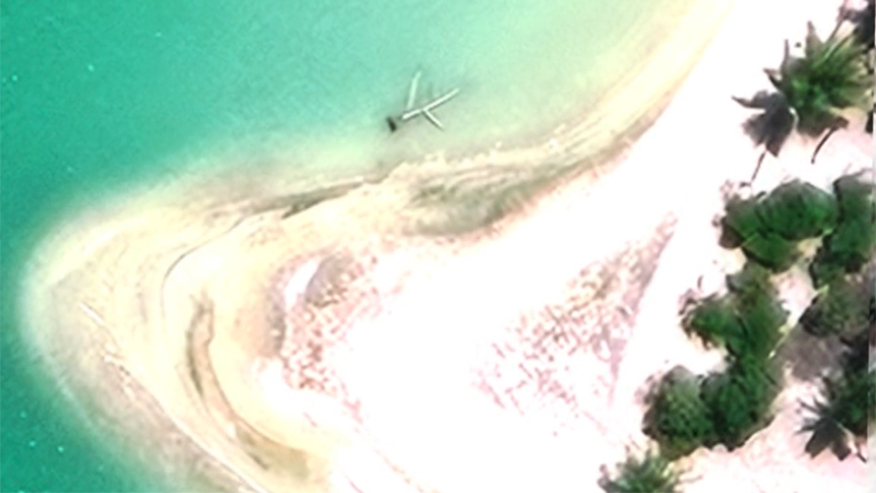
Photo by Rick Pettigrew, Archaeological Legacy Institute
The search is based on the Nikumaroro Hypothesis, which suggests the pair landed on the uninhabited island after they were unable to reach Howland Island and became stranded there.
Expedition leader Richard Pettigrew, executive director of the Archaeological Legacy Institute, said the team believes an on-site investigation is the only way to determine the object’s identity.
The 16-member expedition includes archaeologists, divers, filmmakers, logistics personnel, safety specialists and representatives from Kiribati. Team members will gather in Tarawa before traveling approximately 830 nautical miles by ship to Nikumaroro, where they plan to spend several days examining the site.
Purdue University will be represented by Senior Vice President and General Counsel Steve Schultz, along with alumni Sirisha Bandla and Marc Hagle, members of Purdue’s Cradle of Astronauts.
Earhart’s relationship with Purdue began in 1935 when she joined the university as a career counselor for women and an advisor to the Department of Aeronautics. The Purdue Research Foundation later financed the purchase of her Lockheed Electra through the Amelia Earhart Fund for Aeronautical Research. Earhart intended to donate the aircraft to Purdue after completing her around-the-world flight.
University officials say Earhart’s influence remains an important part of Purdue’s history through its aviation programs, archives and the Amelia Earhart Terminal at Purdue University Airport.
Researchers say several pieces of evidence support the Nikumaroro Hypothesis, including historical radio transmissions that appear to point toward the island, artifacts recovered from the site dating to the 1930s, forensic analysis of human remains found there in 1940, and photographic and satellite evidence. The Taraia Object, first identified in satellite imagery in 2020, is considered one of the most promising leads and will be the primary focus of the upcoming expedition.
The team is expected to depart during the first week of October, with additional updates planned before the expedition begins.

