

BLOOMINGTON— When the Declaration of Independence was signed in 1776, the field of biochemistry did not yet exist. Centuries later, a team of Indiana University molecular biologists has used modern science to resurrect the exact flavors the Founding Fathers might have enjoyed.

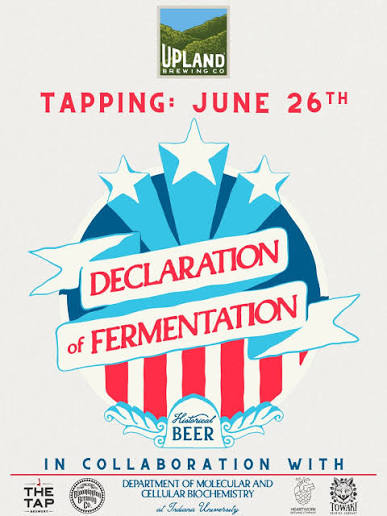
Dr. Matthew Bochman, an associate professor and chair of the Molecular and Cellular Biochemistry Department at IU, has teamed up with Bloomington-based Upland Brewing Company to release a unique commemorative beer titled “Declaration of Fermentation.”
The star ingredient of the historical brew is a wild strain of brewer’s yeast (Saccharomyces cerevisiae) harvested from the bark of an ancient bur oak tree standing near the Indiana Memorial Union on the IU Bloomington campus. Arborists estimate the tree is roughly 250 years old, meaning it was a living sapling when the United States declared its independence.
While capturing wild yeast for a commemorative beer is a festive project, Dr. Bochman’s lab typically focuses on far more serious matters. His team uses yeast cells to study genome stability, DNA repair, and cellular mutations to better understand the mechanisms underlying human diseases such as cancer.
However, yeast is also a highly prolific, fast-replicating organism, making it a perfect tool for both advanced oncology research and artisanal fermentation. Seeking to engage the public and bridge the gap between complex science and everyday life, Bochman and his graduate students regularly go “yeast hunting” in nature to isolate new strains for local food and beverage industries.
The project began in February 2026 when graduate student Spencer Gray gathered bark samples from the historic campus oak tree. Back in the lab, the team isolated and cultivated the winning yeast strain. By March, Upland Brewing Company was ready to scale up production.
The recipe for “Declaration of Fermentation” was carefully modeled after 18th-century English mild ales and colonial “small beers.” Because malted barley was difficult to source reliably in early America, colonists frequently adapted by using alternative sugar sources like molasses, a fermentable sugar source common to the 18th century, according to Clay Steenbergen, Upland’s Collaborations Lead.
According to the creators, the resulting brew features a low, historically accurate alcohol content of around 5% and offers a unique flavor profile. The wild yeast produces a distinct phenolic character, giving the beer a spicy “banana and clove” profile paired with a campfire-like, smoky aroma from the molasses and malts.
Upland produced a limited 20-barrel batch—approximately 620 gallons—of the special brew. The collaboration has also expanded to feature input and draft space from other local staples, including The Tap Brewery, Bloomington Brewing Co., and Heartwork Brewing.
“Declaration of Fermentation” officially went on tap this week and will remain available at Upland locations and select local craft beer spots around Bloomington until supplies run out.

