

LINTON — The Centers for Medicare and Medicaid Services (CMS) has issued a massive wave of warning letters to 500 hospitals nationwide, demanding immediate corrective action plans to address ongoing compliance issues with federal price transparency laws.
The sweeping federal sweep heavily impacted the Midwest, targeting 34 hospitals in Indiana and 21 in Illinois.
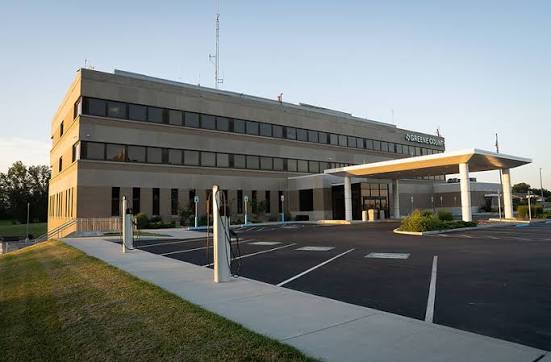
Among the local facilities receiving federal notices was Greene County General Hospital (GCGH), located in Linton.
The Centers for Medicare and Medicaid Services (CMS) does not publicly release the names of the hospitals when they send out initial warning letters or requests for Corrective Action Plans (CAPs).
Because CMS treats these early-stage enforcement notices as ongoing administrative matters, the specific identities of the 34 Indiana hospitals remain confidential unless a hospital chooses to disclose it publicly (as Greene County General Hospital did) or until the federal investigation concludes.
CMS only publishes the names of hospitals on its official federal ledger if they completely fail to respond, refuse to fix the errors, and are hit with official Civil Monetary Penalties (fines). Currently, the vast majority of Indiana facilities flagged in these audits resolve their formatting and technical glitches during the warning phase to avoid those public fines.
Technical Formatting Triggers Federal Warnings
The federal Price Transparency Rule requires all U.S. hospitals to publicly post clear, accessible pricing information online. This data must include the standard charges for all items and services—including negotiated insurance rates, cash discounts, and gross charges—presented in a highly specific, machine-readable format. The law is designed to allow consumers to accurately estimate out-of-pocket medical costs and shop around for care.
According to Greene County General Hospital leadership, their inclusion on the federal warning list was not due to hiding prices, but rather a compliance issue regarding the strict layout parameters mandated by CMS.

Greene County General Hospital Chief Executive Officer Brenda Reetz confirmed that the hospital’s notification was tied directly to technical and formatting errors within their public data files. Reetz noted that the hospital’s IT and administrative teams moved swiftly to resolve the issue, completely correcting the formatting discrepancies within a week of receiving the CMS letter.
A Broad Enforcement Campaign
The 500 warning letters signal an aggressive escalation by federal regulators to enforce price disclosure rules. For years, consumer advocacy groups have noted that while many hospitals have uploaded pricing documents to their websites, the files are frequently buried, incomplete, or formatted in ways that make them unreadable for standard data compilers and consumer search tools.
CMS has steadily increased the severity of its penalties for non-compliance. Under current guidelines, hospitals that ignore federal warning letters or fail to submit a timely Corrective Action Plan (CAP) can face substantial financial consequences:
- Daily Penalties: Fines are calculated based on a hospital’s bed count.
- Maximum Fines: Large institutions can face penalties of up to $5,500 per day, accumulating to more than $2 million annually for full non-compliance.
- Public Shaming: CMS maintains a public online ledger naming every non-compliant hospital that has been hit with an official civil monetary penalty.
For rural and critical access hospitals, keeping pace with evolving federal digital mandates presents a distinct administrative challenge compared to major urban health networks. Despite those resource constraints, local administrators emphasize that the technical adjustments have been fully integrated, ensuring the hospital remains in full alignment with federal transparency standards.
The 34 affected Indiana hospitals must either prove they have remedied their technical errors—as GCGH has done—or submit a formal, step-by-step plan to CMS detailing how they will bring their digital pricing dashboards into absolute compliance.

