

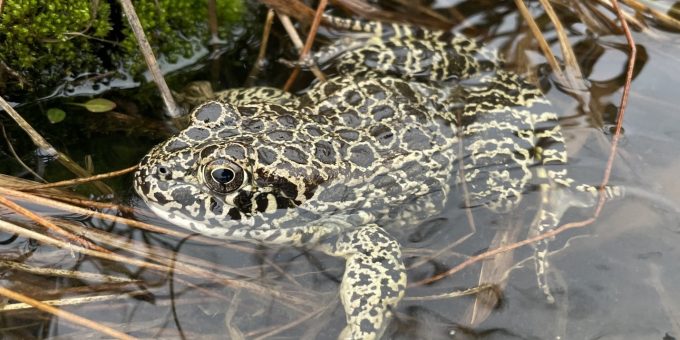
INDIANA — For the first time in nearly 40 years, a distinctive, deep-throated croak is echoing across the grasslands of Evansville. This spring, Indiana Department of Natural Resources (DNR) herpetologists are entering a critical phase of a multi-year mission to save the state-endangered crawfish frog, utilizing a specialized “head-starting” program to ensure the species’ survival.
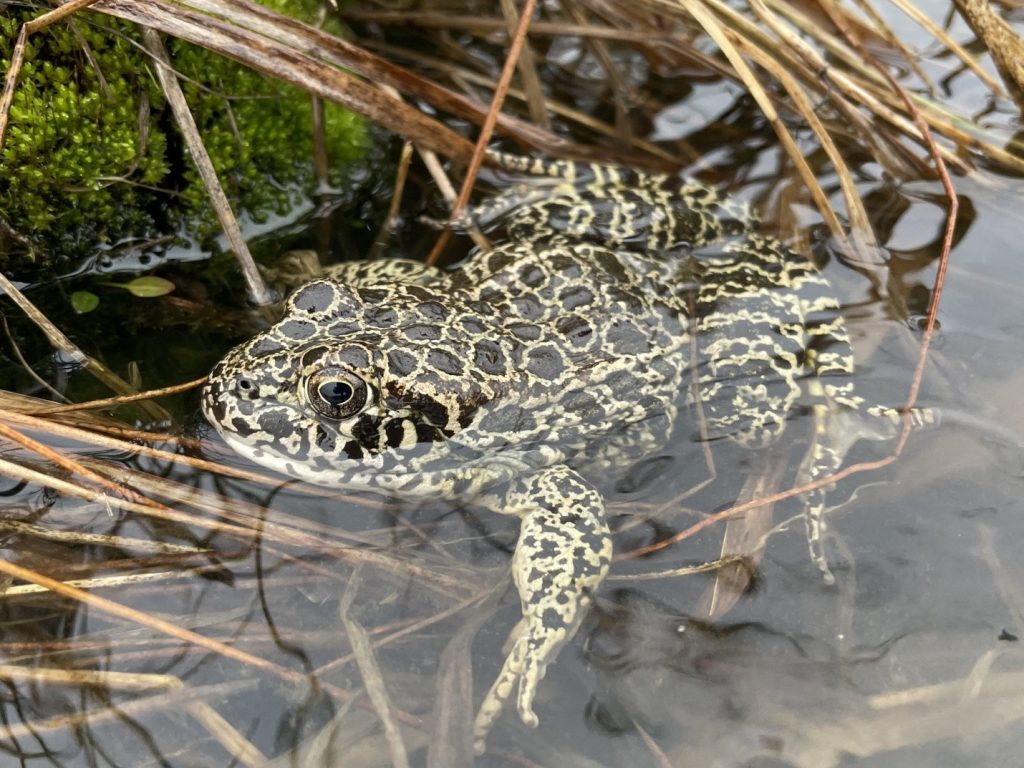
The initiative, titled “Make an Un-frog-gettable Difference,” highlights the intensive labor required to pull a species back from the brink of extinction.
The Secret Life of the Crawfish Frog
True to their name, these fist-sized, spotted amphibians are unique because they do not live in open water. Instead, they spend the vast majority of their lives underground, inhabiting the abandoned burrows of primary crawfish.
While they once thrived across Indiana’s prairies, their numbers plummeted in the 1980s due to habitat loss and land development. Today, only two robust populations remain in the entire state.
The 2026 Strategy: From Lab to Wetland
Because tadpoles are highly vulnerable to predators in the wild, DNR herpetologists have spent the last two years perfecting a “captive-rearing” process:
- Egg Collection: Biologists carefully collect egg masses from Greene County and relocate them to a DNR facility.
- Controlled Rearing: Tadpoles are raised in specialized tanks, free from the threat of birds and larger fish. In 2025 alone, this program successfully released over 900 young “metamorph” frogs into the wild.
- The Big Move: This year, these “head-started” frogs are being moved into suitable wetlands at Angel Mounds State Historic Site and the Sam Shine Foundation Preserve.
Biologists expect 2026 to be a landmark year, as the very first generation of released frogs reaches sexual maturity and begins breeding on their own.
A Fund for the Forgotten
This high-stakes intervention is not funded by state tax dollars. Instead, it relies entirely on the Indiana Nongame Wildlife Fund.
Established in 1982, the fund supports more than 160 species that are not hunted or trapped, including the crawfish frog, the prehistoric Hellbender salamander, and the Franklin’s ground squirrel.
Every $50 donated by a Hoosier resident allows the DNR to unlock an additional $93 in federal matching funds. This nearly triples the impact of local contributions, turning a small donation into a significant conservation win.
How You Can Help
Hoosiers can support these “un-frog-gettable” efforts in three ways:
- Donate via Tax Return: Look for the “Nongame Wildlife Fund” check-off on your Indiana state tax form.
- Direct Contributions: Visit Wildlife.IN.gov to donate online.
- Landscape for Life: If you live near prairie or wetland areas, avoid tilling or plowing near crawfish burrows to protect these essential homes.
By supporting the Nongame Wildlife Fund, Hoosiers ensure that the sound of the crawfish frog remains a part of Indiana’s natural soundtrack for generations to come.

