

INDIANA — Stargazers are in for a celestial treat as the Lyrid meteor shower, one of the oldest recorded meteor displays, reaches its peak overnight on Tuesday, April 21, into the early hours of Wednesday, April 22.
While the Lyrids are known for a relatively narrow peak, the 2026 showing offers favorable conditions for North American observers, with a dark window of opportunity before dawn on Wednesday.
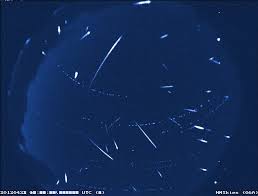
The Lyrids are predicted to reach their maximum activity at approximately 19:15 UTC (3:15 p.m. EDT) on Wednesday, April 22. Because this peak occurs during daylight for the Americas, the best viewing opportunities will be between midnight and dawn on Wednesday, April 22. Because the rates of about 15–18 meteors per hour tend to hold steady, the early hours of Thursday, April 23, are also worth a look for those who miss the primary peak.
The “sweet spot” for viewing generally occurs between 4:00 a.m. and 5:00 a.m. local time, when the radiant point in the constellation Lyra sits high in the northeastern sky, near the brilliant star Vega.
No special equipment, such as telescopes or binoculars, is needed, as these actually limit your field of view.
Find a dark location, bring a reclining chair or a blanket, and lie flat on your back. Look toward the east/northeast, but don’t stare directly at the radiant point (Vega). Meteors appearing further from the radiant will often have longer, more dramatic tails. Give your eyes at least 20–30 minutes to fully adjust to the darkness for the best experience.
This year, the lunar calendar is working in favor of astronomers. With a new moon having occurred on April 17, the peak mornings will feature only a thin waxing crescent moon that sets well before the prime viewing hours. This lack of light pollution means that even the fainter “shooting stars” will be visible to the naked eye, provided you are away from city lights.
The Lyrids are not just random streaks of light; they are pieces of history. Here is what makes them unique:
The shower originates from the debris trail of Comet C/1861 G1 Thatcher. This long-period comet takes about 415 years to orbit the Sun. It last visited the inner solar system in 1861 and isn’t expected back until the year 2283.
Earth plows through this dusty trail at speeds of approximately 30 miles per second (roughly 108,000 mph).
While most Lyrids are about the size of a grain of sand, the shower is famous for occasional “fireballs”—exceptionally bright meteors that can cast shadows for a split second and leave behind glowing “trains” of ionized gas.

