

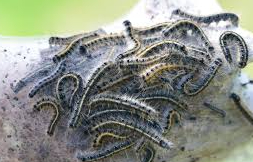
INDIANA — As spring temperatures begin to rise across the Hoosier state, the Indiana Department of Natural Resources (DNR) is advising landowners to keep a close eye on their trees. The eastern tent caterpillar (Malacosoma americanum), a native defoliating insect, has begun its annual emergence, signaled by the appearance of distinctive silken “tents” in the forks of tree branches.
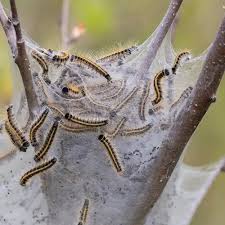
While the sight of these webs can be alarming, experts say the impact is often more aesthetic than terminal for Indiana’s forests and landscapes.
The life cycle of the eastern tent caterpillar is closely tied to the arrival of spring.
- Early Spring (Late March – April): Caterpillars hatch from overwintered egg masses and immediately begin spinning silk tents in the crotches of branches for protection.
- Mid-to-Late Spring (May): The larvae continue to feed on emerging leaves, growing up to twice their current size—reaching roughly 2 to 2.5 inches in length.
- Early Summer (June – July): After the caterpillars finish feeding, they transform into moths. Landowners should use this time to inspect twigs for new egg masses, which appear as shiny, dark-gray bands wrapped around small branches.
Affected Trees and Impact
The caterpillars have a strong preference for members of the rose family, particularly:
- Wild black cherry
- Chokecherry
- Crabapple and apple trees
- Peach, plum, and hawthorn trees
According to the DNR, most healthy, well-established trees can tolerate a full defoliation and will grow a second flush of leaves once the caterpillars pupate. However, young or stressed trees may suffer more significant health setbacks and should be monitored more closely.
A Warning for Horse Owners
While primarily a nuisance to trees, eastern tent caterpillars pose a serious risk to the equine industry. Ingesting these caterpillars—which often wander into pastures to form cocoons—has been linked to Mare Reproductive Loss Syndrome (MRLS), a condition that can cause late-term foal losses in pregnant mares. Horse owners are encouraged to remove host trees (like wild cherry) from the perimeter of their paddocks.
Management: How to Handle “Tents”
If you find these pests in your yard, the DNR suggests several manual and chemical-free removal methods:
- Manual Removal: On a cool morning or evening, when the caterpillars are resting inside the tent, use a gloved hand or a sturdy stick to pull the nest out of the tree. Submerge the nest in a bucket of soapy water to kill the larvae.
- Avoid Fire: Experts strongly warn against using fire to burn the tents while they are in the tree. This often causes significantly more damage to the tree’s bark and limbs than the caterpillars ever would.
- Targeted Spraying: If manual removal isn’t possible, an organic pesticide containing Bacillus thuringiensis (Bt) can be applied to the foliage. Bt is effective against caterpillars but safe for beneficial pollinators like honeybees.
According to DNR, most of the time, these insects are just a part of the natural spring cycle. By checking for egg masses this summer, residents can effectively “pre-manage” next year’s population before it even hatches.
For more information on identifying native insects, visit the Indiana DNR Division of Entomology & Plant Pathology website.

