

WEST LAFAYETTE — Researchers at Purdue University and the National Heart, Lung, and Blood Institute have uncovered an unexpected role for a human immune protein that could help scientists better understand how the body responds to infections, including HIV.
The study, published in Science Immunology, examined CD46, a protein found on most human cells that is part of the complement system. This system serves as an early line of immune defense, helping the body identify and respond to harmful bacteria and viruses.
The research was co-led by Majid Kazemian, a Purdue professor of biochemistry and computer science, and Claudia Kemper of the National Heart, Lung, and Blood Institute.
Scientists already knew CD46 helped T cells obtain the nutrients they need when activated. T cells are a type of white blood cell that plays a central role in the body’s immune response.
However, the researchers discovered that CD46 also acts as a kind of safety switch, helping prevent naive T cells, those that have not yet encountered a specific pathogen or antigen, from dying.
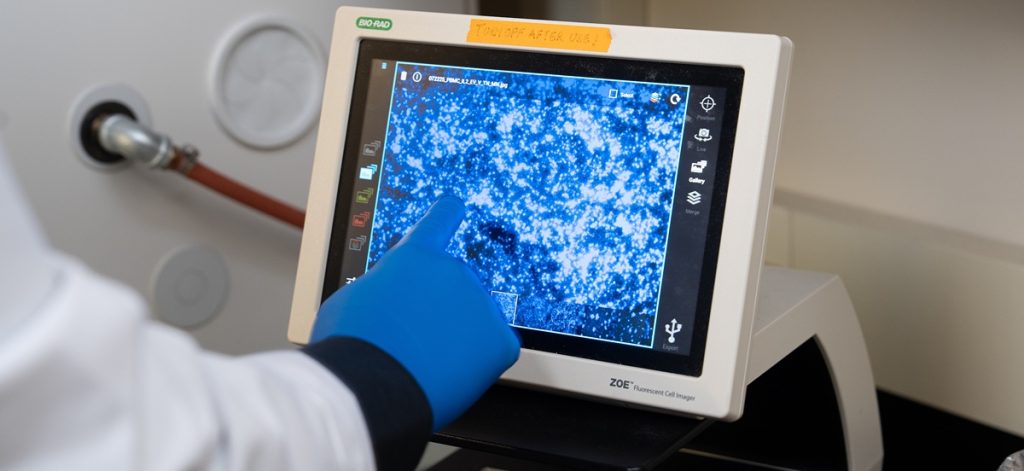
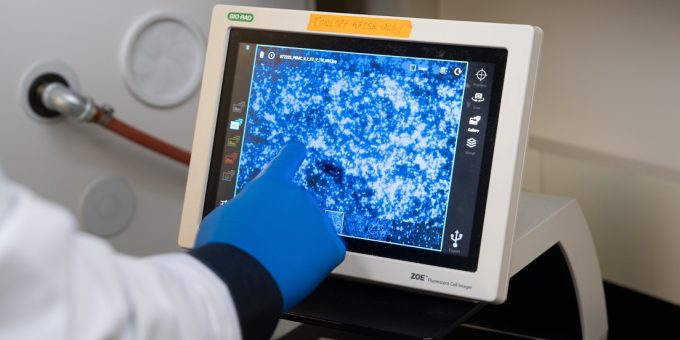
(Purdue Agricultural Communications Photos/Joshua Clark)
The discovery offers new insight into how immune cells survive, function, and respond to threats. Researchers found that signals from CD46 influence which genes are activated or switched off inside T cells, helping regulate their activity.
The findings may have implications for understanding how certain pathogens interact with the human immune system. HIV, along with several disease-causing bacteria and viruses, can exploit CD46 to attach to, enter, or interact with host cells and influence cellular signaling.
Although the researchers were not initially investigating HIV, the newly discovered role of CD46 led them to examine how the protein’s signaling pathways could relate to susceptibility to infection.
The complement system has traditionally been understood as a defense mechanism that helps destroy pathogens or marks them for elimination. Research over the past decade, however, has increasingly shown that it also acts as a communication network, helping immune cells regulate energy use, inflammation, and their responses to infection.
Kazemian and Kemper have collaborated on complement biology research for about a decade, including previous investigations into autoimmunity, infections and immune responses to the virus that causes COVID-19.
A better understanding of CD46 and its signaling pathways could eventually contribute to research into therapies for immune deficiencies, infectious diseases and inflammatory disorders, conditions in which T-cell function may be disrupted.
The findings do not establish a new HIV treatment, but they provide additional information about the molecular processes that influence immune-cell behavior and could inform future studies.
The research highlights how investigating fundamental immune-system functions can reveal new avenues for understanding disease and developing potential medical approaches.
Read more about the research through Purdue University.