

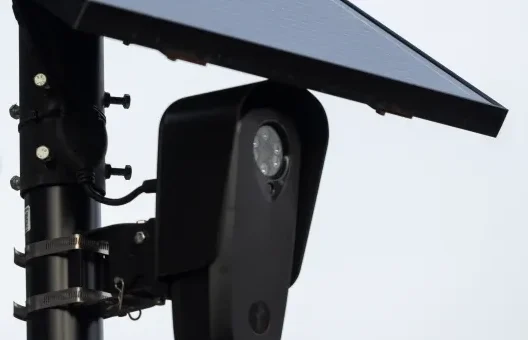
LAWRENCE COUNTY – A grassroots effort across rural Lawrence County has gathered 518 signatures, as of Monday morning, on a petition demanding an immediate ban on automated license plate readers (ALPRs). What began as a neighborhood conversation quickly escalated into a high-visibility debate over Fourth Amendment rights, government overreach, and the creeping presence of surveillance technology along southern Indiana’s backroads.
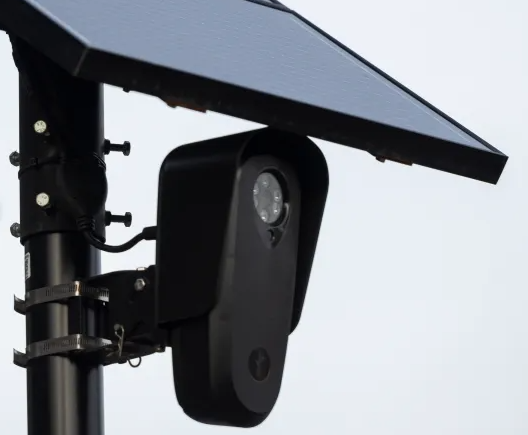
Resident Nikki Luallen organized the Lawrence County petition after spotting 16 automated license plate readers in the area. People can sign the active appeal online via the Change.org Lawrence County Petition.
According to Luallen, “Our nation prides itself on being the land of the free, yet the pervasive surveillance from these technologies poses a direct threat to our Fourth Amendment rights. These tools, intended for surveillance, infringe upon our privacy and civil liberties, elements that are foundational to American democracy.
“Privacy isn’t just about keeping criminals at bay; it’s about protecting personal autonomy, maintaining power balances, and upholding civil liberties,” she added. “The constant monitoring by Flock cameras and ALPRs creates a chilling effect on free thought, personal growth, and political dissent. This pushes citizens towards conformity and self-censorship, stifling innovation and the vibrant democratic exchange of ideas.
The rapid surge of local support highlights a growing skepticism among residents who worry that the stationary, solar-powered cameras—commonly operated by vendors like Flock Safety—are expanding beyond traditional law enforcement into blanket public monitoring.
A report published on August 20, 2026, by the nonprofit Eyes Off Indiana identifies at least 2,792 automated license plate readers across the state, with at least 2,501 confirmed as Flock Safety units. The organization notes its count represents a baseline estimate, meaning actual numbers may be higher.
A report published on August 20, 2026, by the nonprofit Eyes Off Indiana identifies at least 2,792 automated license plate readers across the state, with at least 2,501 confirmed as Flock Safety units. The organization notes its count represents a baseline estimate, meaning actual numbers may be higher.
- Monroe County leads the local region with 36 documented cameras (2.6 per 10,000 residents; 9 per 100 sq mi).
- Greene County follows with 25 cameras, boasting a high density relative to its population (8.0 per 10,000 residents; 5 per 100 sq mi).
- Jackson County sits mid-pack with 18 cameras (3.8 per 10,000 residents; 4 per 100 sq mi).
- Lawrence County ranks in the middle tier with 15 cameras (3.3 per 10,000 residents; 3 per 100 sq mi).
- Orange County records 5 cameras (2.5 per 10,000 residents; 1 per 100 sq mi).
- Daviess County reports just 1 camera (0.3 per 10,000 residents; 0 per 100 sq mi).
- Martin County stands out as one of nine counties in the entire state with 0 documented cameras.
The Spark Behind the Petition
Organizers launched the petition following the increasing visibility of camera installations mounted on black poles along county highways and key rural intersections. Designed to capture high-speed images of license plates, vehicle makes, colors, and unique features, ALPR systems automatically cross-reference data with state and national law enforcement databases.
While local authorities often frame the technology as a vital tool for locating missing persons, recovering stolen property, or tracking suspects in real time, rural residents voiced deep concerns over data ownership and long-term tracking.
“We have witnessed firsthand how these technologies can overreach. Reports have emerged highlighting instances where the data collected is misused, leading to potential violations of our rights as law-abiding citizens,” said Luallen. “Instead of feeling protected, residents often feel under scrutiny, which erodes trust in local law enforcement and governmental bodies.
Key objections raised in the Lawrence County petition include:
- Indefinite Data Retention: Indiana currently lacks statewide statutory limits on how long law enforcement agencies or third-party vendors can store license plate location history.
- Third-Party Data Sharing: Fears that private camera vendors could share, sell, or allow federal agency access to local driving records.
- Lack of Transparency: A desire for clear public audits showing who accesses local camera logs and under what specific circumstances.

