

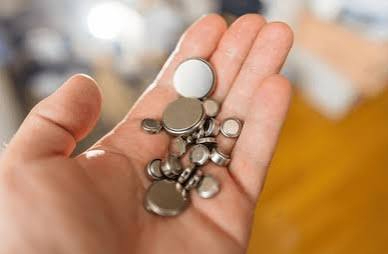
WASHINGTON — Federal health and safety regulators are urging parents and caregivers to immediately inspect their homes for small disc-shaped button and coin cell batteries, warning that accidental ingestion can cause catastrophic tissue damage or death in as little as two hours.
According to safety alerts from the U.S. Consumer Product Safety Commission (CPSC), severe injuries and fatalities linked to button batteries have surged sevenfold since 1985, fueled by the widespread proliferation of small household electronics. Nationwide, more than 70 children have died after swallowing button batteries, including at least 27 fatal cases recorded between 2016 and 2021.
Why Button Batteries Pose a Lethal Risk
Unlike standard cylindrical batteries, button and coin batteries create a unique chemical hazard when lodged inside the human body. When a battery becomes stuck in a child’s esophagus or throat, the electrical charge reacts with moisture and saliva to produce hydroxide—a harsh caustic chemical that rapidly burns through internal tissue.
Early diagnosis is notoriously difficult. More than 60 percent of ingestion cases are initially misdiagnosed because common symptoms—such as an upset stomach, fever, and vomiting—closely mimic routine childhood illnesses like the flu. Because irreversible tissue destruction can take place within just two hours, diagnostic delays frequently result in fatal complications before families realize a battery was swallowed.
Common Household Locations for Button Batteries
Button batteries power an expansive array of everyday consumer items, making them easy for young children to discover within reach. CPSC safety experts warn families to audit common items, including:
- Living Room & Media Electronics: Remote controls for televisions, fans, and cameras.
- Automotive: Keyless entry remotes and key fobs.
- Toys & Novelties: Musical greeting cards, handheld games, calculators, flashing jewelry, and light-up shoes.
- Health & Personal Care: Digital bathroom scales, thermometers, watches, clocks, and hearing aids.
- Home Decor: Flameless tea lights, decorative candles, and smart home devices.
Senior Safety Note: Ingestion risks are not limited to children. Older adults have also suffered severe injuries after accidentally swallowing button batteries after mistaking them for oral medications or pills. Adults should visually inspect all medications before swallowing.
Federal Protection: Reese’s Law
Following advocacy led by families impacted by battery ingestion tragedies, Congress passed Reese’s Law in August 2022. Named in honor of 18-month-old Reese Hamsmith, who passed away in 2020 after swallowing a coin-cell battery, the law mandated federal safety rules for consumer products utilizing button cell or coin batteries.
Under CPSC standards established by Reese’s Law, covered products must feature child-resistant battery compartments—requiring either a tool like a screwdriver or two independent and simultaneous hand movements to open—alongside prominent safety warning labels.
Critical Prevention Guidelines and Emergency Steps
To protect children from battery ingestion, safety officials recommend the following immediate measures:
- Secure Electronics: Keep remotes and electronic devices away from young children unless the battery compartment is secured with a screw closure.
- Inspect Household Items: Check battery compartments regularly; if a latch is broken or loose, repair or dispose of the item safely.
- Verify Toy Standards: Ensure all toys containing button batteries require a tool or screwdriver to access the compartment.
- Never Allow Play: Do not permit children to handle loose button batteries under any circumstances.
Emergency Actions if Ingestion is Suspected:
- Go to the ER Immediately: Do not wait for symptoms to appear. Seek emergency medical care immediately.
- Administer Honey (Ages 12 Months and Older): For children aged 12 months or older who ingested a button battery within the past 12 hours, the National Capital Poison Center recommends giving 10 mL of honey every 10 minutes while traveling to the hospital. Honey helps coat the battery and reduce tissue damage. Do not give honey to infants under 12 months, and do not delay heading to the emergency room to obtain honey.
- Contact Poison Control: Call the National Battery Ingestion Hotline at 800-498-8666 or the Poison Help Line at 800-222-1222.
- Report Unsafe Products: Consumers can report dangerous products or battery-related injuries directly at SaferProducts.gov or by calling the CPSC Hotline at 800-638-2772.

