

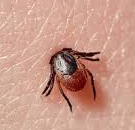
INDIANA — Tick bites are sending Americans to emergency departments at rates not seen in nearly ten years, according to newly released data from the Centers for Disease Control and Prevention (CDC).
The scale of this season’s surge is striking. Federal health surveillance shows that during the fourth week of April 2026, approximately 114 out of every 100,000 emergency department visits across the United States were directly related to tick bites. This represents the highest nationwide rate recorded for this point in the spring season since at least 2017.
With tick-borne illnesses like Lyme disease, Rocky Mountain spotted fever, and alpha-gal syndrome (a tick-induced red meat allergy) all actively on the rise, public health officials and outdoor protection brands are urging families to take immediate preventative action.
The Hidden Scale of the Epidemic
According to the CDC, an estimated 476,000 people are diagnosed and treated for Lyme disease every single year in the United States, making it by far the most common vector-borne illness nationwide.
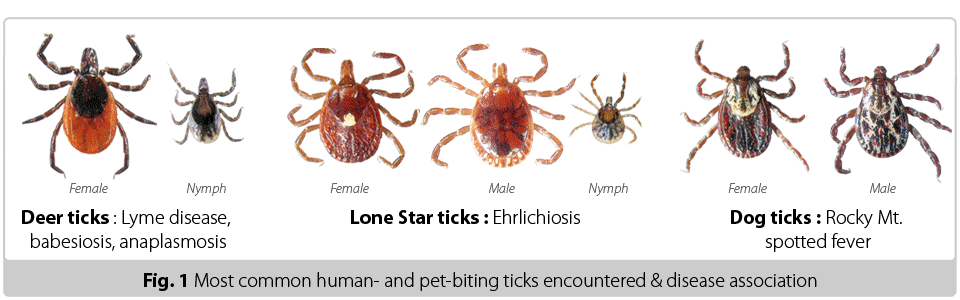
While ticks can be found across the country, data analyzed by Harvard Health indicates that the vast majority of the danger remains heavily concentrated. Approximately 90% of all documented U.S. Lyme disease cases are clustered within just 14 states: Connecticut, Maine, Maryland, Massachusetts, Minnesota, New Hampshire, New Jersey, New York, Pennsylvania, Rhode Island, Vermont, Virginia, West Virginia, and Wisconsin.
Understanding the Enemy: How Ticks ‘Quest’
Experts note that many common myths about how ticks find their victims lead to improper protection. Ticks are anatomically unable to fly or jump, and they do not drop from high tree canopies.
Instead, they engage in a behavior known as “questing.” Ticks climb to the tips of tall grasses, low brush, and roadside weeds, holding onto the vegetation with their rear legs while extending their front legs into the open air. When a human or animal brushes past the plant, the tick instantly latches onto the passing host.
Because of this specific behavior, health officials say that staying in the center of marked hiking trails and avoiding heavy leaf litter dramatically slashes a person’s immediate exposure. Around the home, maintaining short grass and laying down wide wood chip barriers at lawn edges can severely limit local tick habitats.
Four Critical Steps for Family Protection
To combat the spring surge, outdoor safety experts have outlined a four-part defense strategy to prevent tick attachments and subsequent infections:
- Layer Up and Check Often: Wear long sleeves and long pants, tucking the pant cuffs directly into socks to create a physical barrier. Conduct frequent visual checks during outdoor breaks. Once indoors, taking a hot shower within two hours and performing a meticulous full-body scan can catch crawling ticks before they have a chance to attach to the skin.
- Utilize Picaridin on Exposed Skin: Applying a 20% Picaridin topical repellent provides all-day protection. Unlike heavier DEET formulas, Picaridin is safe for children as young as six months old and effectively repels more than 55 types of insects.
- Treat Outdoor Gear and Apparel with Permethrin: Clothing, hiking boots, and camping gear can be sprayed with Permethrin, a specialized fabric treatment that binds to fibers and lasts through up to six washes. The efficacy of this method is backed by a landmark 2011 study from the University of Rhode Island, which discovered that individuals wearing Permethrin-treated footwear were 73.6 times less likely to be bitten by a tick than those wearing untreated shoes.
- Defend Household Pets: Pet owners are statistically nearly twice as likely to discover ticks crawling on themselves as people without animals. Dogs should be thoroughly checked after every outing. Treating a dog’s coat with veterinary-approved Permethrin can kill ticks on contact after they crawl just a single inch across the fur, preventing the pests from hitchhiking into the home and transferring onto human family members.
What to Do If a Tick Attaches
If a tick is found embedded in the skin, proper removal is vital to prevent the transmission of bacteria.
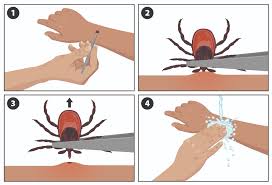
Using fine-tipped tweezers, grasp the tick as close to the skin’s surface as possible. Pull steadily and evenly straight upward without twisting or squeezing the tick’s body, which can cause the mouthparts to break off or inject fluids into the wound. After removal, thoroughly clean the bite site with rubbing alcohol or soap and water.
Medical professionals recommend saving the tick in a sealed plastic bag for identification purposes and monitoring the victim closely for symptoms like fever, joint pain, or a distinctive “bullseye” rash in the weeks following the bite. If symptoms develop, seek medical evaluation immediately.

