

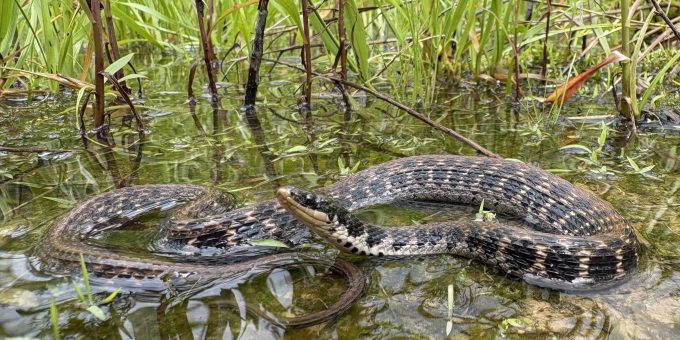
LINTON — A grassroots effort by local citizens has led to a breakthrough for wildlife conservation in southwestern Indiana. Following an influx of rare reptile reports from the public, herpetologists with the Indiana Department of Natural Resources (DNR) have successfully located populations of the state-endangered Kirtland’s snake (Clonophis kirtlandii) at four separate locations across Greene County.
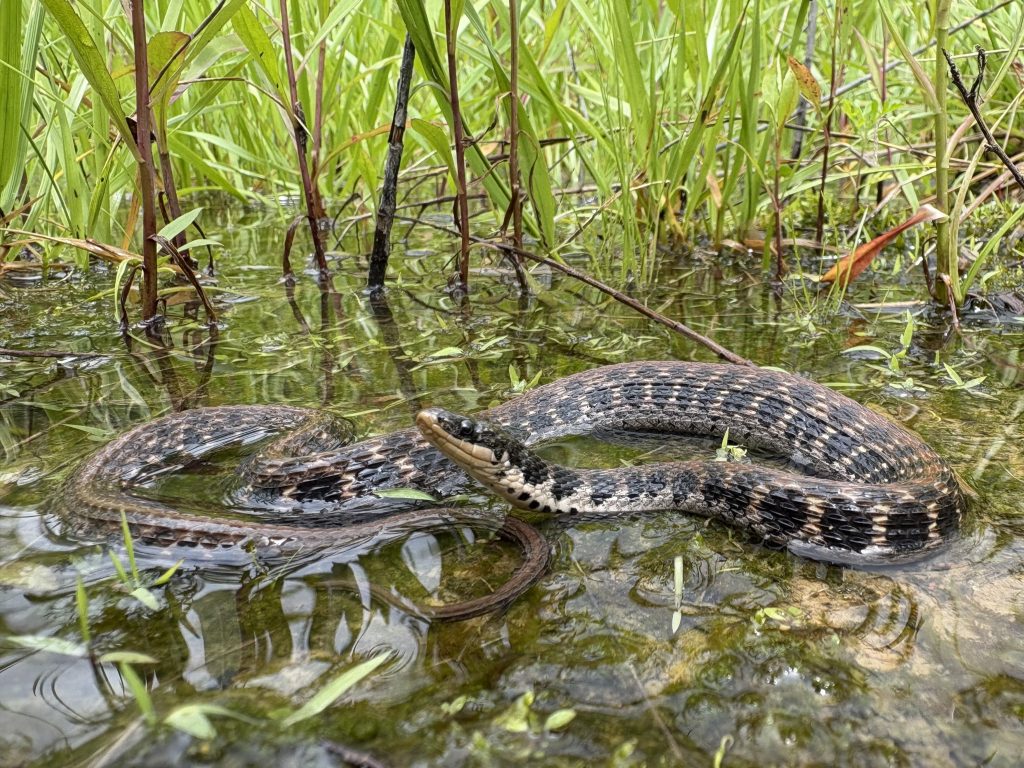
The unexpected discoveries provide crucial evidence for state biologists tracking the recovery of the elusive species. Most notably, the data confirms that these snakes are actively colonizing and thriving within newly restored wetlands—proving that the species will aggressively migrate into new habitats if the environmental conditions are right.
“Kirtland’s snakes are very secretive and typically live underground,” the DNR noted in a statement. “The results indicate the snakes are using restored wetlands, which means Kirtland’s snakes will move into suitable new habitats quickly once they become available.”
The Secret Life of a Buried Species
Finding a Kirtland’s snake in the wild is famously difficult. Growing between 12 to 18 inches long, the small, fossorial (underground-dwelling) snakes spend the vast majority of their lives completely out of sight.
While they feature a nondescript, grayish-brown back patterned with dark blotches, their most striking feature is a brilliant reddish-pink underbelly neatly flanked by two parallel rows of small black spots.
Historically native to the moist prairies, wet meadows, and open floodplains of the Midwest, the species has suffered severe population declines over the last century. Massive agricultural tiling and urban development have wiped out the vast majority of Indiana’s pristine wetlands. Ironically, because their natural marshlands disappeared, many remaining historical records of the snake came out of heavily altered urban spaces like damp city parks, suburban drainage ditches, and vacant lots in Indianapolis and New Albany.
The Crayfish Connection
The discovery at the four Greene County sites underscores the ecological value of local wetland restoration initiatives, such as those managed by the DNR and non-profit groups like the Sycamore Land Trust.
Biologists emphasize that Kirtland’s snakes depend entirely on a very specific roommate to survive: the burrowing chimney crayfish.
The Burrow Ecosystem: Kirtland’s snakes do not dig their own holes. Instead, they rely on subterranean crayfish burrows to hibernate through harsh Hoosier winters, escape the intense summer heat, and seek refuge from predators.
When conservation groups restore natural water levels to local lands, burrowing crayfish return almost immediately. Because no-till conservation practices and wetland easements preserve these underground tunnels, nearby populations of Kirtland’s snakes are able to successfully expand their hunting ranges into the newly available territory.
How to Help State Herpetologists
Because these animals are so difficult to track via traditional biological surveys, the Indiana DNR relies heavily on citizen-science reporting to make informed management decisions.
If you spot a snake matching this description on your property or while visiting a local park, the DNR requests that you safely take a photograph from a distance and log the sighting. Reports containing the date, exact location, and photos can be submitted directly via email to HerpSurveys@dnr.IN.gov.
To learn more about how state herpetologists track this elusive reptile in the field, you can watch this Kirtland’s Snake Recovery Field Panel Discussion. The presentation features joint research from the Indiana DNR and the Sycamore Land Trust highlighting how the snakes adapt to restored grasslands and no-till agricultural fields.

