

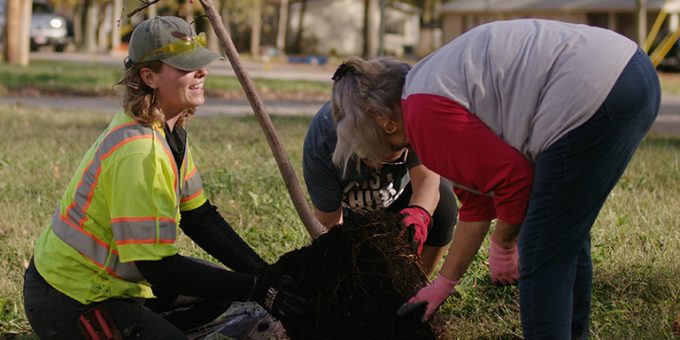
BLOOMINGTON — An Indiana University program is expanding its reach this year to help nine Hoosier communities protect, manage, and grow their local tree canopies.
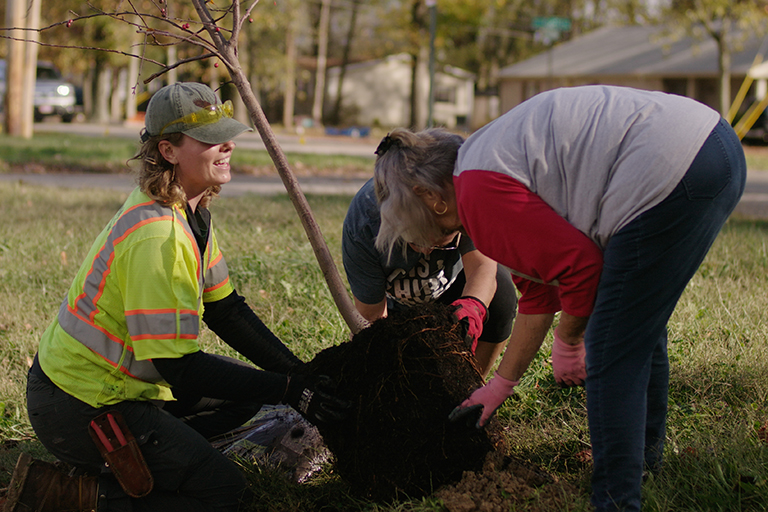
The local governments are participating in the 2026 Resilience Cohort, an initiative led by IU’s Environmental Resilience Institute (ERI). As Indiana’s climate becomes warmer and wetter, robust urban forests offer vital defense against extreme weather by providing cooling shade, capturing stormwater, and filtering air.
This year, the program splits into two distinct operational tracks:
1. Urban Green Infrastructure (High-Priority Planting)
- Participants: Gary, Huntington, Lafayette, Logansport, and South Bend.
- Objective: For a third consecutive year, communities will use local data—including flood risk, urban heat island effects, and sociodemographic metrics—to map high-priority planting zones.
- The Benefit: Beyond receiving data-driven blueprints to secure future forestry grants, participating communities will receive physical trees to jumpstart their implementation plans. To date, this USDA-funded track has planted 800 trees across Indiana.
2. Urban Green Governance (Master Planning)
- Participants: Dearborn County, Lawrence, Richmond, and Evansville.
- Objective: Funded by the Indiana Department of Natural Resources (IDNR), this brand-new track shifts the focus toward long-term policy. Local governments will design community-wide urban forest master plans by evaluating local tree health, existing forestry ordinances, and community assets.
- The Benefit: In high-growth regions like Dearborn County, these blueprints will directly shape local zoning laws. “An urban forest management plan will help local government staff identify key forest areas and shape local ordinances to guide sustainable long-term development,” said Nicole Daily, Dearborn County’s planning and zoning director.
Embedded Support and Next Steps
To facilitate these plans, each participating municipality will host an embedded McKinney Climate Fellow—an IU student specializing in sustainability—who will lead data collection and neighbor-to-neighbor community outreach.
In the fall, communities in the governance track will also receive a couple of dozen demonstration trees from the IDNR nursery to anchor their new civic forestry initiative

