

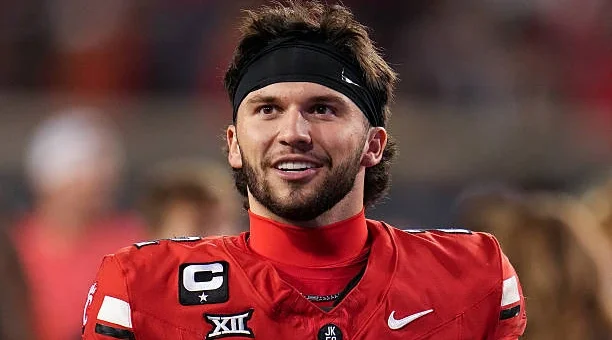
LUBBOCK, TX — Former IU and current Texas Tech quarterback Brendan Sorsby made thousands of sports wagers totaling at least $90,000 during his collegiate career, including multiple bets on his own team, according to recent court filings.
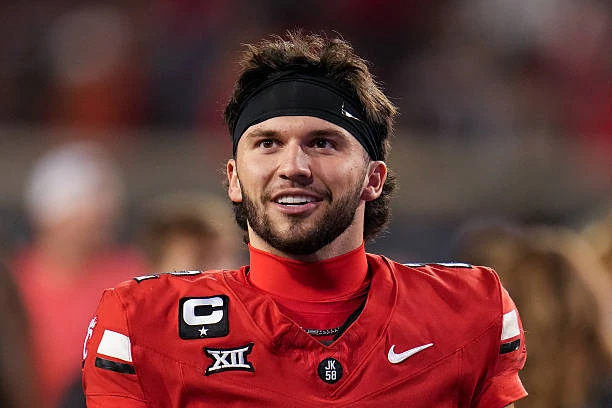
The revelations come ahead of a high-stakes district court hearing in Lubbock County, where the transfer player is suing the NCAA to restore his eligibility for what would be his final season this fall.
Sorsby, 22, was ruled ineligible by Texas Tech on May 18, a procedural necessity before the school could petition the NCAA for his reinstatement. The NCAA swiftly denied that petition on May 22, prompting the quarterback’s legal team to seek an expedited temporary injunction.
At stake is not just Sorsby’s final year of college football but a reported multimillion-dollar Name, Image, and Likeness (NIL) deal he signed with Texas Tech after transferring from Cincinnati in the offseason.
According to the lawsuit, Sorsby’s legal team argues that the quarterback suffers from a “clinically diagnosed” gambling disorder, which they define as a legitimate mental health condition. The court filings harshly criticize the collegiate governing body, alleging: “The NCAA has weaponized his condition to shore up a facade of competitive integrity, while simultaneously profiting from the very gambling ecosystem it polices.”
The legal filings also note that Sorsby is facing an impossible administrative bind. If the court does not grant the injunction, his only alternative is to keep playing football is the NFL Supplemental Draft. However, the deadline to declare for that draft is June 22—a timeline Sorsby’s team argues the NCAA was intentionally trying to run out through bureaucratic delays.
The timeline of how the gambling activity unraveled spans three different universities:
The Indiana Era
June 2022 – Dec 2023
While redshirting as a freshman and playing for the Hoosiers, Sorsby placed at least 2,900 bets totaling more than $30,000. This included 40 bets on Indiana football games and players (including prop bets on teammates), though he did not wager on the single game he actively played in. He also placed 40 bets on IU men’s basketball and 300 on unrelated college football games.
The Cincinnati Shift
Dec 2023 – June 2025
After transferring to Cincinnati, Sorsby desisted from betting on the Bearcats but escalated his overall volume. He provided over $60,000 to a friend to deposit into a FanDuel account registered under his brother-in-law’s name to evade detection.
The Texas Tech Investigation
Spring 2026
Following a multimillion-dollar transfer deal to Texas Tech, the NCAA received a tip from an online sportsbook via law enforcement on March 11. Texas Tech was notified of the probe on April 14. Because online sports betting is illegal in Texas, Sorsby had been using Venmo and Zelle to send roughly $5,000 to out-of-state associates to place bets on his behalf.
Rehab and Legal Battle
April – May 2026
On April 27, Sorsby took an indefinite leave of absence to enter a 35-day residential treatment program for gambling addiction in Arizona. He completed the program in late May. After the NCAA denied Tech’s reinstatement request on May 22, the university announced it would formally appeal the decision.
NCAA Rules vs. “Culture of Care”
Under standard NCAA guidelines, cumulative student-athlete wagers exceeding $800 typically trigger a mandatory 30% loss of a season’s eligibility. However, for amounts that “greatly exceed” that threshold—such as Sorsby’s $90,000—NCAA staff are directed to consider permanent ineligibility. Sorsby’s gambling apps of choice reportedly spanned Hard Rock Bet, BetMGM, DraftKings, PrizePicks, and bet365.
Despite the strict rules, Texas Tech leadership is firmly standing behind its quarterback. In a letter to the university community, Texas Tech President Lawrence Schovanec argued that the NCAA needs to look at the case through a modern lens, pointing out that sports betting has reached an “epidemic” level among college-aged men.
“The NCAA bylaws governing Brendan’s case have not adapted to the era of widespread legalized sports betting that this generation of college athletes now has to navigate,” Schovanec wrote, urging the NCAA to honor its professed “culture of care” regarding student-athlete mental health.
If Sorsby is permitted back on campus, Texas Tech has committed to a strict structural support plan. The university intends to monitor Sorsby’s technological devices with gambling-blocking software, mandate ongoing outpatient clinical therapy for both his gambling and an underlying anxiety disorder, and appoint a financial custodian to oversee his personal finances.
Sorsby himself expressed relief after finishing rehab, stating he finally feels “free” and is “no longer fully at the mercy” of his addiction. He is currently allowed to participate in offseason workouts with the Red Raiders while the legal system determines whether he will ever take a snap in a Texas Tech uniform.
This video analysis details the massive ripple effects that the Brendan Sorsby lawsuit could have on the future of NCAA eligibility rules and how sports betting is policed in college athletics.