

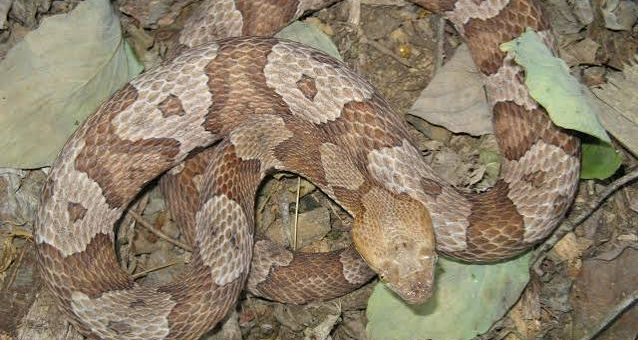
INDIANA — It may not be the largest or most intimidating animal in the Hoosier State, but the eastern copperhead is considered Indiana’s most dangerous animal in a recently published state-by-state ranking, bringing attention to one of the few venomous snakes residents may encounter outdoors.
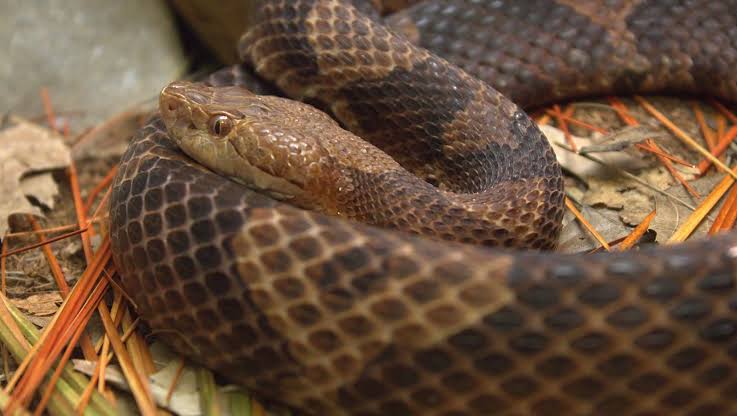
According to a recent roundup from World Population Review, the eastern copperhead ranks as Indiana’s top animal threat. The ranking highlights the potential danger posed by wildlife, particularly species capable of delivering venomous bites. The eastern copperhead is identified as Indiana’s top animal threat in the cited ranking. That does not establish it as the animal responsible for the most human deaths in Indiana.
While Indiana is home to several venomous snakes, the copperhead is the only one considered somewhat common and regularly encountered by people, particularly in southern and west-central Indiana.
The eastern copperhead is identified as Indiana’s top animal threat in the cited ranking. That does not establish it as the animal responsible for the most human deaths in Indiana.
The Indiana Department of Natural Resources (DNR) reports that the state has 32 native snake species, but only four are venomous. The other three are the timber rattlesnake, eastern massasauga rattlesnake, and cottonmouth.
All three are rare in Indiana, with the timber rattlesnake and cottonmouth listed as state endangered species and the eastern massasauga federally threatened.
Where Copperheads Are Found
Eastern copperheads are primarily found throughout the southern half of Indiana, where wooded hillsides, rocky areas, and forest edges provide suitable habitat.
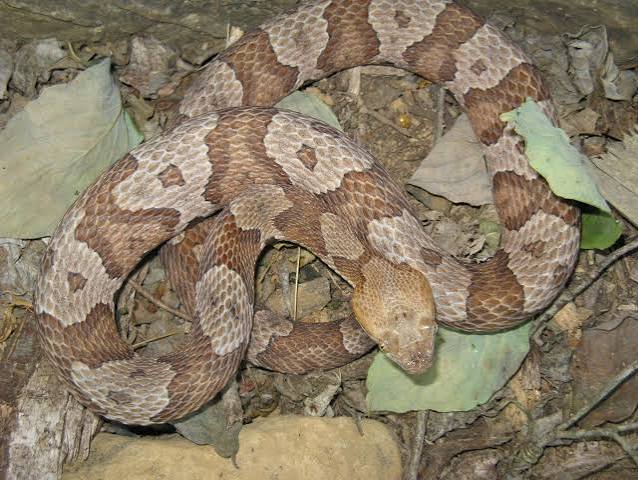
They can also be found around fallen logs, rock piles, brush, and old buildings, where they seek shelter and hunt for prey.
Copperheads are recognizable by their copper-colored heads and distinctive reddish-brown hourglass-shaped markings running across their tan or brown bodies.
Adult copperheads generally measure between 2 and 3 feet long. Their coloring provides natural camouflage among fallen leaves and forest debris, making them difficult to spot when resting on the ground.
The snakes primarily feed on small mammals, amphibians, and other prey. Young copperheads also consume insects, including caterpillars.
How Dangerous Is a Copperhead Bite?
Although copperheads are venomous, they generally do not seek out people and typically strike when they feel threatened, are accidentally stepped on, or are handled.
A bite can cause significant pain, swelling, bruising, and tissue damage. While copperhead bites are rarely fatal, they require prompt medical evaluation and treatment.
According to the Centers for Disease Control and Prevention, an estimated 7,000 to 8,000 people in the United States are bitten by venomous snakes each year, with approximately five deaths annually.
Prompt medical treatment can reduce the risk of serious complications and lasting injuries.
What to Do If You Encounter a Copperhead
If you leave a snake alone, it will leave you alone. When a snake bites a person, it does so in self-defense.
The Indiana DNR encourages residents to leave snakes alone rather than attempt to capture, kill, or relocate them.
A few precautions can help reduce the chances of an encounter:
- Watch where you step when walking through wooded areas, tall grass, or rocky terrain.
- Wear sturdy shoes and long pants when hiking or working outdoors.
- Avoid reaching into areas you cannot see, including woodpiles, brush piles, and rock crevices.
- Keep a safe distance if you spot a snake.
- Never attempt to pick up or handle a snake, even if it appears dead.
If bitten, seek emergency medical attention immediately. Keep the affected area as still as possible and avoid cutting the wound, attempting to suck out venom, or applying a tourniquet.
Snakes Play an Important Role in Indiana’s Ecosystem
Despite their reputation, snakes provide important benefits to the environment. They help control populations of mice, rats, insects, and other small animals while also serving as food for birds of prey and other wildlife.
The DNR emphasizes that most snakes in Indiana are harmless and that venomous snakebites are very rare statewide.
The agency encourages residents to learn how to identify local snake species and give wildlife plenty of room rather than unnecessarily killing snakes out of fear.
For more information about identifying Indiana snakes, visit the Indiana Department of Natural Resources snake information page