

INDIANA – Washing a vehicle in the driveway may seem like an easy way to save money, but using the wrong household supplies or techniques can quietly strip protective coatings, scratch clear coats, and accelerate tire dry rot.
According to Anna Fodor, marketing team supervisor at PriorityTire, avoiding a few widespread car-care habits can prevent long-term cosmetic and structural wear.
Four Common Car Cleaning Mistakes to Avoid
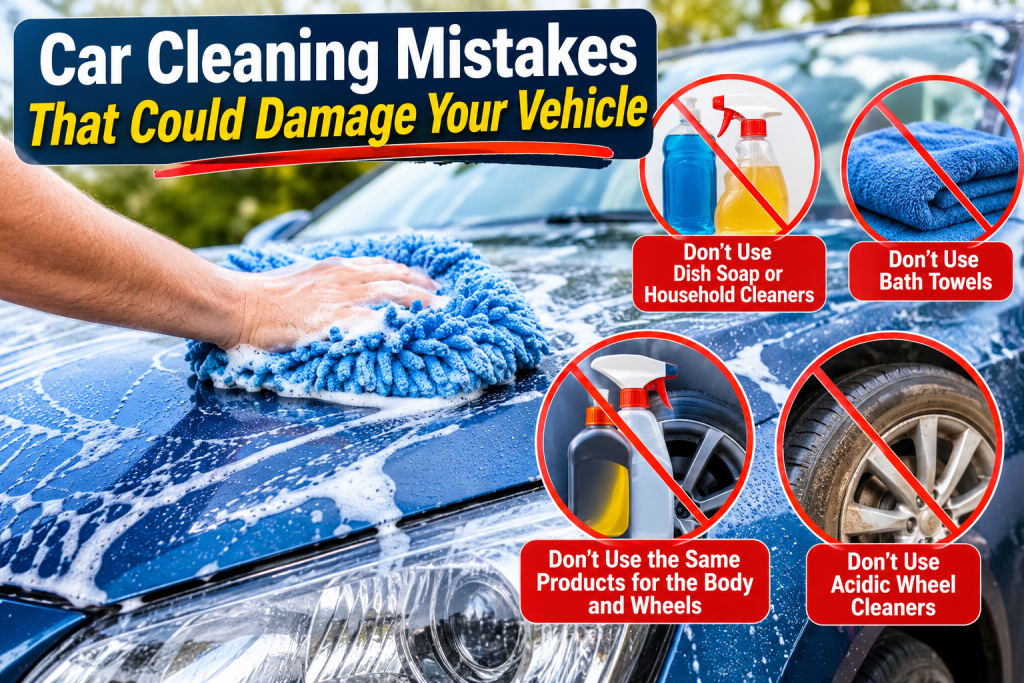
- Using Dish Soap or Household Sprays: Household cleaners are formulated with high pH levels to cut through kitchen grease. On a vehicle, those harsh detergents strip away protective waxes and paint sealants, leaving the finish vulnerable to accelerated oxidation.
- Drying With Bath Towels: Standard cotton bath towels and household rags tend to push grit across the paintwork rather than trapping it, leaving behind fine swirl marks and streaks.
- Sharing Tools Between Wheels and Bodywork: Wheels accumulate sharp road grit and metallic brake dust. Using the same sponge, mitt, or bucket on both the tires and the car’s body can transfer abrasive particles directly onto the paint.
- Applying Acidic Wheel Cleaners: Tire rubber contains protective compounds called anti-ozonants that migrate to the surface as the tire flexes. Harsh, acidic cleaners strip these compounds faster than the tire can replenish them, leading to premature cracking and dry rot. Fodor also noted that brownish discoloration on tires—often mistaken for mud—is frequently a natural oxidation process called “blooming,” which requires a dedicated tire degreaser rather than harsh acids or standard car soap.
The Right Supplies and Step-by-Step Method
To protect a vehicle’s finish, Fodor recommends keeping dedicated tools for the wheels separate from those used on the paint—ideally utilizing a three-bucket setup (one for wheels, and two for washing and rinsing the body).
- For Wheels and Tires: Use a pH-balanced, iron-dissolving wheel cleaner to break down embedded brake dust, a tire degreaser for rubber sidewalls, a stiff tire brush, and a soft microfiber brush for wheel barrels and lug nuts.
- For the Body: Pair a gentle, pH-balanced car shampoo with microfiber wash cloths that lift and trap dirt, followed by a large, absorbent microfiber drying towel.
When washing, Fodor advises tackling the dirtiest areas first so brake dust and grime do not splash onto freshly cleaned paint:
- Clean Wheels and Tires First: Rinse loose debris, scrub the rubber sidewalls with tire degreaser and a stiff brush, apply pH-balanced wheel cleaner to the wheel face and barrel, agitate with soft brushes, and rinse thoroughly.
- Wash the Body Top to Bottom: Pre-rinse the vehicle from the roof down. Using one bucket for soapy water and a second bucket of clean water to rinse the wash cloth, clean one section at a time, working downward, then rinse and dry with a microfiber towel.
- Finish the Tires (Optional): Apply a water-based, solvent-free tire dressing for a clean, satin finish without damaging the rubber.
Experts recommend washing a vehicle every one to two weeks. Contaminants such as acidic bird droppings can etch into clear coats if left unaddressed, while metallic brake dust can rust and permanently bond to wheel finishes over time.