


INDIANA — Indiana Governor Mike Braun officially submitted the state’s bid on Tuesday to host the brand-new United States Space Academy, a proposed NASA-supported federal institution designed to educate and train future American leaders in space, aviation, and defense.
Established by a Presidential Commission in August 2026, the academy is projected to welcome an inaugural class of 300 cadets in the fall of 2028, expanding to 1,200 students by 2031 and potentially reaching 4,000 or more. Graduates are expected to pursue careers in the U.S. Space Force, NASA, or the private civilian aerospace sector.
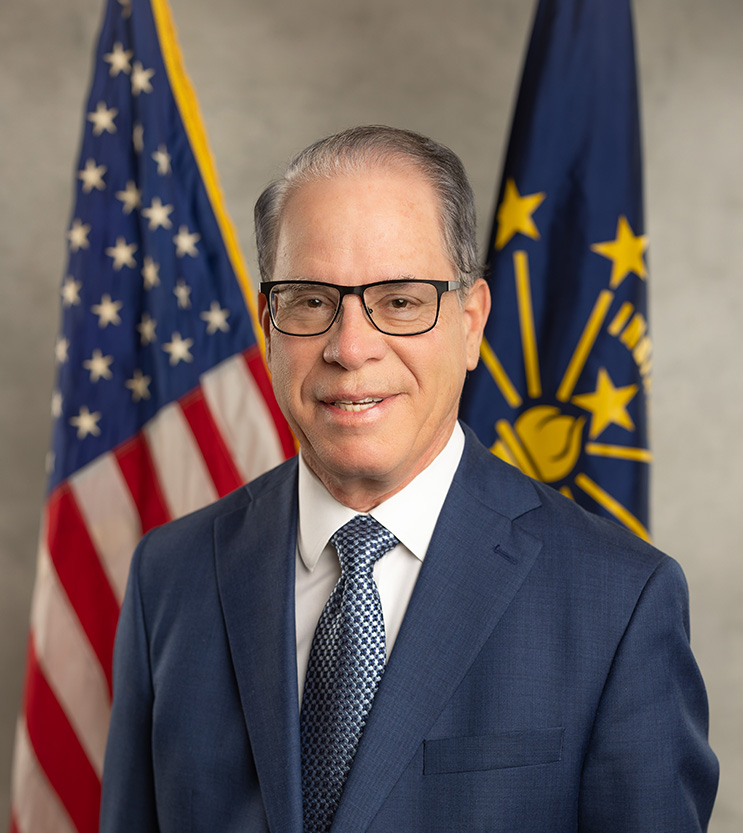
“Indiana is an ideal destination to train tomorrow’s space, aviation and defense leaders,” Braun said in a statement. “Here, we’re developing and manufacturing the next generation of defense national security solutions, from drones to hypersonics to semiconductors, while boosting the institutions that are training a top-ranked number of engineers to power the warfighter. Thanks to our talent partners, businesses and workforce training initiatives, Indiana is already training the leaders of tomorrow, and we can’t wait to expand our expertise to support the U.S. Space Academy.”
Proposed Locations and Statewide Partnerships
Led by the Indiana Economic Development Corporation (IEDC), the state’s proposal highlights several potential campus sites along Indiana’s hard-tech corridor, including:
- Grissom Air Reserve Base
- The LEAP Innovation & Research District
- The Purdue Research Foundation (in partnership with Tippecanoe County)
- Land near the Indianapolis International Airport
Beyond physical locations, the bid emphasizes a unified academic and industry coalition. Purdue University, Indiana University, the University of Notre Dame, and Ivy Tech Community College collaborated on a comprehensive curriculum framework tailored to support the future talent needs of NASA and the U.S. Department of War.

“This is a testament to the state’s broad and growing defense ecosystem, and the unmatched power of three world-class research universities collaborating on a common vision,” said Andrew Kossack, President and CEO of the Applied Research Institute. “That spirit of partnership makes Indiana uniquely positioned to advance the U.S. Space Academy’s mission.”
Economic Incentives and Space Heritage
State officials also highlighted Indiana’s deep roots in American space exploration—noting Hoosier pioneers such as Mitchell native Gus Grissom, one of the original Mercury Seven astronauts, and Purdue graduate Neil Armstrong, the first person to walk on the moon—alongside its modern defense installations and advanced manufacturing sector.

“Indiana has so many advantages and resources to offer that would ensure the long-term success of the U.S. Space Academy,” said Indiana Secretary of Commerce Chuck Goodrich. “What stands out most, though, is the unmatched level of collaboration and partnership we bring to the table across academia, business, government, and industry.”
To secure the facility, Indiana’s proposal outlines a financial and in-kind support package featuring site selection assistance, Innovation Development District revenues, workforce training programs, and potential tuition support from participating colleges and universities. The incentive package remains subject to approval by the Indiana General Assembly and ongoing negotiations with NASA.