

WEST LAFAYETTE — The Purdue Applied Research Institute’s (PARI) Infrastructure Innovation Lab entered into an agreement with the U.S. Department of Energy’s National Reactor Innovation Center (NRIC) to test novel construction materials, methods, processes, and digital tools for designing and constructing structures that house nuclear reactors. The partnership supports NRIC’s Advanced Construction Technology Initiative, located at Idaho National Laboratory.
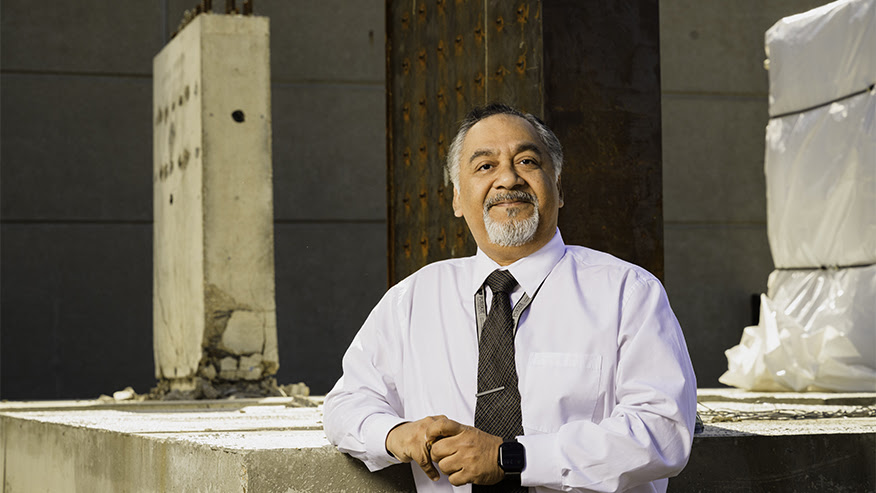
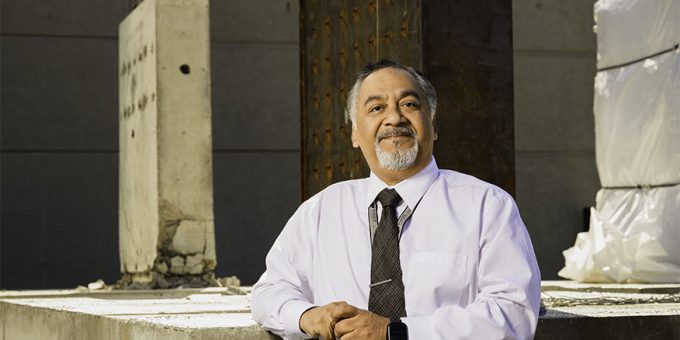
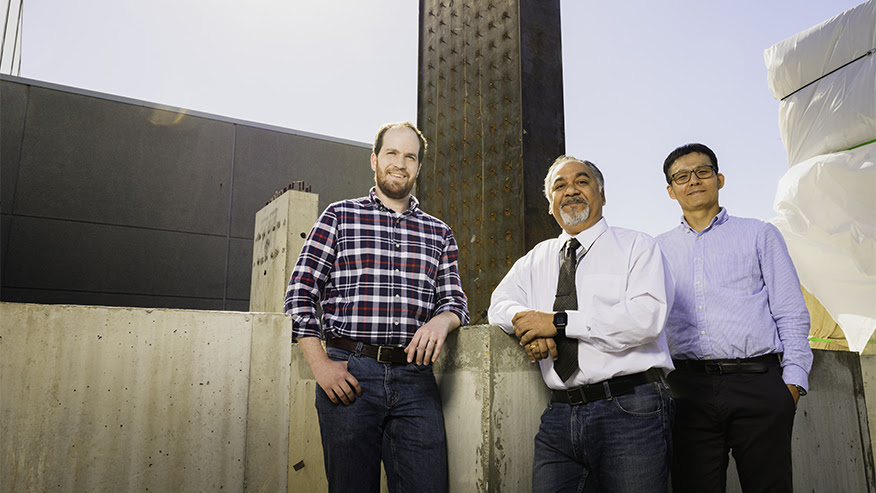
The PARI team will design and construct two structures: a model containment vessel that would encase a small modular reactor as well as a model reactor building to surround the containment vessel and provide additional protection and support. The team is led by Amit Varma, the Karl H. Kettelhut Professor in Civil Engineering in the Lyles School of Civil and Construction Engineering and executive director of PARI’s Infrastructure Innovation Lab (PIIL); Rinaldo Hunt, PIIL’s executive director for business development and strategic partnerships; and Sanjeev Malushte, PIIL’s distinguished fellow and senior director of technology.
Both structures will be temporary, and no nuclear materials or equipment will be used during the project. Following integrity testing, the structures will be disassembled and their materials recycled.
According to Varma, the project represents a significant opportunity to work with the Department of Energy to strengthen America’s energy future, while positioning Purdue University and the state of Indiana as national leaders in advanced nuclear construction.
“Energy security is national security, and enabling the next generation of nuclear energy will require us to rethink how we design and construct critical infrastructure,” Varma said. “Through this project, we’re partnering with the NRIC to advance innovative materials, digital technologies and construction methods that can help reduce project timelines and costs while building the skilled construction workforce and supply chain capabilities needed to support a growing nuclear industry.”
The structures will be built using steel-plate composite technology, which consists of steel faceplates and concrete infill. These materials combine steel’s strength and ductility — the ability to stretch or bend without breaking — with the stiffness, shock absorption and temperature control of concrete to reduce damage when subjected to extreme conditions such as earthquakes and other natural disasters or high temperatures. Steel-plate composites are an alternative to the reinforced concrete that was traditionally used for nuclear construction.
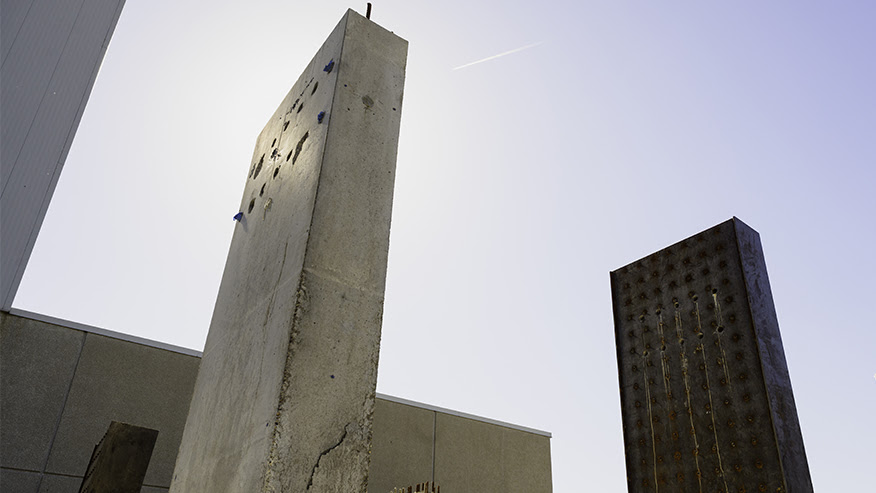
Another benefit of steel-plate composites is that they eliminate the need for concrete molds and steel rebar to reinforce the concrete, both of which require significant field labor to construct. Instead, the steel faceplates can be manufactured in a facility, assembled on-site, and filled with concrete, thereby reducing labor costs and construction time.
In addition to testing the materials, PIIL will develop a digital twin of the structures — a virtual replica of the physical systems being built. The digital twin will reflect the progress of the construction, identify errors, and help support cost management.
The project also provides opportunities to bolster the nuclear construction workforce and supply chain. In conjunction with the construction project, PIIL will develop training packages, curricula, and on-site instruction to help upskill workers throughout the construction industry. Varma and his team also hope to expand participation and capabilities among steel producers, fabricators, builders and manufacturers.
“Modernizing nuclear construction requires innovation not only in materials and technologies but also in how we develop and train the workforce that will build these facilities,” Varma said. “This project allows us to demonstrate new approaches, expand industry capabilities, and strengthen the domestic supply chain, all while preparing the next generation of skilled construction workers to support America’s energy future.”