

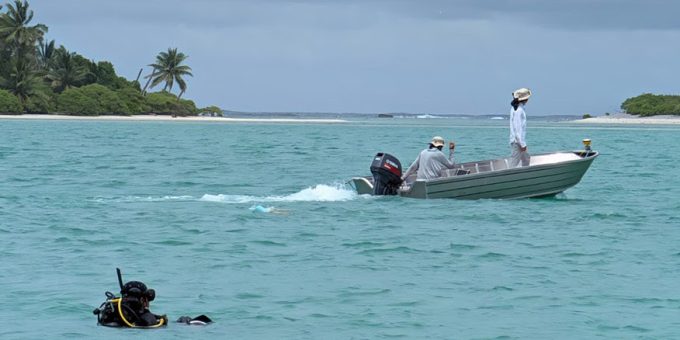
NIKUMARORO, KIRIBATI — The search in Nikumaroro’s lagoon for what could be Amelia Earhart’s Lockheed Electra 10-E is underway. On Wednesday (Oct. 14), members of the Taraia Object expedition, a joint effort between the Archaeological Legacy Institute, Purdue Research Foundation and Purdue University, began the underwater survey at the heart of their investigation.
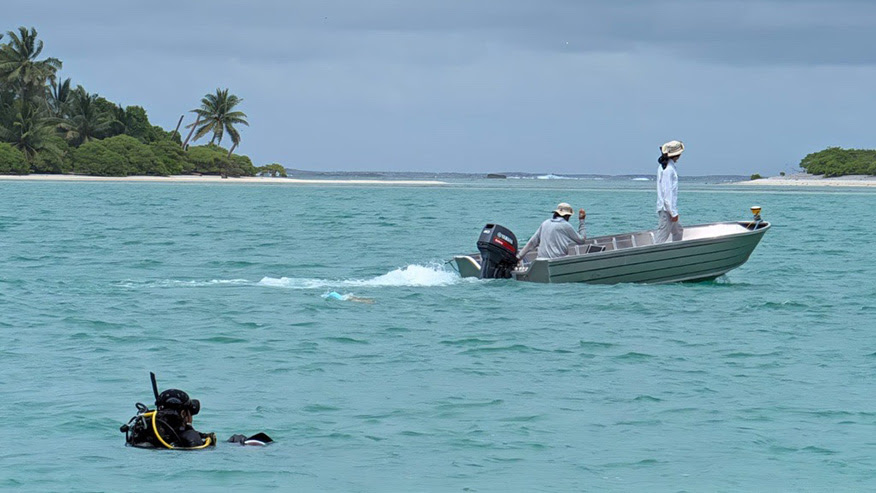
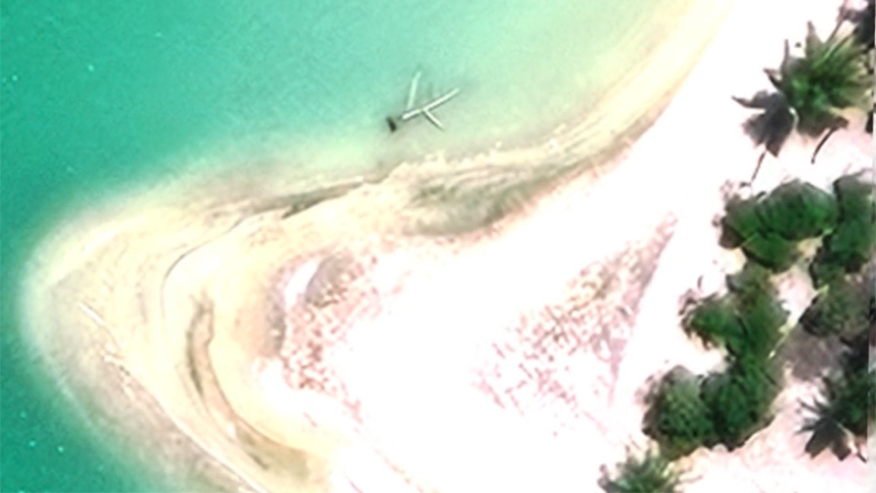
The 17-person team traveled five days by sea from Tarawa, Kiribati, to Nikumaroro, a remote atoll in the South Pacific. The team’s goal is to search for evidence of the castaway hypothesis, the theory that when Earhart and her navigator Fred Noonan disappeared in July 1937 on the third-to-last leg of her round-the-world flight attempt, the pair landed on this uninhabited island. Work on Nikumaroro is focused on inspecting the Taraia Object, first noticed in satellite imagery in 2020 and later confirmed to be visible on aerial photos taken of the island’s lagoon as far back as 1938.
The Purdue Research Foundation originally funded the Lockheed Electra “Flying Laboratory” through the Amelia Earhart Fund for Aeronautical Research as part of Purdue’s pioneering efforts in aviation. Earhart intended for the plane to be returned to Purdue upon completion of her historic flight.
In the first day of field operations, the maritime archaeology team began surveying the lagoon using a magnetometer and side-scan sonar technology. The magnetometer is used to detect ferrous metals, which could include steel cabling and other metal components from the mostly aluminum Electra, while sonar technology is used to search for objects under sediment on the lagoon floor. The data gathered from these tools will be analyzed to create a more complete and accurate picture for the application of later search techniques, which include the use of a hydroprobe and a water induction dredge to remove sediment from identified objects.
“We’re following our game plan,” said Rick Pettigrew, executive director of the Archaeological Legacy Institute. “It’s too early to reach conclusions as we’ve got a lot of science left to apply.”
Onshore, the solar-powered tech system that will provide connectivity for monitoring devices, including a remote camera and water level transducer, was set up and is operating successfully. These tools will provide ongoing information about Nikumaroro’s weather and tidal flows that has never before been available.
Nikumaroro is part of the Phoenix Islands Protected Area and has been designated as an Important Bird Area by BirdLife International. Three representatives from Kiribati are part of the expedition team.
The underwater work marks a critical phase of the expedition after the team spent Tuesday (Oct. 13) establishing operations on the island. The crew cleared a trail across the island, created staging areas and reached the Taraia Peninsula ahead of schedule, allowing team members to conduct an initial survey for surface artifacts and assess conditions in the lagoon before beginning the underwater survey.
Nikumaroro is located halfway between Australia and Hawaii and lies close to 400 miles southeast of Howland Island, the planned destination of Earhart and Noonan on the fateful final leg of their attempt to circumnavigate the globe.
Earhart began her attempt to circumnavigate the globe and set a record for long-distance flight in late May 1937, flying out of Oakland, California. Already an aviation legend in the 1930s, Earhart came to Purdue in 1935 and worked for two years as a women’s career counselor and advisor in the university’s aeronautics department. The recently opened Amelia Earhart Terminal at the Purdue Airport honors her legacy as a valued Boilermaker. She is also remembered across campus through facilities, programs and clubs.