

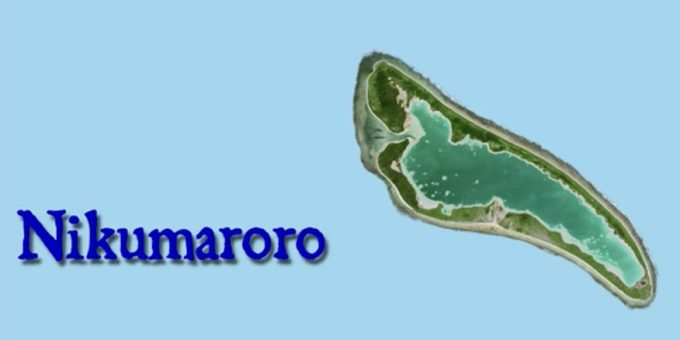
NIKUMARORO, KIRIBATI — Following a five-day, 830-nautical-mile voyage across the remote South Pacific, the 17-person Taraia Object expedition team, supported by a 17-person boat crew, arrived Monday (Oct. 12) at Nikumaroro to start its investigation of a visual anomaly that may be what remains of Amelia Earhart’s Lockheed Electra 10-E.
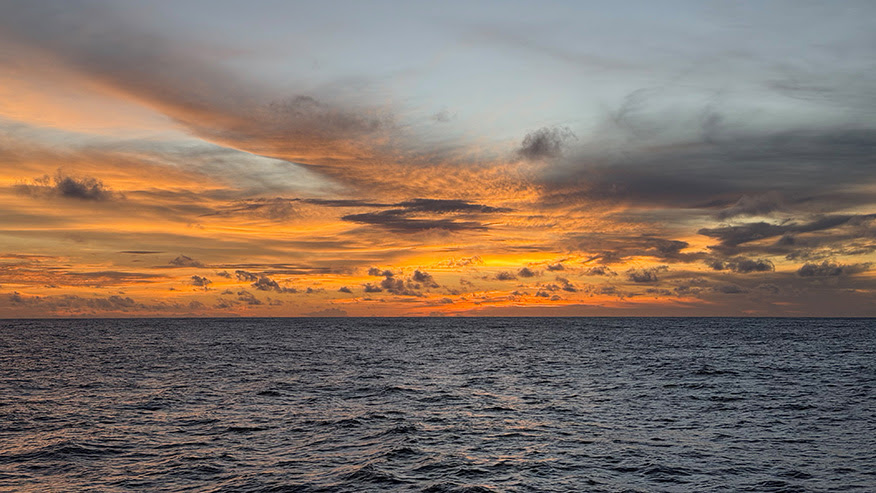
The Marin Mainiku arrived at approximately 8 p.m. local time on the western side of the uninhabited atoll, part of the Phoenix Islands of the Republic of Kiribati. Nikumaroro is 17 hours ahead of Eastern time in the United States.
“It is incredibly rewarding to be this close to completing our inspection of the Taraia Object and potentially solving, at long last, the outstanding mystery of the disappearance of Amelia Earhart and Fred Noonan more than 89 years ago,” said Rick Pettigrew, executive director of the Archaeological Legacy Institute (ALI) and leader of the expedition.
The expedition is the result of years of research on the Taraia Object hypothesis by Pettigrew and ALI, which builds on the castaway hypothesis established and documented by The International Group for Historic Aircraft Recovery over the past nearly 40 years. Pettigrew approached Purdue University and the Purdue Research Foundation in February 2025 due to the university’s historic connection to Earhart. Through the Amelia Earhart Fund for Aeronautical Research, the Purdue Research Foundation funded Earhart’s Lockheed Electra “Flying Laboratory.”
Since the expedition team arrived after sunset, no field operations took place immediately. Instead, the Marin Mainiku proceeded to the island’s eastern end for calmer overnight sea conditions, and the team spent the evening making final preparations to go ashore at daybreak through the “blasted channel,” a man-made opening near the southwestern corner of the atoll’s wide and imposing perimeter reef.
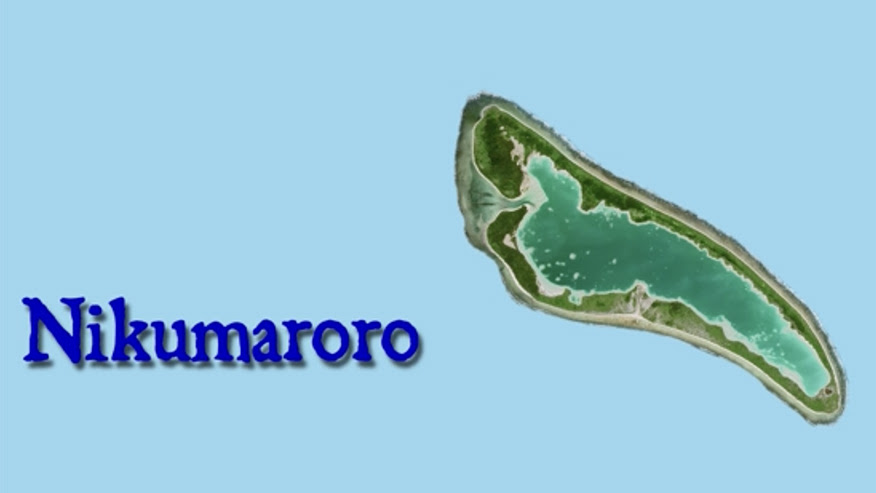
Pettigrew said it has been seven years since the last authorized expedition set foot on Nikumaroro and more than 15 years since anyone has been on the Taraia Peninsula. While there, the team will also conduct biological and environmental surveys of the area in coordination with the Kiribati representatives on the expedition.
The first day on-site will focus on transporting equipment, clearing vegetation, and establishing staging operations at the beach and on the south side of the lagoon. Upon reaching shore, the team will divide into two teams, with one taking smaller transport boats through the Tatiman Passage, a natural opening on the island’s western side, to access the lagoon and place buoys along the way to guide a return trip to the Marin Mainiku at the conclusion of work.
The second team will begin marking and cutting a trail through the jungle from the landing site at the beach to a designated spot on the south side of the island’s lagoon, where it will rendezvous with the boat team. Staging areas will be established on both ends of the jungle trail to support the first day’s work, before the focus moves to the Taraia Peninsula on Wednesday (Oct. 14).
Once at the peninsula, the first piece of investigative work will be a survey of the sand spit at the tip to identify the presence of any surface artifacts before beginning maritime archaeology work. The maritime specialists will first deploy a surface boat to lay out a series of parallel transect lines — a process to establish a systematic grid for conducting the search for artifacts, then measuring and recording them. The team will then use a magnetometer to detect the presence of ferrous metals. Although the Electra was largely made of aluminum, steel cabling and other metal components of the aircraft could give a ferrous metal reading.
In the next phase, various sonar technologies will be used to detect objects under sediment along the lagoon floor, and the archaeology team will use a hydroprobe to contact the object directly to determine its depth, orientation, and surface composition. Finally, a water induction dredge will be used to remove sediment for visual inspection of the object. Based on estimates from aerial photos, the Taraia Object is believed to be located only 10 feet from the lagoon’s shore, and depending on the tide, under as little as 5 feet of water, plus a layer of sediment of unknown depth.
Although the crew has successfully reached Nikumaroro, prevailing weather and sea conditions will continue to be a factor in conducting operations. The effects of El Niño remain present around the island, and daily access to shore will depend on tides and safe boating conditions. The crew will sleep nightly aboard the Marin Mainiku for a number of reasons, one of which is the presence of coconut crabs, whose size and overnight activity make staying on the island impractical. The team is expecting to spend five days on the island to complete its fieldwork before beginning the return to Tarawa.
“Despite the inevitable challenges of carrying off an endeavor of this magnitude, and the difficulties of sailing across the vast Pacific in a working vessel to reach a place as remote as this one, our team is in excellent spirits,” Pettigrew said. “We continue to be well taken care of by our very capable Kiribati crew, and we are looking forward to the work ahead.”