

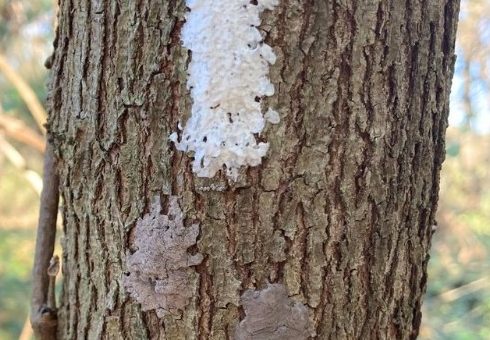
INDIANA – Homeowners across the state should keep an eye out for an unwelcome seasonal visitor: gray, mud-like smudges on tree trunks, fences, and outdoor furniture.
Far from harmless dirt or dried gum, these patches are spotted lanternfly egg masses. Tucked into the bark during late summer and early fall, each waxy, gray mass holds roughly 30 to 50 future pests.
Why Scraping Matters
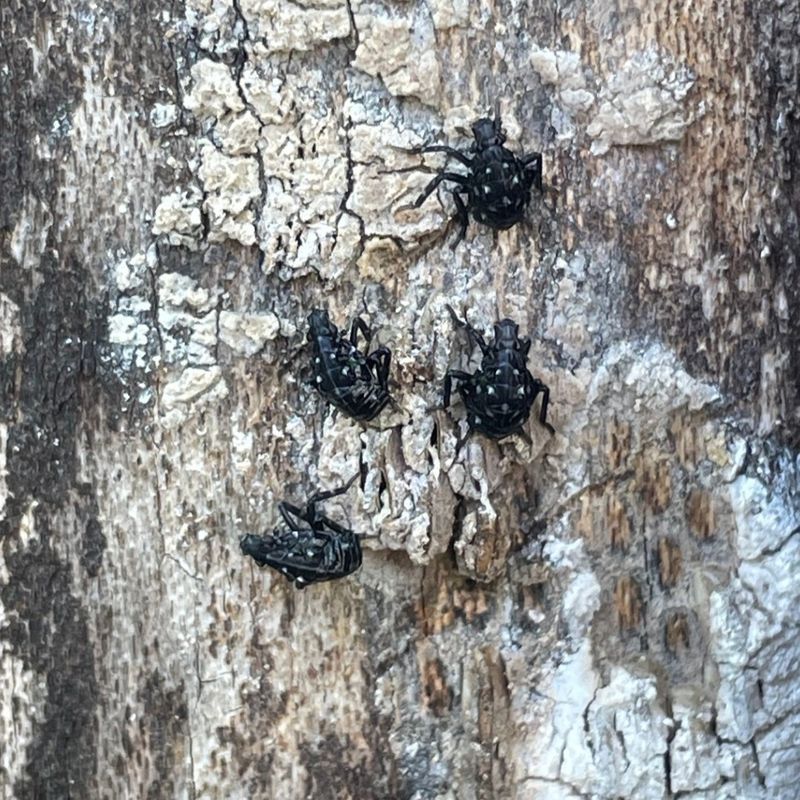
First confirmed in Indiana in Switzerland County in July 2021, the invasive spotted lanternfly has since spread across several counties. Left untouched, the eggs survive snow, ice, and winter winds inside their protective waxy coating. When late April through June arrives, the eggs hatch into sap-sucking nymphs that weaken native maples, black walnuts, and fruit trees, leaving behind sticky honeydew that coats decks and attracts black sooty mold.
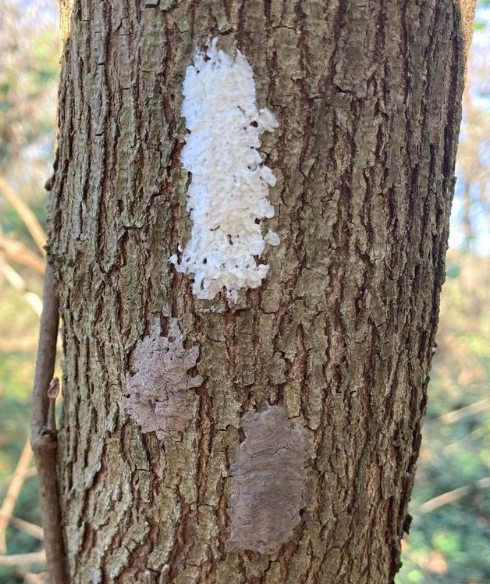
Because adults lay eggs from September through the first hard freeze, early fall through early spring offers an ideal window to destroy the masses before they hatch.
Common Mistakes to Avoid
- Flicking or knocking them off: Knocking egg masses onto the ground or leaf litter does not stop them; the eggs will still hatch in the spring.
- Only checking at eye level: Lanternflies often lay eggs high in the tree canopy, under branches, or on the shady sides of trunks.
- Ignoring non-tree surfaces: Egg masses routinely turn up on firewood, trailers, grills, and vehicle bumpers, allowing the pest to hitchhike into new counties.
- Using chemical sprays: Harsh sprays rarely penetrate the tough waxy coating and often go to waste.
How to Properly Remove and Destroy Egg Masses
- Prepare a container: Fill a zip-top bag or small jar with a disinfecting solution or rubbing alcohol. Hold it directly beneath the egg mass.
- Scrape downward: Using an old gift card or a plastic putty knife, press flat against the bark and scrape firmly downward so the mass falls straight into the solution.
- Destroy completely: Seal the container and let it sit for a few days before throwing it in the trash. Alternatively, crush each egg individually until completely flattened.
- Report the sighting: Take a photo before scraping and submit the location, date, and image to the Indiana Department of Natural Resources (DNR) online to help track the pest’s movement statewide.

