

INDIANA — Emergencies can happen with little warning, but taking time to prepare now can make it easier for families to respond when something goes wrong.
The American Red Cross recommends a simple approach to emergency preparedness: get a kit, make a plan and be informed. Being prepared cannot prevent a disaster, but it can give families greater confidence and help them respond more safely.
Build an Emergency Kit
One of the first steps families can take is putting together an emergency or survival kit.
The kit should contain essential supplies that could be needed during an emergency. Families should also consider their individual needs when putting together their supplies.
A basic preparedness kit can include:
- Water and nonperishable food
- Flashlights and extra batteries
- A battery-powered or hand-crank radio
- First-aid supplies
- Necessary medications
- Phone chargers and backup power
- Blankets and extra clothing
- Personal hygiene items
- Important documents
- Supplies for children, older adults or people with disabilities
- Food, water and other necessities for pets
The Red Cross also recommends having a first-aid kit and encourages households to make sure at least one person is trained in first aid and CPR/AED.
Make a Family Emergency Plan
A disaster is not the time to figure out what everyone should do.
Families should create an emergency plan ahead of time and practice it.
Talk with family members about the emergencies most likely to affect your community and determine where everyone should go and how you will communicate.
Make sure children understand the plan in an age-appropriate way. Emergencies can be frightening for children, and the Red Cross recommends providing information that can help them feel less anxious and prepared.
It is also important to consider the needs of older adults, people with disabilities and anyone in the household who may need additional assistance during an emergency.
Know What Could Happen in Your Area
Being informed is another important part of preparedness.
The Red Cross recommends learning which disasters are most likely to occur where you live and understanding what to do before, during and after those emergencies.
For Southern Indiana residents, that can mean preparing for hazards such as severe thunderstorms, tornadoes, flooding, winter storms and power outages.
Families should have multiple ways to receive emergency information and warnings, particularly if a storm or other disaster could affect the area.
Don’t Forget Your Pets
Pets are part of the family and should be included in an emergency plan.
The Red Cross recommends preparing for pets as part of the overall household emergency plan.
Keep food, water, medications and other necessary pet supplies available, and make sure you know where you could take your animals if you need to leave your home.
Think About Special Needs
Emergency planning should take into account everyone in the household.
Children, older adults and people with disabilities may have different needs during an emergency. The Red Cross provides preparedness resources specifically addressing these groups.
Families should consider medications, mobility needs, communication needs, medical equipment and other necessities when developing their plans.
Don’t Wait for the Warning
Perhaps the most important part of preparedness is simply starting before an emergency happens.
The Red Cross offers a preparedness checklist that asks residents to consider five questions:
- Do you know which emergencies are most likely to occur in your community?
- Do you have a family disaster plan and have you practiced it?
- Do you have a survival kit?
- Does at least one person in your household know first aid and CPR/AED?
- Have you taken steps to help your community prepare?
If the answer to any of those questions is no, now is a good time to take that next step.
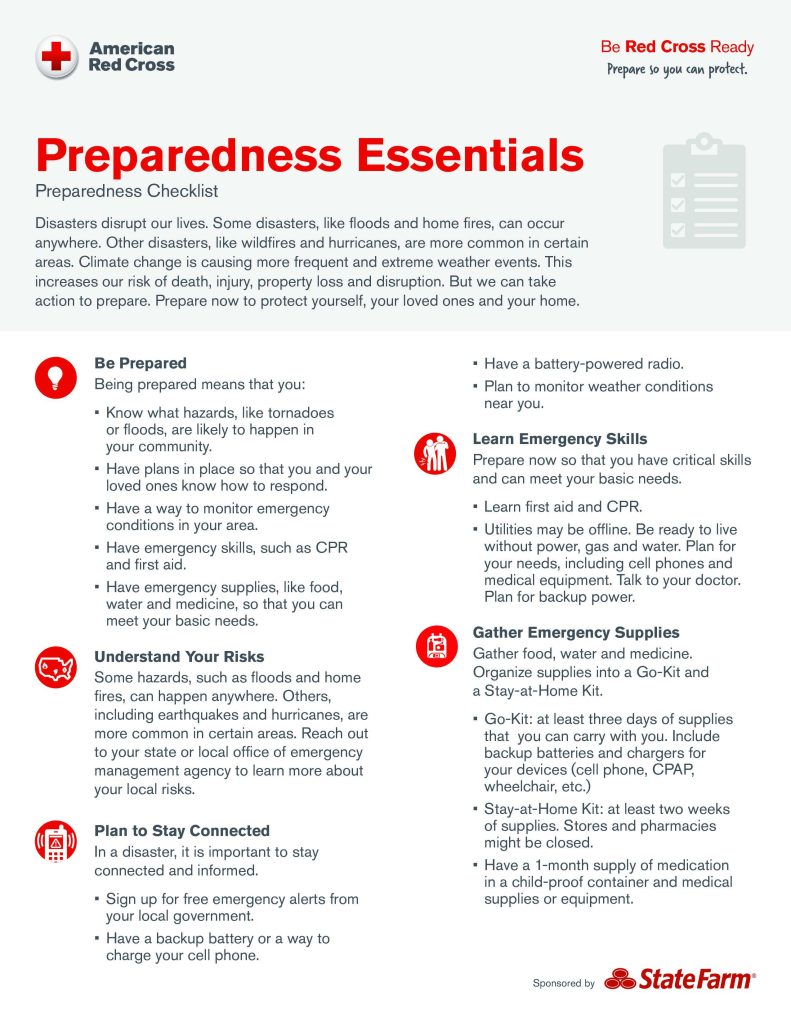
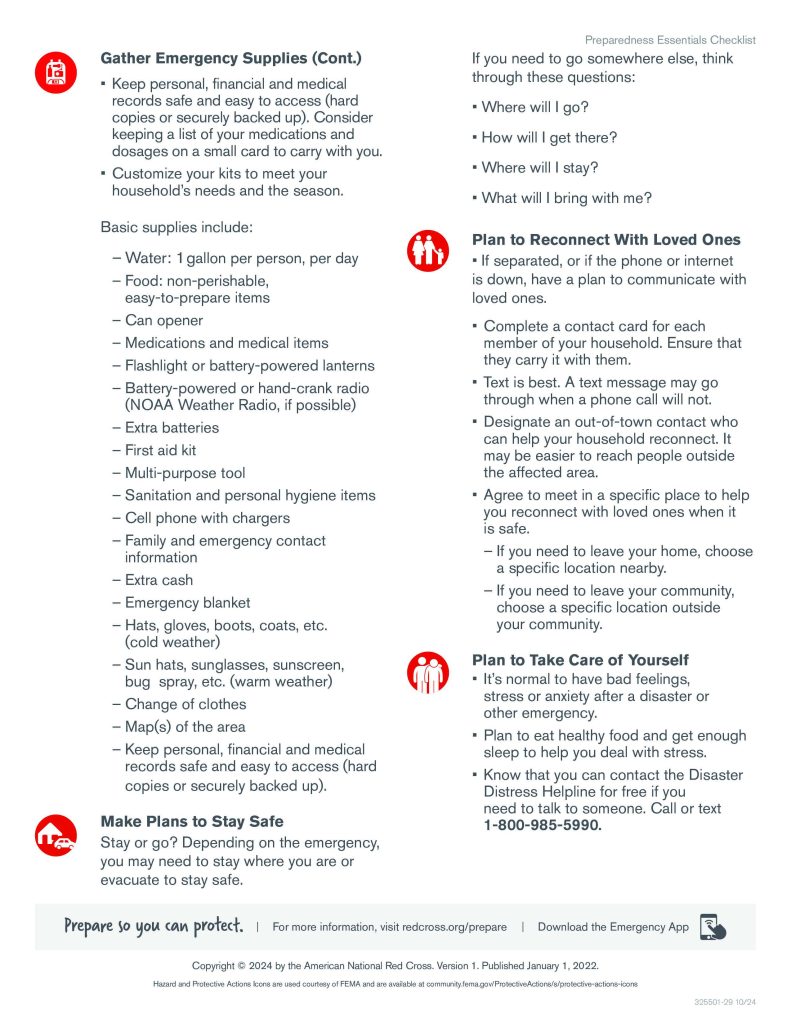
Graphics by the American Red Cross
Preparedness doesn’t have to happen all at once. Start with a kit, make a plan, stay informed and practice what you would do. A little preparation now can make a big difference when an emergency occurs.
For additional preparedness resources, visit the American Red Cross emergency preparedness guide

