

INDIANA — If you’ve heard a teenager shout a pair of random numbers or call someone an “unc” and wondered what on earth they were talking about, you aren’t alone. Indiana residents are turning to search engines in record numbers to decode the latest internet lingo.
A new 2026 search-data study by digital research team Unscramblerer.com reveals the top 10 most searched slang terms across the Hoosier State. Analyzed between January and August 2026 using Google Trends and search volume aggregators, the findings highlight how viral social media trends, “brainrot” internet humor, and gaming culture are reshaping daily conversation in Indiana.
The Top 10 Most Searched Slang Words in Indiana
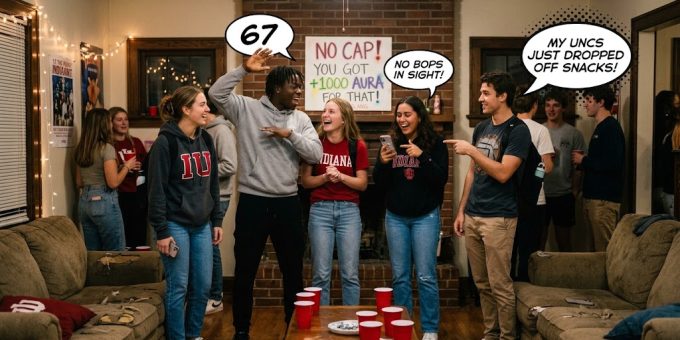
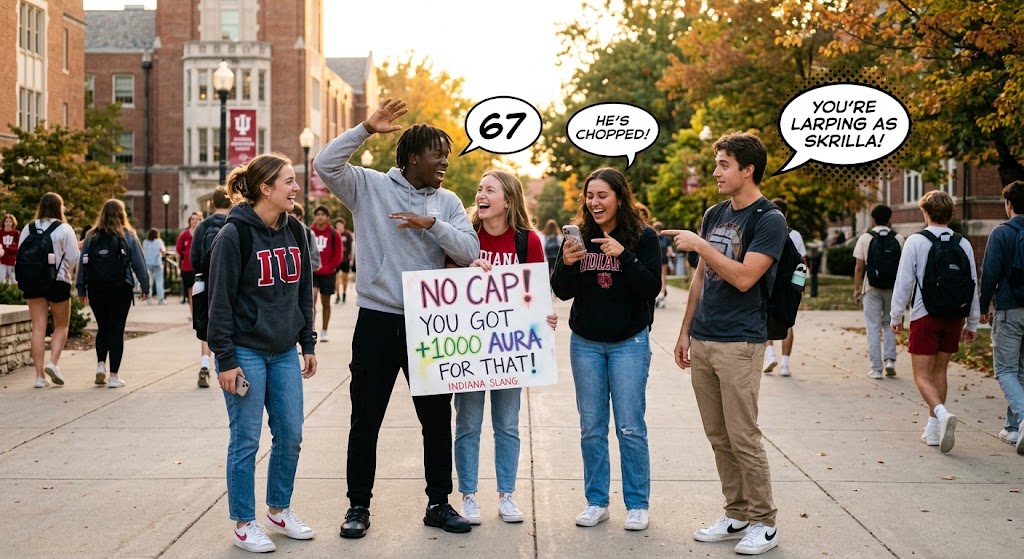
At the very top of Indiana’s curiosity list is “6-7” (six-seven)—a nonsensical phrase that has taken schools and social feeds by storm. Originating from the drill rap track “Doot Doot (6 7)” by Skrilla and popularized through basketball highlight edits of NBA player LaMelo Ball (who stands 6’7″), the phrase has no literal meaning. Its absurdity is the entire point, making it a textbook example of Gen Alpha “brainrot” humor.
Indiana’s Top 10 Slang Rankings
- 6-7: An absurd, nonsensical internet chant popularized by rap music, basketball edits, and viral TikTok trends. Often paired with exaggerated, up-and-down hand gestures.
- Chud: Slang for an obnoxious person, jerk, or internet troll who is unlikable or rude.
- Larping: Derived from “Live Action Role Play,” this term is used as a synonym for a poser, fraud, or try-hard—someone faking a lifestyle or acting out for attention online.
- Unc: Short for “uncle,” used humorously to point out someone’s age or perceived “out of touch” status.
- Bird: A derogatory term for someone acting foolishly in relationships—such as repeatedly taking back an unfaithful partner or tolerating disrespect.
- Chopped: A descriptor meaning ugly, unattractive, or looking rough.
- Cap / No Cap: “Cap” refers to a lie or exaggeration, while “no cap” means telling the honest truth.
- Foid: Short for “femoid” (a blend of “female” and “humanoid”), a derogatory and objectifying term used primarily in online troll subcultures.
- Bop: A term used online and in cyberbullying to describe someone perceived as having many romantic or sexual partners.
- Aura: A person’s overall cool factor, swagger, or presence. Indiana searchers frequently look up terms like “aura points” (coolness points gained or lost through actions) and “aura farming” (doing something solely to look cool).
National Comparison: How Indiana Compares to the U.S.
While Indiana searchers leaned heavily into terms like Chud, Unc, and Bird, the national landscape saw massive search volume for broader romance and gaming culture terms. Across the entire U.S., “6-7” still took the overall #1 spot with over 1.6 million monthly searches, but terms like Rizz (171,100 searches), Gooning (158,700 searches), and Mogging (82,800 searches) dominated the nationwide top 10 list.
| Rank | Indiana Top Searched Terms | U.S. Top Searched Slang (Monthly Searches) |
| 1 | 6-7 | 6-7 (1,602,200) |
| 2 | Chud | Chud (184,900) |
| 3 | Larping | Rizz (171,100) |
| 4 | Unc | Gooning (158,700) |
| 5 | Bird | Cap / No Cap (96,600) |
| 6 | Chopped | Mogging (82,800) |
| 7 | Cap / No Cap | Bop (78,300) |
| 8 | Foid | Larping (74,400) |
| 9 | Bop | Aura / Aura Points (66,400) |
| 10 | Aura | Sigma (65,400) |
According to researchers, the rise in slang searches isn’t just about kids making up jokes—it reflects a fundamental human need to connect and understand evolving social dynamics.
“The most searched slang words of 2026 give insight into the cultural conversations happening in America,” said Randoh Sallihall, a spokesperson for Unscramblerer.com. “Using slang is a social signal. What people search for can tell us something about what they are trying to understand and participate in culturally.”
Sallihall noted that psychological research—including work cited by the American Psychological Association—shows language choices act as key signals of identity and belonging.
“Slang may look like a collection of throwaway jokes from the internet, but psychology suggests it is doing something much more interesting,” Sallihall explained. “Today, new slang terms can spread like wildfire around the world thanks to social media like TikTok, Instagram, gaming chats, and streaming. The popularity of trending slang words can change quickly, but the psychological need behind them stays the same: People want to understand one another and belong.”

