

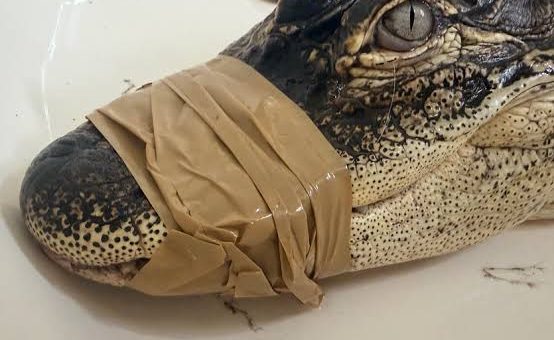
JEFFERSONVILLE — An early-morning drive took an extraordinary turn in southern Indiana over the weekend when a motorist spotted an unusual sight along the roadway: a 4.5-foot alligator on the loose near downtown Court Avenue.
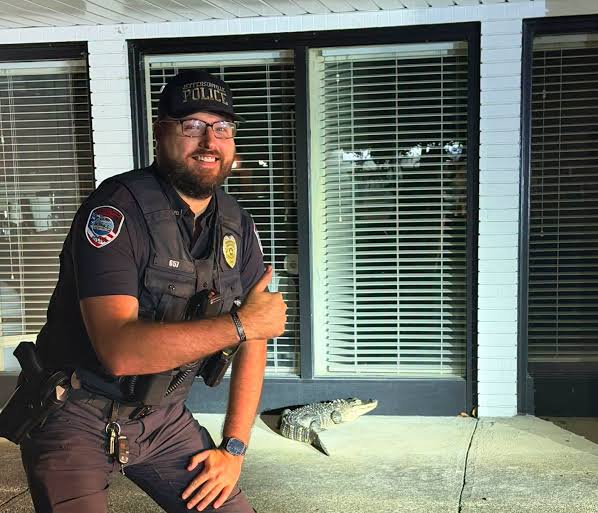
Officers with the Jeffersonville Police Department responded to the scene after dispatch received a call from a commuter who spotted the reptile wandering through the area. The creature eventually made its way toward the front windows of a local law office before police arrived.
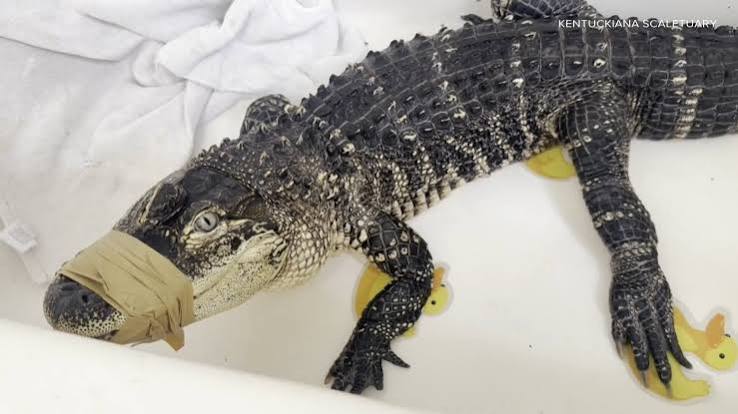
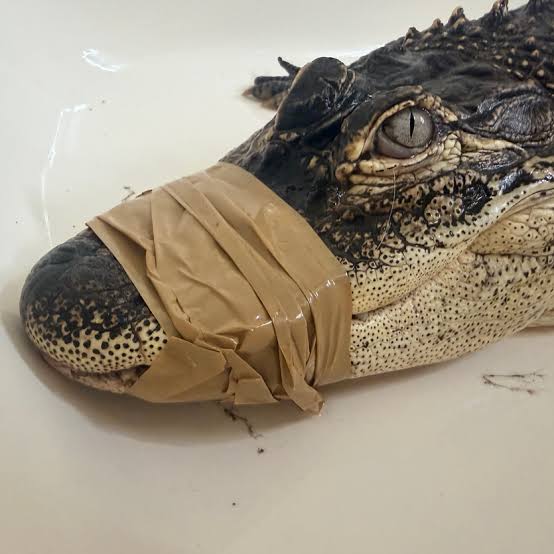
Jeffersonville officers safely secured the animal without injury to the alligator or responding personnel. The police department later shared photos of the capture on social media to reassure residents that the incident was genuine.
“This image and situation are not AI. It really isn’t AI; it’s an actual alligator in Indiana,” the department noted online, adding lightheartedly, “It’s not a goodbye, it’s a see ya later alligator.”
Transfer to Local Sanctuary
Following the capture, the juvenile alligator was safely handed over to the care of The Kentuckiana Scaletuary, a local non-profit facility equipped to house and rehabilitate exotic reptiles.
The sanctuary recently reached out to the community via social media, requesting financial support to cover initial veterinary care for the rescued gator, with expenses estimated at $500.
Surprisingly, this marks the second time in recent months that Jeffersonville authorities have had to respond to a loose gator. In November, police responded to a local apartment complex after a smaller alligator was spotted running free. That animal was also placed in the care of the Kentuckiana Scaletuary.
While alligators are not native to Indiana and cannot survive the region’s harsh winter climates in the wild, state law does allow residents to keep them under strict guidelines.
In Indiana, alligators are classified as restricted live wildlife. To legally own an alligator as a pet, owners must obtain specific permits from the Indiana Department of Natural Resources (DNR). Requirements include:
- Constructing approved primary and secondary containment spaces to prevent escape.
- Securing a licensed veterinarian qualified to treat exotic reptiles.
- Providing a proper, species-appropriate diet.
- Maintaining valid, up-to-date state permits.
Despite these regulations, escaped or illegally released pets occasionally turn up in the wild across the state. Authorities remind the public that releasing non-native wildlife into local neighborhoods or ecosystems is illegal and hazardous to both the animals and the public.
Anyone who encounters an escaped exotic animal is urged not to approach it and to contact local police or wildlife officials immediately.

