

INDIANA – The number of measles cases in the U.S. has officially surpassed the record-breaking tally for all of 2025, with five full months of 2026 remaining.
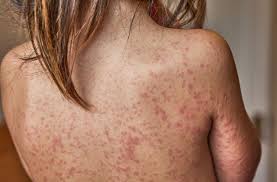
According to a Friday update from the Centers for Disease Control and Prevention (CDC), federal health officials logged 2,318 confirmed cases of measles nationwide as of Thursday. The figure eclipses the 2,289 cases recorded throughout 2025, which had previously marked the worst year for measles in the nation in over three decades.
Now, 2026 has easily become the United States’ worst year for measles since 1991. Major outbreaks in South Carolina, Utah, and Arizona have sickened hundreds, while smaller clusters of cases continue to spark in other states across the country.
Indiana and the Broader Midwest Landscape
Indiana is among the 45 jurisdictions nationwide that have reported confirmed measles activity during the ongoing multi-year resurgence. According to historical CDC data tracking the ongoing wave, Indiana recorded six confirmed cases of measles in 2025, which was the state’s highest yearly case total in a decade following a localized outbreak in Lake County.
While Indiana health officials have managed to avoid the massive, multi-hundred-case outbreaks currently impacting states like South Carolina (997 cases) and Utah (over 700 cases), regional public health agencies maintain heightened surveillance due to declining regional vaccination rates.
Threat to Elimination Status
The widespread resurgence has placed the nation’s public health status at a critical crossroads. In November, international health officials are scheduled to meet to determine whether the U.S. and Mexico have officially lost their “measles-free” status.
The U.S. originally eliminated local, endemic measles transmission in the year 2000 by maintaining high community vaccination rates. However, coverage for the Measles, Mumps, and Rubella (MMR) vaccine among U.S. kindergartners fell to 92.5% in the 2024–2025 school year—down from 95.2% in 2019–2020—dropping below the critical 95% threshold required to prevent widespread community transmission.
Official Counts Likely Underestimate True Spread
Public health departments and disease researchers acknowledge that official state and federal counts are almost certainly incomplete. Because some individuals choose not to seek medical treatment or testing when falling ill, the true reach of the current wave remains difficult to pin down.
Experts emphasize that the virus’s extreme contagiousness, combined with localized pockets of low vaccination, creates silent chains of transmission:
- Uncounted Outbreaks: In Utah, mathematical modeling and genetic analysis suggest a large border outbreak may be three to four times larger than official case numbers show.
- Data Gaps: In South Carolina, state health officials acknowledged that their nearly 1,000 confirmed cases represent an undercount, though determining the exact discrepancy is nearly impossible without mandatory hospitalization reporting across all jurisdictions.
- Previous Outbreak Studies: In Texas, researchers analyzing the state’s massive 2025 outbreak found that actual cases were likely nearly double the 762 officially confirmed, largely due to unconfirmed cases among unmonitored households.
“What we’re able to count and report is almost always an underestimate of what actually occurred,” said Dr. Varun Shetty, chief state epidemiologist for Texas. “It relies on people being willing to get tested and share information with healthcare providers and public health. Sometimes that just doesn’t happen.”