


INDIANA — Indiana University has officially shut down its Muslim Philanthropy Initiative (MPI) after state lawmakers mounted intense scrutiny over the program’s partnership with Hayat Yolu, an overseas charity designated by the federal government as a sham organization supporting Hamas.
The decision follows a campaign led by State Rep. Andrew Ireland (R-Indianapolis) and seven other Indiana lawmakers who demanded accountability and a formal investigation into the relationship between the university unit and the sanctioned entity.
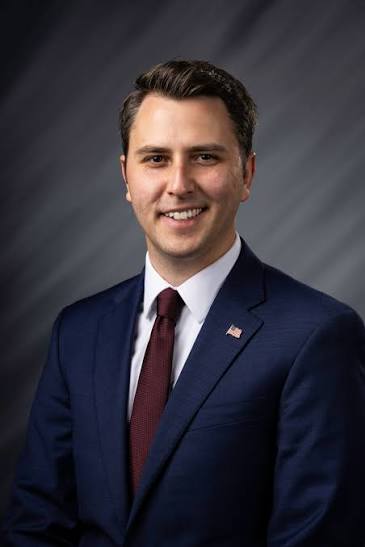
“Indiana University made the right decision by closing the Muslim Philanthropy Initiative,” Ireland said in a statement. “A taxpayer-supported university should never lend its name, expertise or credibility to an organization connected to the financial network of a terrorist group.”
Ireland characterized the partnership as a major lapse rather than an administrative error. “IU personnel traveled overseas to partner with and conduct programs alongside Hayat Yolu, and the organization paid travel expenses associated with those programs,” Ireland said. “Once the facts became known, the university had a responsibility to investigate, end the relationship and make structural changes. Permanently shutting down this program is the appropriate result.”
Federal Sanctions Spark Investigation
The controversy began when the U.S. Department of the Treasury’s Office of Foreign Assets Control (OFAC) added Hayat Yolu and three other organizations to its Specially Designated Nationals list.
Treasury officials described Hayat Yolu as a “sham charity” operating within Hamas’s international fundraising network to generate revenue for the Izz al-Din al-Qassam Brigades, Hamas’s military wing. Federal authorities also identified Hayat Yolu as an operational and financial hub for the Muslim Brotherhood.
The OFAC designation freezes the organization’s U.S. assets and prohibits U.S. persons from conducting further transactions with it.
Following the federal announcement, Rep. Ireland and state Reps. Garrett Bascom, Martin Carbaugh, Matt Commons, Craig Haggard, Chris Judy, Jim Lucas, and J.D. Prescott issued a joint letter to IU President Pamela Whitten and Lilly Family School of Philanthropy Dean Amir Pasic. The letter expressed deep concern that public resources were used to assist an organization linked to terror financing.
In their communication, the lawmakers demanded an immediate internal investigation, a freeze on related records, the suspension of active relationships with Hayat Yolu, and full public disclosure regarding any financial or in-kind support exchanged.
“Public universities have a heightened responsibility to know whom they are working with, particularly when they are providing fundraising or organizational expertise overseas,” Ireland noted. “When federal authorities identify a university partner as part of a terrorist-financing network, legislators and taxpayers are entitled to immediate and complete answers.”
Findings and Structural Overhaul
An internal review conducted by IU’s Office of the General Counsel revealed that the MPI’s engagement with Hayat Yolu was initiated after the U.S.-based nonprofit United Mission for Relief and Development recommended the group as a regional partner.
The university confirmed that MPI held joint training sessions with Hayat Yolu in Istanbul, Turkey, and Jakarta, Indonesia. Additionally, records confirmed that Hayat Yolu reimbursed MPI Director Shariq Siddiqui for travel expenses, including flights, lodging, ground transportation, and meals related to the overseas events.
While IU’s legal team concluded that the program did not violate federal law—because the activities occurred before Hayat Yolu’s official designation by the Treasury Department—university officials acknowledged significant deficiencies in their administrative oversight.
In its response to state leaders, IU conceded that it historically relied on a “highly decentralized approach” regarding high-risk international partnerships and over-relied on basic government lists rather than robust internal vetting.
In response to the findings, university leadership halted the initiative’s activities, placed a legal hold on program records, expanded the mandate of the IU Research Security Office, and ultimately moved to close the initiative entirely.
Pattern of Vetting Concerns
The closure comes after scrutiny regarding the initiative’s vetting procedures. In December 2022, the school faced public backlash for featuring Sami Al-Arian—who previously pleaded guilty to conspiring to provide services to Palestinian Islamic Jihad—at an MPI event. Dean Pasic subsequently issued a public apology for the oversight and promised stronger diligence protocols.
“After the 2022 incident, IU publicly acknowledged a due-diligence failure and promised stronger procedures,” Ireland said. “The subsequent relationship with Hayat Yolu demonstrated that those protections were not sufficient. The university’s decision to close the initiative recognizes the seriousness of that repeated failure.”
State officials praised the university’s final decision to end the program as a win for public oversight.
“This outcome shows why legislative oversight matters,” Ireland concluded. “We demanded answers, IU investigated, and the university has now closed the entire program. That is what accountability is supposed to look like.”

