


INDIANA — As summer temperatures climb, millions of American families are turning to a quick, affordable way to beat the heat: backyard inflatable pools.
However, federal safety officials are issuing an urgent warning to parents. These inexpensive, portable products carry the same drowning risks as full-sized, permanent in-ground pools—yet they are routinely treated with far less caution.
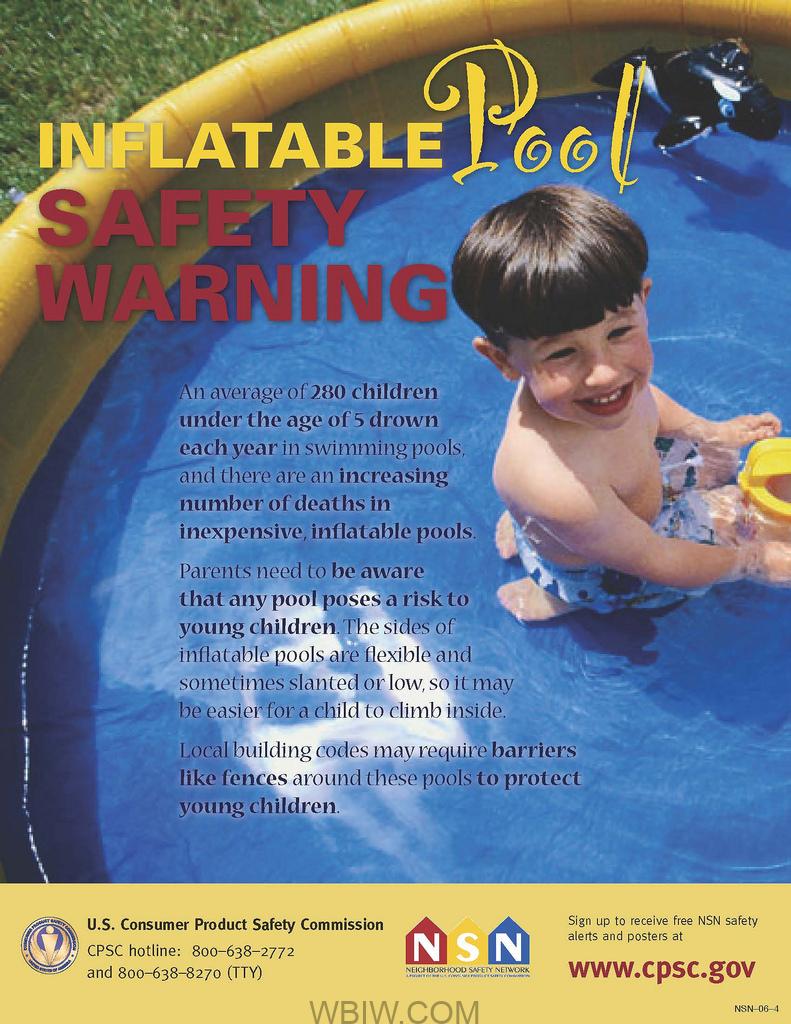
The U.S. Consumer Product Safety Commission (CPSC) reports an average of 12 drowning deaths per year involving children under the age of 10 in inflatable pools, with federal data showing that these fatalities are steadily on the rise.
Inflatable pools have exploded in popularity because of their accessibility, with smaller models costing as little as $50. But modern inflatable pools are no longer just shallow wading basins for toddlers. Today, heavy-duty seasonal models can measure up to 4 feet deep and 18 feet wide, holding up to 5,000 gallons of water.
Safety experts say the low price tag and temporary nature of these pools create a dangerous psychological illusion of safety, leading parents to underestimate the level of supervision required.
Furthermore, inflatable pools present unique physical hazards that permanent structures do not:
- Easy Access: The flexible, soft, or slanted walls of an inflatable pool can easily bow under a child’s weight, making it remarkably simple for an unsupervised toddler to climb or tumble inside.
- Lack of Permanent Barriers: Because they are set up casually in backyards, they rarely feature the secure, permanent perimeter fences that guard traditional pools.
Crucial Safety Steps for Backyard Pools
To prevent a summer celebration from turning into a tragedy, the CPSC and pediatric health organizations recommend implementing a strict layer-of-protection strategy.
1. Active Supervision
- The Designated “Water Watcher”: Never leave a child unsupervised near an inflatable pool, even for a brief moment to answer a phone or grab a towel.
- Swim Skills Aren’t Enough: Parents should never assume a child is safe just because they have taken swimming lessons. The CPSC emphasizes that no child is completely “drown-proof.”
2. Physical Barriers & Access Control
- Check the Code: Many homeowners are unaware that local building codes often require fencing around temporary or inflatable pools if the water reaches a certain depth (typically 18 to 24 inches). Check with your local municipal office regarding regional ordinances.
- Fencing: If keeping the pool inflated for the season, surround it with a fence with self-closing, self-latching gates.
- Secure the Ladder: For larger inflatable models that utilize A-frame ladders, always remove or lock the ladder when the pool is not actively in use to prevent toddlers from climbing up.
3. Maintain and Drain
- Empty Small Pools: For smaller “kiddie” pools, get into the habit of completely draining the water and storing the pool upside down or out of reach after every single use. Stagnant rainwater can quickly pool inside an empty, upright plastic basin, creating a secondary hazard.
- Lock the Doors: If your house opens directly into the yard where a pool is set up, install high-decibel alarms on those exit doors to alert you if a child slips outside.
Be Prepared for Emergencies
Because a child can lose consciousness in as little as two minutes underwater, immediate reaction time is paramount. Homeowners should always keep a charged cell phone and basic rescue equipment (like a life ring or reaching pole) poolside.
| Emergency Checklist | Action Item |
| Learn CPR | Seconds count. Parents, grandparents, older siblings, and babysitters should all be certified in standard CPR. |
| Have a Phone | Keep a phone nearby strictly for emergency dialing—not for social media distractions while watching children. |
| Report Hazards | To report a pool-related product defect or injury, contact the CPSC Hotline at 800-638-2772 or visit SaferProducts.gov. |