

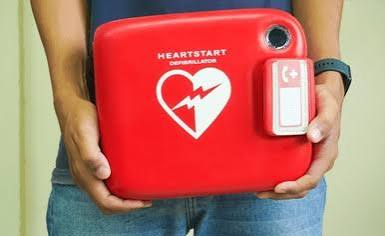
BEDFORD — During a Tuesday morning meeting, Valerie Luchauer, Director of Lawrence County Emergency Management, informed the county commissioners that she is looking to replace the automated external defibrillators (AEDs) at the Lawrence County Courthouse and Courthouse Plaza.
Luchauer noted that the facilities’ current units are out of date and require replacement. She is currently in the process of seeking price quotes to determine the cost of upgrading the life-saving equipment.
An AED is a portable medical device designed to automatically analyze a person’s heart rhythm during sudden cardiac arrest. If the device detects a life-threatening, uncoordinated rhythm—such as ventricular fibrillation—it delivers a controlled electrical shock to reset the heart and restore a normal heartbeat.
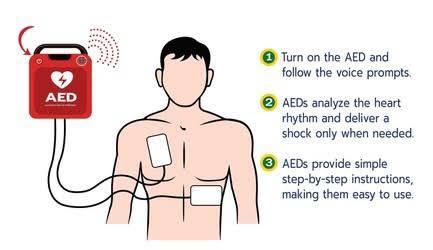
Modern AEDs are built specifically for use by the general public and are extremely intuitive. Once activated, the devices utilize clear voice commands and visual prompts to guide bystanders through the rescue process:
- Placing the Pads: Sticky electrode pads are attached to the person’s bare chest, following exact visual diagrams pictured on the device or packaging.
- Analyzing the Rhythm: The AED independently reads the heart rhythm to determine if an electrical shock is necessary.
- Delivering the Shock: If a shockable rhythm is found, the machine instructs the user to ensure no one is touching the individual before prompting them to press the shock button (though some automated models deliver the shock themselves).
Officials note there is a common misconception that AEDs are used to treat heart attacks. However, the two medical emergencies are distinct:
- Heart Attack: Occurs when a blocked artery stops blood flow to a portion of the heart. The individual experiencing a heart attack is usually conscious, and an AED is not used for treatment.
- Cardiac Arrest: Caused by an electrical malfunction that results in the heart unexpectedly stopping altogether. The individual will collapse and lose consciousness. AEDs are used exclusively in these sudden cardiac arrest scenarios.
A Critical Tool for Public Safety
Upgrading these units is vital for public facilities, as the chance of surviving cardiac arrest drops by 7% to 10% for every minute that passes without intervention. When utilized alongside immediate CPR, an AED can double or even triple a person’s chance of survival.
Because rapid deployment is critical, AEDs are typically housed in highly visible public cabinets within high-traffic areas, including government workplaces, office buildings, schools, and community centers.

