

LAWRENCE COUNTY — Drawing from data compiled by the Indiana Local Technical Assistance Program (LTAP) at Purdue University, Lawrence County Highway Department Superintendent Brian Sowder has shared details from a newly released state technical report outlining the critical funding mechanisms and stark financial gaps facing local county infrastructure.
The report, titled the Indiana Local Road and Bridge Report, underscores a massive statewide challenge: local agencies maintain 89% of all centerline miles in Indiana and roughly 70% of all bridges, yet they face a projected multi-billion-dollar funding deficit over the next decade to keep infrastructure functional.
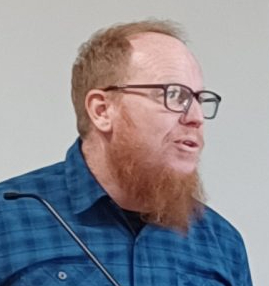
“Maintaining rural roadways and aging bridge networks is an ongoing battle against escalating construction costs,” said Sowder. “Understanding the precise breakdown of where state fuel taxes go and where our local shortfalls lie is crucial as we plan our paving and repair schedules.”
Breaking Down ‘Road Funding 101’
According to the state data, Indiana’s local infrastructure relies on a highly structured baseline of state-dedicated, locally generated, and supplemental funds. At the foundational level, the state generates approximately $1.6 billion for infrastructure via dedicated state highway funds, supplemented by $949 million in local dedicated funds and $190 million in other localized pools.
For county highway departments, the major operational “buckets” include:
- Motor Vehicle Highway Account (MVH): Heavily restricted funds generated primarily by state fuel taxes. PDF
- Local Road and Street Account (LRS): Distributed strictly based on localized vehicle registrations and county population-to-mileage ratios. PDF
- Community Crossings Matching Grants (CCMG): A highly competitive state-matching program managed by INDOT. PDF
- Local Option Highway User Tax (LOHUT): Composed of local wheel taxes and vehicle excise surtaxes. PDF
Approximately 80% of the foundational MVH account is derived purely from fuel taxes. As of 2024, the state gasoline tax stands at $0.35 per gallon, alongside a $0.166 gasoline use tax and a $0.184 federal tax. Special diesel fuel is taxed at an even higher rate of $0.59 per gallon by the state.
However, local departments do not see the entirety of these funds, according to Sowder. In the overarching state allocation of the $1.52 billion MVH pool, INDOT receives the lion’s share at 68% ($940 million). The remaining 32% ($576 million) is split among local communities, with Indiana’s 92 counties receiving 25.9% ($392 million) and cities or towns receiving 12.1% ($184 million). County-level distributions are calculated through a rigid statutory formula: 5% is distributed evenly, 30% is based on total vehicle registrations, and 65% is dictated by total county road mileage.
The Pavement Condition Reality
Across Indiana’s 92 counties, crews manage 62,977 centerline miles of paved road networks. According to 2023 condition summaries, the state’s collective county roads sit at:
- 28% Good (Qualifying for minor preservation like crack sealing costing $1,000–$7,500 per mile). PDF
- 46% Fair (Requiring minor rehabilitation like chip sealing or overlays costing $25,000–$70,000 per mile). PDF
- 27% Poor or Failed (Requiring major structural rehabilitation or full reconstruction costing anywhere from $150,000 to $1,500,000 per mile).
To just preserve current statewide conditions and prevent more roads from failing, cities and counties require an estimated $1.26 billion annually for roadways alone. To eliminate poor and failed roads over ten years, that number shoots up to $2.685 billion annually.
The Aging Bridge Dilemma
The report highlights an even more time-sensitive crisis concerning local bridge networks. A bridge is defined as any drainage or pass-through structure spanning 20 feet or greater.
The average lifespan of a standard bridge is 70 years. Currently, the average age of a local bridge in Indiana is 46 years old, but a staggering 16% of the state’s local bridges have already surpassed their 70-year operational life expectancy.
Statewide Local Bridge Age Breakdown:
- 1–30 Years Old: 3,070 structures
- 31–50 Years Old: 4,468 structures
- 51–70 Years Old: 2,472 structures
- 70+ Years Old: 2,163 structures (Beyond designed lifespan)
Data shows that 92% of local bridges older than 50 years are tracking in “Fair” or “Poor” condition, meaning a total of 3,109 local bridges across Indiana are currently in immediate need of complete replacement, while hundreds more require structural rehabilitation or thin polymer overlays to survive. The baseline financial need to systematically address these bridges is pinned at $579.8 million annually.
A Stark Financial Funding Gap
The primary takeaway from the Indiana LTAP data is the looming structural deficit. When combining the total annual money needed to manage both roads and bridges, the baseline state-level demand is compared against actual available local dedicated funding ($853.2 million).
The technical report presents three stark paths forward over the next ten years:
| Proposed 10-Year Investment Level | Total Annual Road & Bridge Need | Available Dedicated Funding | Estimated Annual Funding Gap |
|---|---|---|---|
| Preserve Current Network (Reduces poor roads to <20%, but doesn’t “move the needle” on failed roads) | $1.839 Billion | $853.2 Million | -$986.5 Million |
| Improve Overall Network (Reduces poor roads to <10%, adds years of system service life) | $2.614 Billion | $853.2 Million | -$1.761 Billion |
| Eliminate Poor & Failed Roads (Completely clears out failing infrastructure over a decade) | $3.264 Billion | $853.2 Million | -$2.411 Billion |
Sowder noted that these estimates include construction costs only—they completely exclude small drainage structures under 20 feet, engineering design costs, construction inspection fees, right-of-way acquisitions, permitting fees, and critical capacity expansion projects.
“The reality is that local dedicated revenue is falling far short of what the physical infrastructure demands,” Sowder stated. “In Lawrence County, we work aggressively to maximize every single dollar, utilize localized LOHUT funds carefully, and pursue every available matching grant like CCMG to stretch our paving dollars as far as humanly possible.”

