

BLOOMINGTON – In recognition of National Stroke Awareness Month, learn about this potentially life-threatening health issue in the Q&A below from IU Health Bloomington inpatient Neurologist Zhu Zhu, MD, PhD.

When we talk about strokes, we talk about basically two types, and they both disrupt the flow of blood in the brain. Ischemic strokes are caused by blockage of the vessels. Hemorrhagic strokes are caused by the rupture or bleeding from a vessel.
When the blood can’t flow in the brain, brain cells start to die, which can cause permanent brain damage or even death.
Symptoms of strokes
Stroke symptoms can be remembered with B.E.F.A.S.T. The American Stroke Association
explains the acronym as:
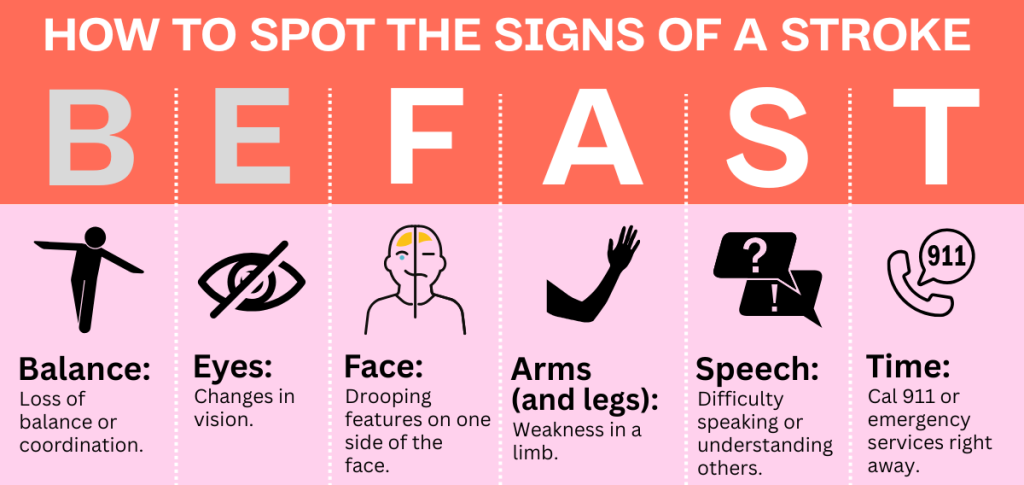
- Balance loss: Is there a sudden loss of balance or coordination? Is the person having trouble walking or experiencing dizziness?
- Eye (vision) changes: Are there sudden vision changes (blurriness, double vision, loss of sight in one or both eyes)?
- Face drooping: Does one side of the face droop, feel numb, or is the person’s smile uneven?
- Arm weakness: Is one arm weak or numb? When the person tries to raise both arms, does one arm drift downward?
- Speech difficulty: Is speech slurred or difficult to understand?
- Time to call 911: If you have any of these symptoms or see someone else having them, call 911 immediately
Your risk increases after you turn 60, and some people have a genetic predisposition or medical conditions that put them at higher risk of strokes, but anyone can have a stroke. That’s why it’s important to know the signs and to call 911 if you notice them.
Reduce your risk
Controlling high blood pressure, controlling high blood sugar, regular exercise, and eating a healthy diet are some steps that can make a big difference in terms of stroke prevention.
Time is brain when you have a stroke. The longer it takes to get medical assistance, the more brain cells die because they’re not getting the oxygen they need to survive.
What happens after a stroke
Stroke care can be divided into three parts:
- Acute management to remove the clot or stop the bleeding,
- Figure out the stroke’s cause
- Help the patient recover from deficits caused by the stroke through therapy (physical, speech, occupational, etc.)Identify how to prevent or reduce the risk of future strokes
- Talk to your primary care provider if you’re concerned about your stroke risk, and remember B.E.F.A.S.T., so you can get the care you need as soon as possible if you do have symptoms of a stroke

