

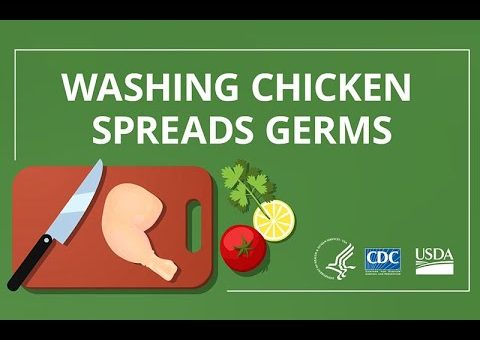
INDIANA — Federal health officials are renewing a critical safety plea to home cooks: stop washing raw poultry. The U.S. Department of Agriculture (USDA) explicitly warns that rinsing chicken under a faucet significantly increases the risk of foodborne illness by spreading dangerous bacteria throughout the kitchen.
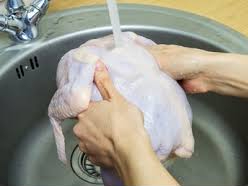
While many home cooks believe they are cleaning the meat, the USDA explains that splashing water actually “aerosolizes” bacteria, including potent antibiotic-resistant strains. This creates an invisible spray that can contaminate countertops, utensils, and any food items within a three-foot radius of the sink.
Because these contamination patterns are often invisible, residents rarely sanitize the surrounding areas after rinsing, leading to a higher rate of cross-contamination and illness than if the chicken had not been washed at all.
Health experts emphasize that the only effective way to eliminate pathogens is through heat, not water.
- Heat Kills Bacteria: Cooking chicken to an internal temperature of 165°F kills all harmful bacteria, making any pre-wash completely unnecessary.
- Resistant Strains: The spray from rinsing is particularly concerning because it can spread resistant bacteria that are harder to treat if an infection occurs.
To keep your kitchen safe, the USDA recommends a “direct-to-dish” approach:
- Transfer Carefully: Remove chicken from its packaging directly over the baking dish or pan you intend to use.
- Dispose Quickly: Throw away all packaging immediately to prevent it from touching other surfaces.
- Targeted Cleaning: Instead of cleaning the entire sink area, focus only on the surfaces and tools that directly contacted the raw poultry.
- Sanitize: Use hot, soapy water or a dedicated sanitizing solution to clean those specific areas.
In addition to the USDA warnings, the Centers for Disease Control and Prevention (CDC) notes that raw chicken is frequently contaminated with Campylobacter, Salmonella, and Clostridium perfringens. According to CDC data, about 1 million people get sick from eating contaminated poultry every year in the United States.
By following the “no-wash” rule, residents can significantly reduce the risk of secondary infections and ensure their kitchen remains a sterile environment for food preparation.

