

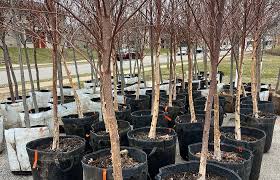
BLOOMINGTON – The City of Bloomington continues to expand and strengthen its urban tree canopy through strategic investments in planting, maintenance, and storm resilience. Bond funding and grants support the planting of native trees, care of existing trees, and proactive efforts to reduce storm-related damage.
Bloomington’s urban forestry program, housed within the Parks and Recreation Department, manages more than 24,000 publicly owned trees along streets, rights-of-way, and in City parks.
In November 2023, the City received a $100,000 Inflation Reduction Act grant from the U.S. Department of Agriculture Forest Service’s Urban and Community Forestry Program, administered through American Forests’ Catalyst Fund. The grant, distributed in $25,000 annual installments over four years, doubled the City’s budget for proactive “storm resilience” pruning. This work focuses on removing weak or hazardous limbs before they fail during severe weather.
Phase I of the Storm Resilience Pruning Project, completed in March 2026 by Bluestone Tree, included approximately 50 trees. On March 23, 2026, the Board of Park Commissioners approved a $25,000 contract with Bluestone Tree for Phase II, which will address an additional 50 trees.
The first two phases prioritized “priority routes,” or city streets selected based on:
- High pedestrian and vehicle traffic
- Concentrations of overhead utility lines
- Trees with structural defects or high risk of storm failure
- Historically underrepresented areas or neighborhoods with low canopy cover
- Dense, mature canopies where storm debris could block roadways
Proactively identifying and addressing high-risk trees reduces cleanup costs and improves public safety following storms. Targeting underserved areas also helps address inequities in tree canopy coverage and access to environmental benefits.
Now in its fourth year, the City’s 15-year plan to remove invasive Callery pear trees continues to make steady progress. A 2022 inventory identified 1,251 Callery pears in parks and rights-of-way; approximately 950 remain today. Staff plans to remove 80–120 trees each year and replace them with native species.
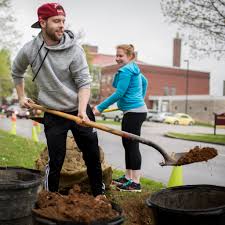
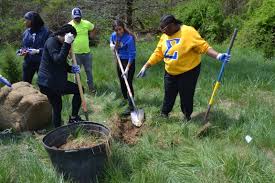
A series of Bicentennial Bond projects approved in 2018 allocated $800,000 for tree planting along streets and in public rights-of-way, resulting in approximately 2,500 trees planted to date. The next planting phase scheduled for this fall will add about 200 more trees across Bloomington. Priority planting locations will be identified using criteria such as high bus stop usage, significant pedestrian traffic, heat index data, and suitable planting conditions.
An additional 157 trees were planted in 2024 to replace those removed for Duke Energy’s Bloomington Reliability Project. Duke Energy contributed more than $55,000 toward these replacement plantings.
Bloomington’s investment in a healthy urban tree canopy enhances quality of life by keeping neighborhoods cooler, improving air and water quality, and creating more welcoming public spaces. Proactive tree care also reduces the risk of damage from severe storms by addressing weak trees and limbs before they fall, supporting a safer and more resilient community.

