

INDIANA – As colder weather sets in, households are being encouraged to inspect their properties for overlooked gaps and poorly insulated areas that could be letting valuable warmth escape.
According to guidance from the Energy Saving Trust, reducing unwanted draughts helps homes retain heat and lowers overall heating demand, provided that essential ventilation remains clear.
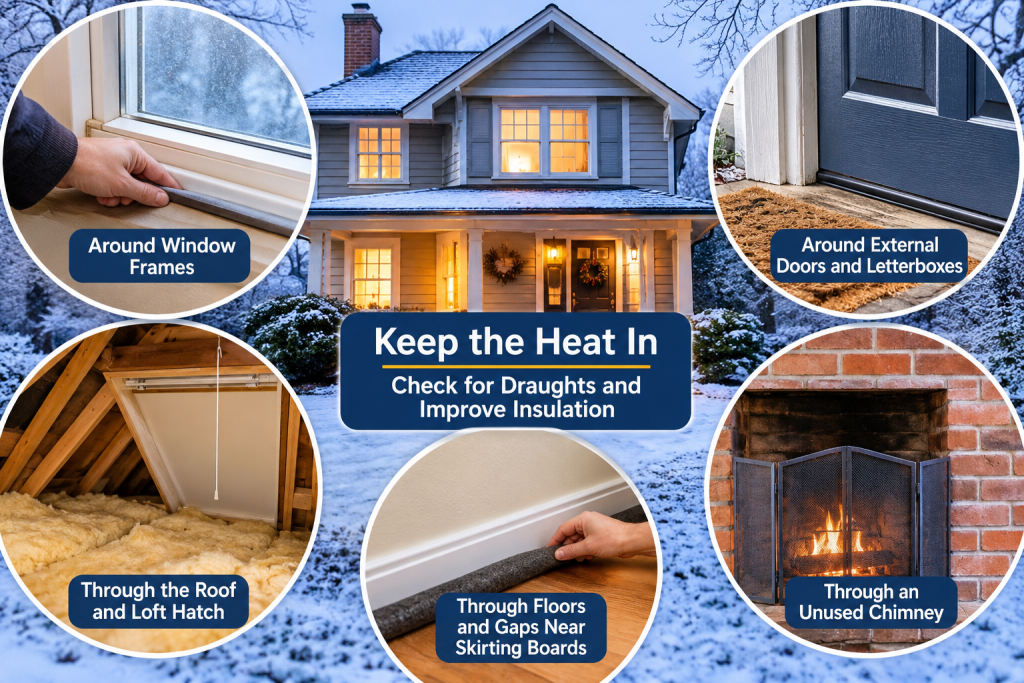
Before cranking up the thermostat, Gordon Wallis, an energy expert at Your NRG, advises homeowners to check five common problem areas.
“If your home feels cold, increasing the thermostat is not the only thing to consider. It is worth checking whether warmth is escaping through gaps or areas where insulation needs attention,” Wallis said. “The right improvements depend on the property. Some problems have straightforward fixes, while others need a professional assessment.”
1. Around window frames
Gaps between an opening window and its frame are a frequent source of cold air. The Energy Saving Trust recommends fitting appropriately sized draught-proofing strips, or using brush strips and seeking professional advice for sliding sash windows.
“Check around closed windows for noticeable air movement,” Wallis advised. “A window does not necessarily need replacing because it feels draughty, so investigate the cause before committing to an expensive change. Any draught proofing should allow the window to close properly and leave its ventilation openings clear.”
2. Around external doors and letterboxes
The edges and bottom of an external door—along with smaller openings like letterboxes and keyholes—can let significant warmth slip out. Suitable seals, brushes, or purpose-made covers can help block these routes.
“Check the smaller openings as well as the door itself. A letterbox that does not close properly can be easy to overlook,” Wallis said. “Choose fittings that suit the door and keep it operating normally. Avoid treating internal doors in the same way, as airflow between rooms needs to be maintained.”
3. Through the roof and loft hatch
Because warm air rises, proper roof and loft insulation is critical to reducing heat loss. However, the loft hatch itself often requires equal attention, including insulation and draught-proofing where appropriate.
“A loft is often out of sight, so it can be missed when people are trying to understand why their home feels cold,” Wallis noted. “Check whether the hatch closes securely and ask a qualified installer to assess insulation if you are unsure. Do not block roof ventilation or assume every loft can be insulated in the same way.”
4. Through floors and gaps near skirting boards
Warmth can escape downward through an uninsulated ground floor, while gaps around floorboards and skirting boards allow draughts to creep in. The Energy Saving Trust emphasizes that the right insulation method depends on the floor’s construction and that underfloor air bricks must always remain unobstructed.
“If a room feels particularly cold near floor level, the floor is worth investigating,” Wallis said. “Sealing an unwanted gap and insulating a floor are different jobs. Get advice on the right approach for your property, particularly in an older home, and preserve ventilation beneath timber floors.”
5. Through an unused chimney
Even when a fireplace is not in use, an open chimney acts as a direct route for warm indoor air to escape upward. A suitable chimney draught excluder can help, though it must preserve necessary ventilation and be removed before lighting a fire.
“A fireplace can remain a source of draughts even when you never use it,” Wallis explained. “Seek advice on a suitable solution rather than stuffing materials into the opening. Never obstruct a working flue or ventilation needed by a heating appliance.”
Above all, experts stress that retaining heat should never come at the expense of a healthy, breathable home.
“Keeping warmth in should go alongside maintaining a properly ventilated home,” Wallis added. “If you are unsure whether an opening is an unwanted gap or essential ventilation, get professional advice before sealing it.”