

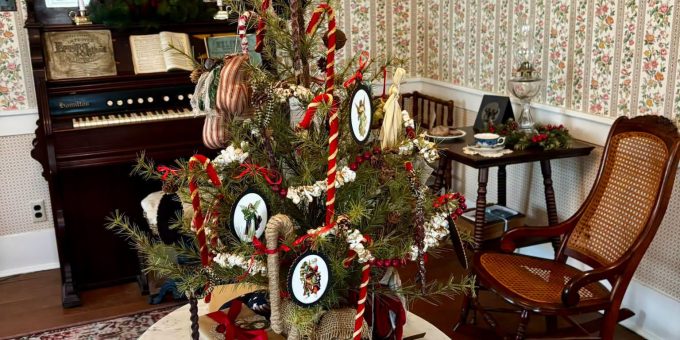
PAOLI — Residents looking to step away from the rush of modern holiday shopping can experience a simpler, 19th-century Christmas next month when the Orange County Historical Society (OCHS) opens the doors of the historic Thomas Elwood Lindley House.
The society will host its annual Old-Fashioned Holiday Celebration on Sunday, Dec. 6, from 2:00 p.m. to 4:00 p.m. at the Lindley Farmhouse, located at 1563 W. Willow Creek Road on the western edge of Paoli. Admission is free, though donations are welcomed to help preserve and maintain the historic property.
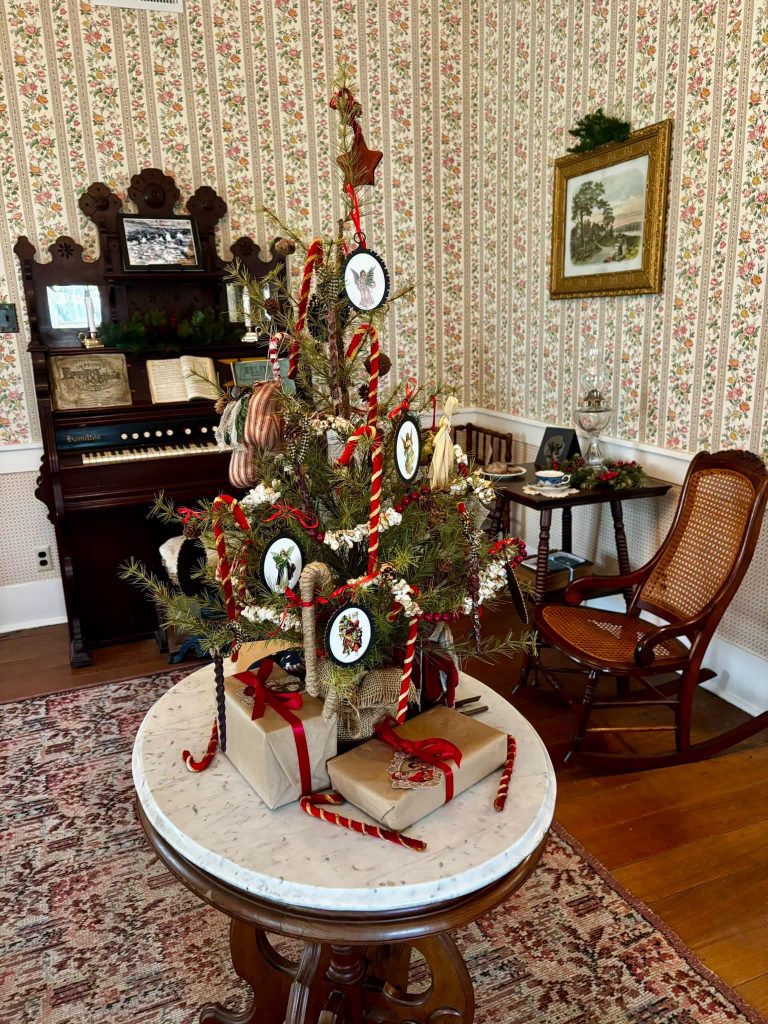
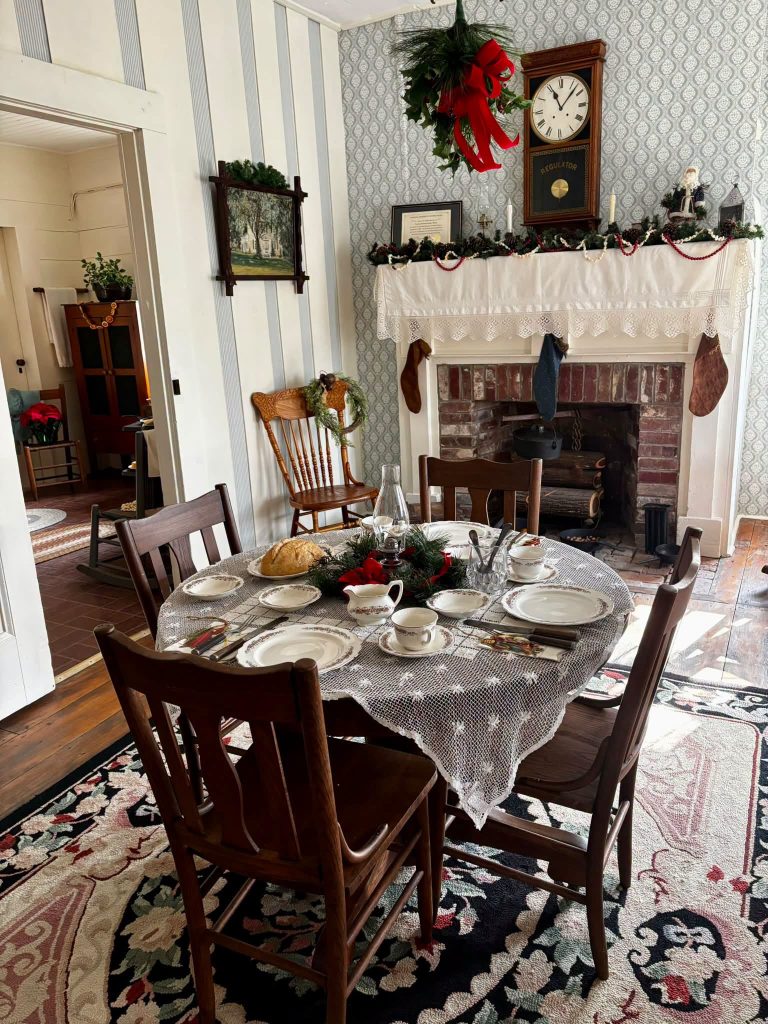
Built nearly 175 years ago and listed on the National Register of Historic Places since 1985, the Lindley House is restored to reflect farm life from the late 1850s through the mid-1860s. Normally open by appointment only, the home’s downstairs rooms will be lightly decorated to reflect a modest Civil War-era holiday and open for informal tours.
During the afternoon, the musical group Wildflowers & Weeds will perform period music in the front parlor, while OCHS volunteers share local history and serve hot cider and cookies.
“While we are aware that traditionally the Lindley family, who were Quakers, would have very likely avoided any efforts of the period to commercialize Christmas, the event simply gives us an occasion just to open up the old farmhouse to our visitor friends one last time at season’s end and share some of the simple holiday traditions of the time period of the home itself,” OCHS President Robert F. Henderson said.
Inside a Mid-19th-Century Hoosier Christmas
According to Henderson, holiday decor in the 1860s was minimal and drawn largely from nature. Homes of the era featured evergreen boughs, holly, and garland draped over mantels, picture frames, lamps, and doorways, alongside sprigs of mistletoe. Poinsettias—which gained popularity in the U.S. during the 1850s—and spring bulbs “forced” to bloom indoors also added seasonal color.
The mid-1800s also marked a formative era for many familiar holiday traditions:
- Music and Literature: Families read Clement Moore’s ’Twas the Night Before Christmas (1822) and Charles Dickens’ A Christmas Carol (published in the U.S. in 1843), while singing newer carols of the era such as It Came Upon a Midnight Clear (1850) and We Three Kings of Orient Are (1857).
- Holiday Fare: A festive Hoosier table in the 1860s often featured boned turkey, oysters, venison, biscuits, citrus and glazed fruits, fruit cake, eggnog, and hot coffee.
- Simple Gifts: Children typically received wooden toys, popcorn balls, and candy, while adults exchanged books, note paper, pens, fancy soaps, and perfumes. The modern image of Santa Claus was still evolving and would not fully solidify until cartoonist Thomas Nast’s illustrations appeared in Harper’s Weekly in the 1870s and 1880s.
Visitors are invited to drop in anytime between 2 and 4 p.m. on Dec. 6 to tour the home and enjoy the seasonal music and refreshments.