
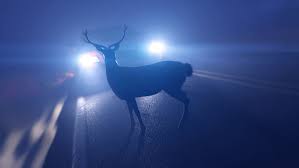
INDIANA — With Thanksgiving travel picking up across the state, drivers are facing heightened odds of encountering deer on the road during peak fall movement.
According to the Indiana Department of Natural Resources (DNR), deer-vehicle collisions occur most frequently between September and December—especially during fall mating season—and peak around dawn and dusk when deer are most active. Indiana records more than 14,000 reported deer-vehicle collisions annually, making it essential for motorists to know how to respond safely.
Immediate Steps After a Deer Strike
If you hit a deer in Indiana, safety experts and wildlife officials recommend taking these immediate steps:
- Move to safety: Pull your vehicle off the roadway onto the shoulder or a side street if it is safe and drivable, and turn on your hazard lights. If the vehicle is disabled or in a dangerous spot, stay buckled inside until help arrives or it is safe to exit.
- Keep your distance: Do not approach or try to move a deer, even if it appears motionless. Injured deer can panic, thrash, and cause serious injury with sharp hooves or antlers.
- Call law enforcement: In Indiana, drivers must report crashes involving injuries or at least $1,000 in property damage, and Indiana State Police advise calling police after a deer collision to obtain a crash report.
- Check your vehicle: Before driving away, inspect for leaking fluids, a hood that will not latch securely, tire or headlight damage, or deployed airbags. Hidden damage to the radiator or front end can cause problems miles down the road.
Indiana Carcass Handling
In Indiana, motorists may keep a deer struck by a vehicle only if they first obtain a permit issued by an authorized official through the Indiana DNR.
How Auto Insurance Typically Handles Deer Crashes
Damage caused directly by hitting a deer is generally covered under comprehensive (often called “other-than-collision”) auto coverage, subject to your policy’s comprehensive deductible. Drivers who carry only liability coverage typically pay out of pocket for damage to their own vehicle.
In addition, insurers often treat swerving to avoid a deer and hitting a tree, guardrail, or another vehicle as a collision claim rather than a comprehensive claim, which can involve a different deductible or different rating effects.
Tips to Prevent a Collision
To reduce the risk of a deer crash during holiday trips:
- Slow down in wooded, rural, and agricultural-edge areas, especially at dawn and dusk.
- Use high beams when safe and no oncoming traffic is present.
- Expect more than one deer—if one crosses the road, others often follow nearby.
- Brake firmly while keeping both hands on the wheel rather than swerving into oncoming traffic, ditches, or fixed objects.
- Always wear a seat belt.