

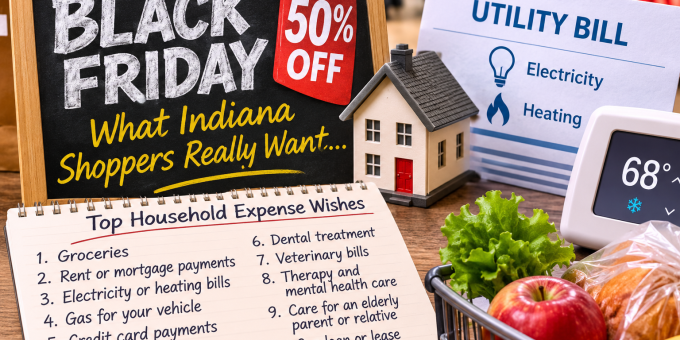
INDIANA — While Black Friday is traditionally known for markdowns on televisions, gadgets, and holiday gifts, a new survey suggests many Hoosiers would rather see steep discounts on everyday household bills and basic necessities.
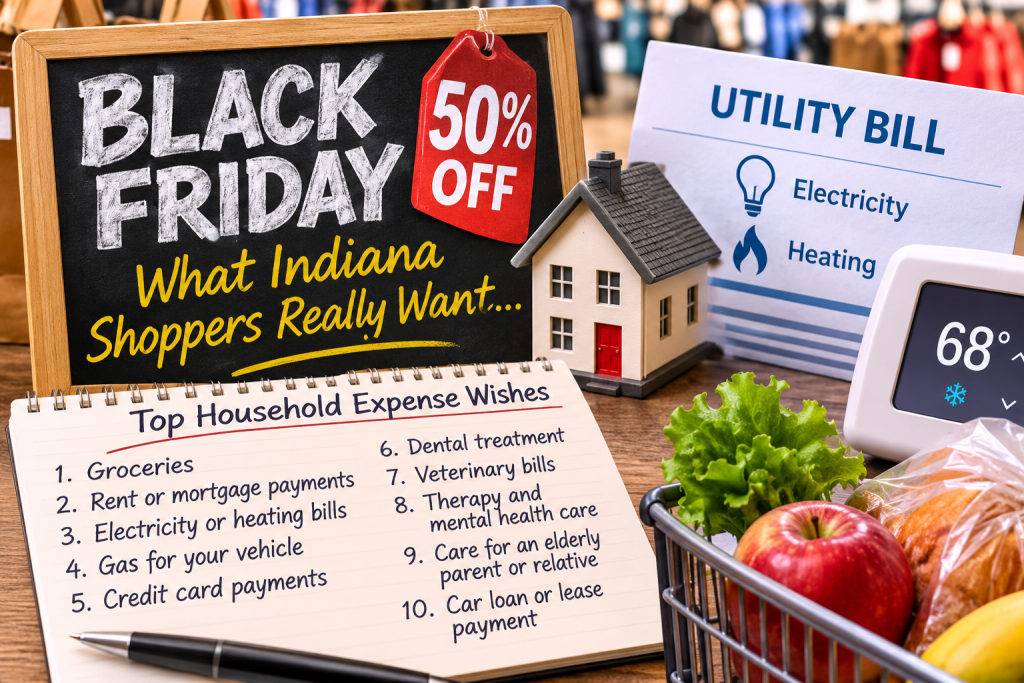
A survey of 3,061 shoppers conducted in October 2026 by shopping browser extension Couponly.ai asked participants what single product, service, or household expense they would choose for a 50% discount for one month during Black Friday.
Top Household Expense Wishes
Rather than focusing solely on discretionary items, the survey highlighted everyday costs that strain household budgets—including electricity and heating bills ranking third among the top 10 wishes:
- Groceries
- Rent or mortgage payments
- Electricity or heating bills (noted as especially relevant heading into colder winter months)
- Gas for your vehicle
- Credit card payments
- Dental treatment
- Veterinary bills
- Therapy and mental health care
- Care for an elderly parent or relative
- Car loan or lease payment
Everyday Products and Delayed Purchases
When asked specifically about everyday products they would most like discounted for Black Friday, respondents pointed to basics over luxury items:
- Clothing, including underwear and socks: 23%
- Packaged food and pantry staples: 16%
- Household paper products: 11%
- Coffee and tea: 10%
- Pet food and pet supplies: 9%
- Laundry detergent and cleaning supplies: 8%
- Vitamins and supplements: 6%
- Toiletries (such as toothpaste, shampoo, and deodorant): 5%
- Skincare: 5%
- Makeup and cosmetics: 5%
- Diapers and baby supplies: 2%
Many shoppers said they have held off on certain buys, waiting for sales. Electronics and gadgets led delayed purchases at 18%, followed by clothing, shoes, and accessories at 12%, while 24% said they had not delayed any purchases for Black Friday.
Holiday Budgets and Skepticism
When weighing whether a deal is worth it, 30% of respondents prioritized a final price that fits their budget, while 20% pointed to a price lower than before the sale and another 20% looked for the lowest price across retailers. Another 13% focused on deals for items they already planned to buy.
More than half of respondents—55%—said all (26%) or most (29%) of their holiday gift shopping would depend on discounts or special offers, while 23% expected about half, 13% a small amount, and 9% none. About one in three said their top post-Black Friday goal is completing holiday shopping without going into debt, 15% hoped to finish with money left over, and 12% wanted to buy something they have wanted for years.
Skepticism around sales remains a factor: 46% said they trusted Black Friday discounts only somewhat, 23% mostly trusted them, and 10% trusted them completely, compared with 16% who did not trust them much and 5% who did not trust them at all.
Groceries topping the wish list says a lot about what people would find useful this Black Friday. A discount on something you buy every week can make a real difference to the household budget. There’s still room for gifts and treats, but shoppers also want to cover the basics and avoid taking on more debt. Retailers should pay attention to that and make sure the price they promise is the price customers can actually get at checkout, according to Couponly.ai.
According to Couponly.ai, the poll surveyed 3,061 shoppers in October 2026 and was balanced across age, gender, and region.