

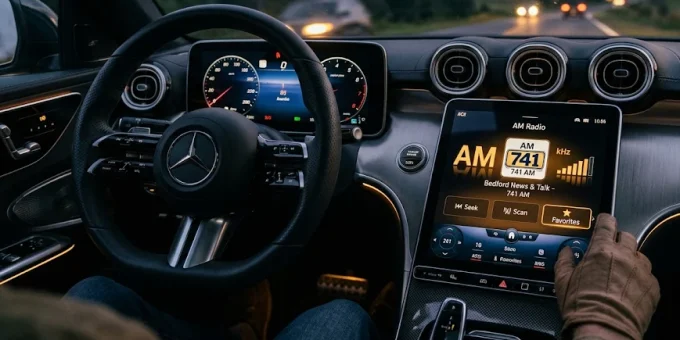
INDIANA — AM/FM radio continues to hold a strong position in one of its most traditional and reliable domains: the automobile.
New data from Edison Research’s ongoing Share of Ear study show that AM/FM radio significantly overperforms its share of total audio listening while consumers are on the road.
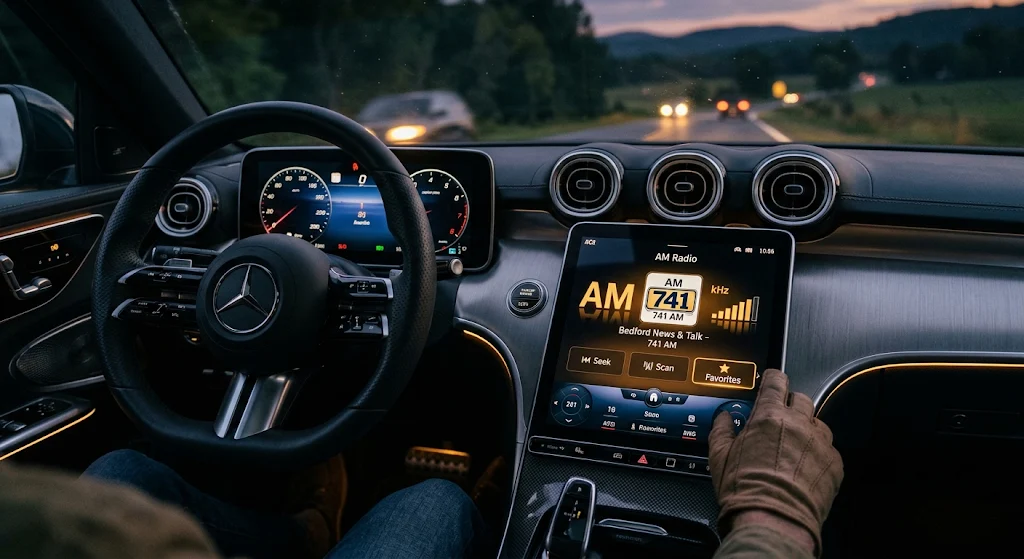
The findings show that AM/FM radio achieves an index of 160 for in-car listening. This indicates that the medium’s share of audio consumption inside vehicles is a striking 60% higher than its share of total daily audio listening across all tracked locations.
The In-Car Landscape: Radio and Satellite Lead
The vehicle environment remains heavily dominated by linear and broadcast audio options. Alongside AM/FM radio, SiriusXM Satellite Radio posted an even higher index of 232 for in-car listening.
Industry experts note that traditional radio benefits heavily from built-in dashboard integration, ease of use, and a frictionless experience for drivers navigating daily commutes, road trips, and errands.
Edison Research’s Share of Ear measures comprehensive daily audio consumption across four distinct environments:
- At home
- In the car
- At work
- In “any other place” (such as gyms, stores, and transit hubs)
Platform Strengths Shift by Location
The research emphasizes that different audio formats capture audiences best in specific settings, providing crucial insights for advertisers and content creators looking to maximize campaign efficiency.
- The Car: Dominated by AM/FM broadcast radio and satellite radio (SiriusXM), driven by accessibility and built-in vehicle hardware.
- “Any Other Place”: Streaming music and podcasts record their strongest relative performance in mobile, on-the-go environments outside of the home, car, and workplace—benefiting directly from smartphone and headphone accessibility.
- The Workplace: While no single platform peaks in the workplace environment, both streaming music and podcasts maintain healthy indexing above 100 during working hours.
Strategic Takeaways for Advertisers
For radio broadcasters, advertisers, and brand marketers, the data reinforces the necessity of location-based media planning. Rather than treating audio consumption as a monolith, the findings demonstrate that consumer attention shifts depending on physical surroundings.
While digital platforms capture fragmented, mobile-heavy environments, AM/FM radio retains a dominant, captive audience during peak travel times—proving that legacy broadcast radio remains an essential anchor in the modern audio ecosystem.