

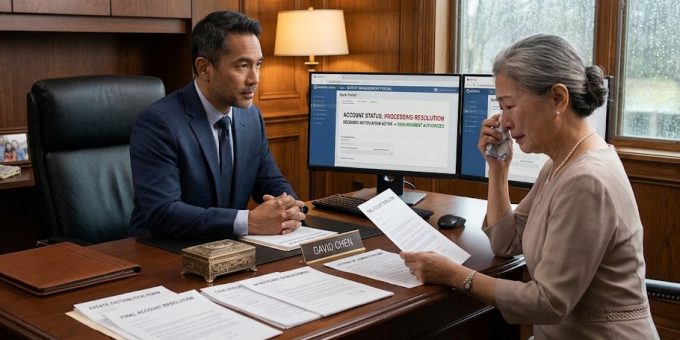
INDIANA — Navigating financial responsibilities after the loss of a loved one can be complex and overwhelming. Financial experts and legal advisors emphasize that banks follow strict statutory and regulatory procedures before releasing funds from a deceased individual’s accounts, designed to prevent fraud and protect estate assets.
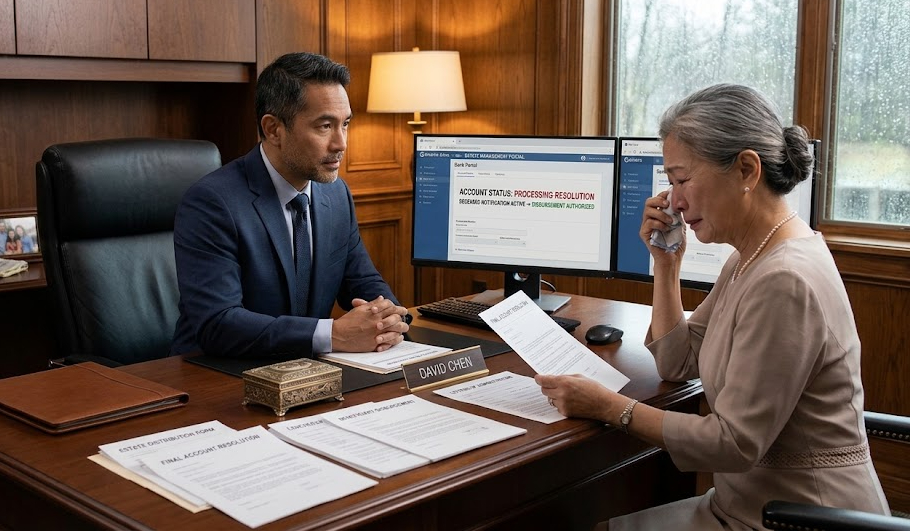
To assist surviving family members, executors, and estate administrators, financial institutions outline a clear four-step process for resolving bank accounts following an account holder’s passing.
1. Notify Financial Institutions Immediately
The initial step for surviving family members or designated estate representatives is to notify the deceased person’s banks and credit unions as soon as possible.
Upon formal notification, financial institutions will immediately freeze the accounts. This administrative hold halts all automated clearing house (ACH) transfers, scheduled bill payments, pending debit transactions, and recurring direct deposits. Freezing the account serves as a critical safeguarding measure against unauthorized access, identity theft, or probate complications.
2. Determine the Account Ownership Structure
How an account was initially set up determines whether the funds are subject to court oversight or can be transferred directly to survivors.
- Joint Accounts with Rights of Survivorship: In joint accounts, full legal ownership automatically transfers to the surviving co-owner. Funds remain accessible without undergoing probate or formal estate administration.
- Payable-on-Death (POD) / Transfer-on-Death (TOD): Accounts with designated POD or TOD beneficiaries allow named individuals to claim funds directly from the financial institution upon presenting valid identification and proof of death, bypassing probate court entirely.
- Sole Ownership (With a Will): If the account was owned solely by the deceased and governed by a last will and testament, the court-appointed executor must oversee the management and distribution of funds in accordance with probate proceedings.
- Sole Ownership (Without a Will): When an individual dies intestate (without a will), solely owned accounts become part of the estate. The funds remain locked until a probate court formally appoints an estate administrator to handle distribution under state intestacy laws.
3. Gather Required Documentation
To initiate account closures, claims, or transfers, banks strictly enforce documentation verification requirements. Representatives and beneficiaries should prepare to submit:
- A certified, official copy of the death certificate.
- The deceased individual’s Social Security number and government-issued identification details.
- Valid photo identification (e.g., driver’s license or passport) for all claiming beneficiaries.
- Letters Testamentary (if a will exists) or Letters of Administration (if no will exists), granted by a probate court establishing legal authority over the estate.
4. Understand the Debt Settlement and Asset Distribution Order
For accounts that enter probate, legal regulations establish a mandatory order of operations before heirs receive any remaining assets.
Under state law, estate funds must first satisfy all outstanding claims, including valid debts, medical bills, funeral and burial expenses, administration fees, and tax obligations owed by the deceased or the estate. Remaining funds are distributed to legal heirs only after all estate liabilities and legal claims have been completely cleared.
Additional State-Specific Considerations & Small Estate Rules
Financial and legal advisors note that many states offer simplified procedures for smaller estates.
- Small Estate Affidavits: In many jurisdictions, if the total value of the deceased’s personal property falls below a state-defined monetary threshold (often ranging between $25,000 and $100,000 depending on the state), eligible heirs can claim sole-ownership bank funds using a notarized Small Estate Affidavit, avoiding formal probate court proceedings entirely.
- Unclaimed Property: If accounts remain inactive or uncollected for an extended period following a death, financial institutions are legally required to transfer the funds to the state’s Unclaimed Property Division. Beneficiaries can subsequently search state unclaimed property registries to locate and recover these assets.
For complex estates or contested claims, estate planning attorneys recommend consulting qualified legal counsel before attempting to access or settle funds.