

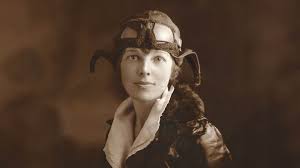
NIKUMARORO, Kiribati — The joint expedition investigating the so-called “Taraia Object” in the South Pacific has announced that it found no conclusive evidence linking wreckage in a remote atoll’s lagoon to Amelia Earhart’s legendary Lockheed Electra 10-E.
The expedition—a collaborative effort by the Archaeological Legacy Institute (ALI), the Purdue Research Foundation, and Purdue University—concluded its fieldwork on Nikumaroro, an uninhabited atoll in Kiribati. Researchers revealed that a visual anomaly first spotted via satellite imagery in 2020 was likely a collection of large trees deposited along the Taraia Peninsula’s sandspit rather than missing aircraft debris.
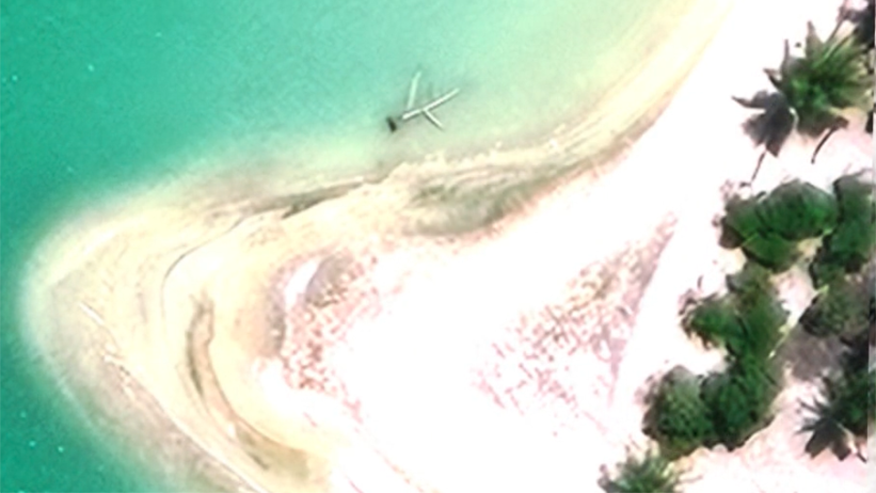
By the time the team reached the site, much of the debris had fragmented and washed away, leaving only a single Y-shaped segment covered in a shiny carbonate veneer that had previously given the false impression of a metallic surface.
The Enduring Mystery of Earhart’s Disappearance
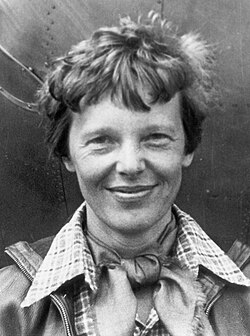
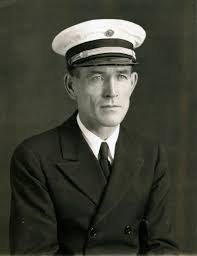
Amelia Earhart and her navigator, Fred Noonan, vanished on July 2, 1937, during their attempt to circumnavigate the globe. Flying from Lae, Papua New Guinea, the pair headed toward Howland Island—located about 400 miles northwest of Nikumaroro—before disappearing and sparking one of history’s largest air-sea searches. Earhart’s plane, affectionately dubbed her “Flying Laboratory,” was purchased with funding from the Purdue Research Foundation.
Despite ruling out the Taraia Object hypothesis, expedition members emphasized that the mission still yielded new terrestrial and maritime artifacts—including a 30-inch steel tube found in the lagoon—that will help researchers understand how objects flow through the atoll’s natural channels.
Sustaining the Castaway Hypothesis
The team reaffirmed its belief in the broader “castaway hypothesis,” a theory championed since the 1980s by The International Group for Historic Aircraft Recovery (TIGHAR). The theory posits that Earhart and Noonan did not perish immediately at sea, but successfully landed on the reef flat of Nikumaroro and survived temporarily as castaways.
Supporters point to a compelling body of historical evidence supporting this narrative, including:
- Historical radio bearings recorded by the U.S. Navy, U.S. Coast Guard, and Pan American World Airways that converge on Nikumaroro.
- A 2018 re-analysis of human bones discovered on the island in 1940, indicating they belonged to a woman of Earhart’s physical stature.
- 1930s-era artifacts recovered from the island, such as a woman’s shoe, a cosmetic compact case, a freckle cream jar, and a medicine vial.
- The “Bevington Object,” a photographic anomaly captured on the Nikumaroro reef three months after the disappearance that resembles the Electra’s landing gear.
Looking Forward
Though the expedition did not find the “smoking gun” connecting the wreckage directly to Earhart, participants expressed optimism about pushing the investigation forward. Purdue University, where Earhart once served as a pioneering career counselor and mentor, has pledged to continue supporting the pursuit of answers.

“Amelia Earhart never gave up — she kept pushing boundaries and flying into the unknown,” said Steve Schultz, Purdue general counsel and expedition member. “That same fire fuels our search. She kept flying, and we will keep searching.”
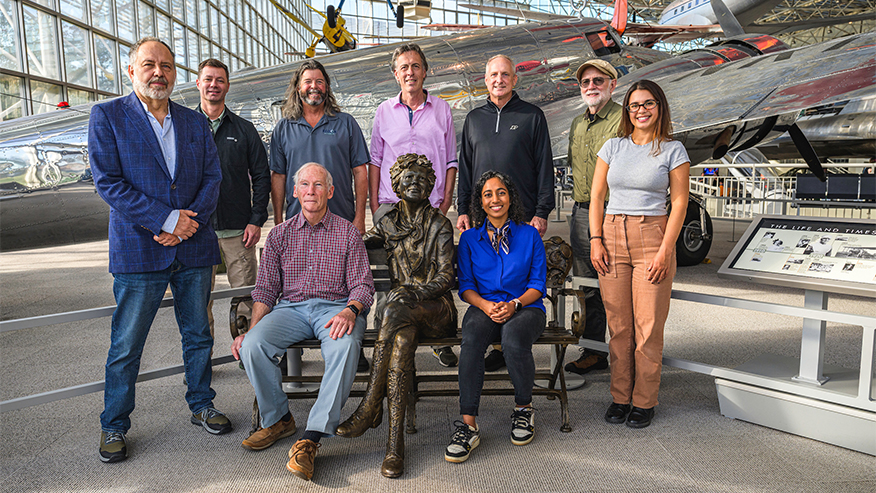
The Taraia Object expedition team included:
- Rick Pettigrew, ALI, project director
- Steve Schultz, Purdue general counsel, field assistant
- Laura Kennedy, ALI, technology specialist
- Philippa Jorissen, ALI, terrestrial archaeologist
- Ren LaRocca, ALI, assistant
- Sirisha Bandla, Purdue alumna, technology specialist
- Marc Hagle, Purdue alumnus, field assistant
- Meere Kenana, curator, Kiribati Culture and Museum, Kiribati representative
- Agnes Naare, Ministry of Line and Phoenix Islands Development, Kiribati representative
- Heidi Boraia-Tangata, Ministry of Line and Phoenix Islands Development, Kiribati representative
- Michael Krivor, RECON Offshore, maritime archaeologist
- William Wilson, RECON Offshore, maritime archaeologist
- Aaron Arrants, medic and safety officer
- Helmut Schleppi, filmmaker
- Ella Van Cleave, filmmaker
- David Pearson, filmmaker
- Matt Maddaloni, filmmaker