

WEST LAFAYETTE — A historic search for one of aviation’s greatest unsolved mysteries officially got underway on Friday, Oct. 2, as researchers set out to determine if a South Pacific lagoon holds the wreckage of Amelia Earhart’s airplane.
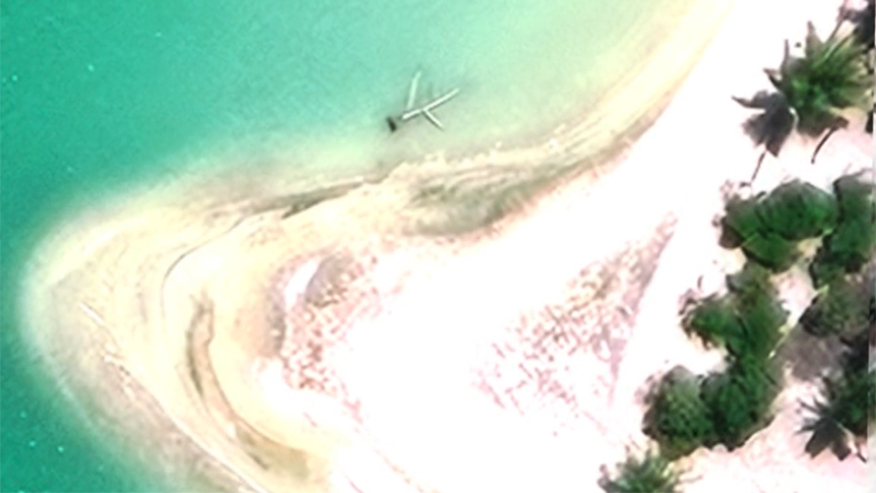
The team behind the Taraia Object expedition—a joint effort between the Archaeological Legacy Institute, the Purdue Research Foundation, and Purdue University—is heading to the remote Pacific to investigate a promising visual anomaly. Researchers suspect the feature in the lagoon may be the missing Lockheed Electra 10-E flown by Earhart during her ill-fated 1937 round-the-world flight attempt.
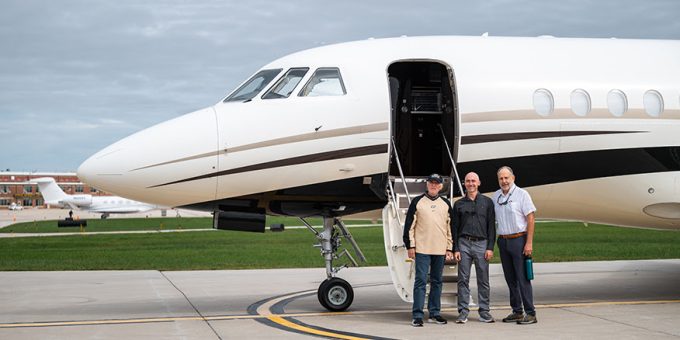
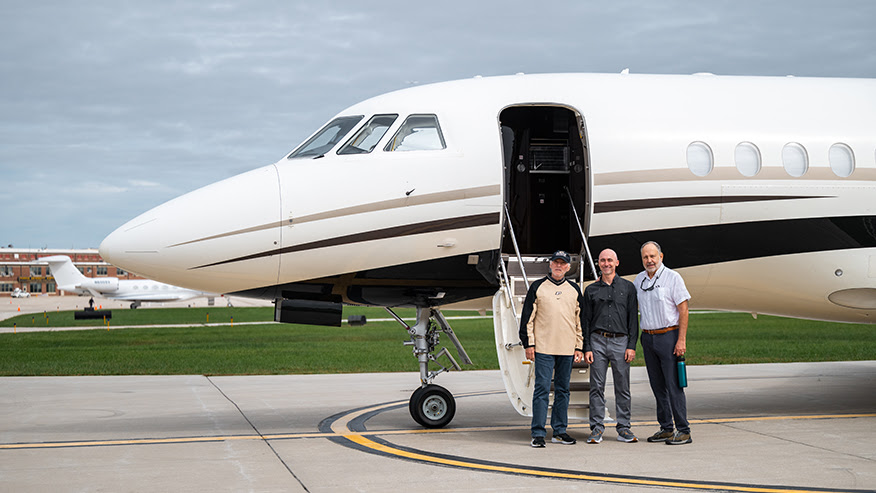
The expedition’s journey began at approximately 2 p.m. on Friday, when three team members—Marc Hagle, William Wilson, and Ren LaRocca—departed from the Purdue University Airport. The trio flew to Los Angeles International Airport, where they are scheduled to rendezvous with fellow expedition members before embarking on subsequent flights to Fiji and Kiribati.
All 17 members of the multidisciplinary team will gather together for the first time on Oct. 6 in Tarawa, Kiribati. From there, the full crew is set to depart by sea on Oct. 7 for Nikumaroro, the uninhabited island where the search will be focused.
Background on the Mystery
Amelia Earhart, the first woman to fly solo across the Atlantic Ocean, vanished on July 2, 1937, along with her navigator, Fred Noonan. The pair were on the penultimate leg of their pioneering circumnavigation flight, traveling from Lae, Papua New Guinea, toward Howland Island in the central Pacific, when they lost radio contact and disappeared.


For nearly a century, the fate of Earhart and her Lockheed Electra 10-E has remained an enduring mystery, giving rise to numerous theories and search efforts. The Nikumaroro hypothesis posits that Earhart and Noonan went off course, landed on or near the surrounding reef of the island (then known as Gardner Island), and survived for a period as castaways.
The current expedition centers on the “Taraia Object,” a distinct visual anomaly identified in a lagoon at Nikumaroro. Utilizing advanced sonar, underwater imagery, and archaeological survey techniques, the 17-member team aims to verify whether the anomaly is indeed the remains of Earhart’s aircraft, potentially solving a global enigma nearly 90 years in the making.