


WASHINGTON, D.C. — Real median household income in the United States surged to $87,460 in 2025, marking a 2.6% increase from the previous year and reaching the highest level ever recorded since tracking began in 1967, according to a U.S. Census Bureau report released today.
The landmark figure surpasses pre-pandemic levels. The previous high set in 2019 was statistically matched in 2024 at $85,210, making 2025’s growth a definitive new benchmark for American household purchasing power. All figures in the report, titled Income in the United States: 2025, were adjusted for inflation.
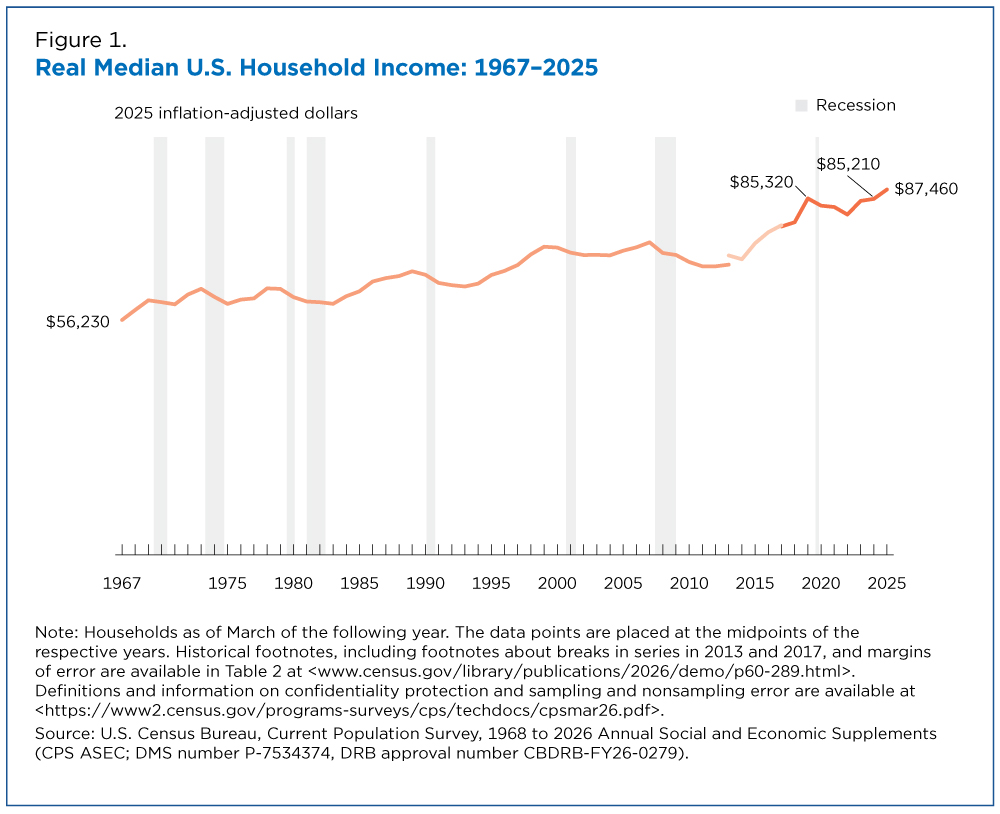
Post-Tax Income Rises, but Trails Pandemic Peak
Post-tax median household income also saw gains, rising 3.1% to $76,060 in 2025, up from $73,760 in 2024. However, post-tax earnings did not set a new record, remaining lower than the peak levels observed in 2020 and 2021 when federal pandemic stimulus payments and expanded tax credits artificially boosted take-home income.
Income Inequality Gap Continues to Widen
While overall median figures signal strong broader economic health, data across different earnings tiers reveals a continuing divide:
- Top Earners (90th Percentile): High-income households saw their third consecutive year-over-year increase in both pre-tax and post-tax income. Since 1967, pre-tax income at the 90th percentile has surged by approximately 121%.
- Lower Earners (10th Percentile): Income at the 10th percentile showed no statistically significant change from 2024 to 2025. Long-term growth at the lower end has lagged significantly behind top earners, increasing by roughly 56% since 1967—matching the percentage growth rate of the 50th percentile.
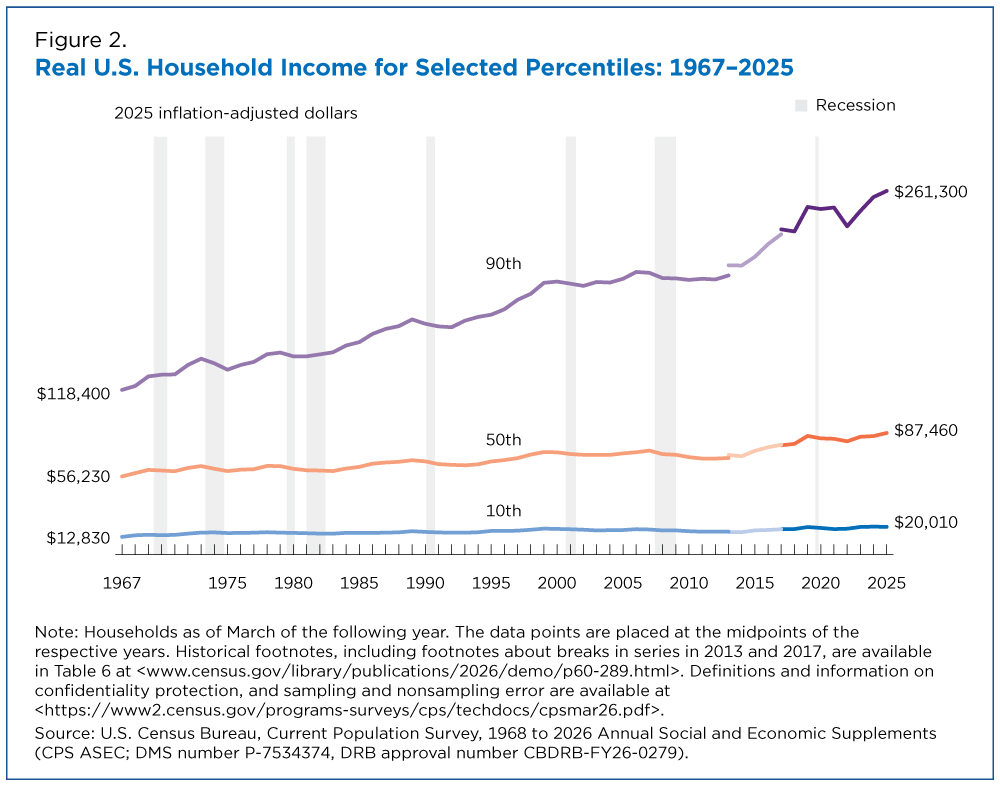
The ratio comparing earnings at the 90th percentile to the 10th percentile widened from 9.23 in 1967 to 13.06 in 2025, illustrating that top-earning households now make more than 13 times as much as those at the bottom of the income spectrum.
All comparative statements in the Census Bureau’s report were tested at the 90% confidence level using Current Population Survey Annual Social and Economic Supplement (CPS ASEC) data.