

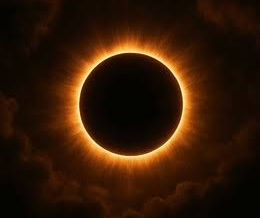
BEDFORD — Night owls and stargazers across Southern Indiana are in for a celestial show tonight as a deep partial lunar eclipse passes directly through Earth’s shadow, turning the Moon a dramatic reddish-copper color.
The astronomical event will be fully visible across Indiana and most of the continental United States, provided weather conditions cooperate.
For residents in Bedford, Mitchell, and surrounding Lawrence County areas, viewing conditions look promising.
Local forecasts indicate early evening clouds will give way to generally clear conditions overnight. Cloud cover is expected to drop significantly late tonight, providing prime conditions to step outside and view the eclipse without severe atmospheric disruption.
Eclipse Timeline (Eastern Daylight Time)
Because the Moon passes through multiple layers of Earth’s shadow, the eclipse unfolds over several hours:
- 10:33 p.m. (Aug. 27): The partial eclipse officially begins as the Moon enters Earth’s dark inner shadow (the umbra). Viewers will start seeing a noticeable bite taken out of the lunar disk.
- 12:12 a.m. (Aug. 28) — Peak Eclipse: The peak of the event arrives just after midnight. At this point, more than 96 percent of the Moon’s surface will be submerged in shadow. Only a tiny crescent edge will remain brightly lit, creating a striking “blood moon” effect across the rest of the surface.
- 1:51 a.m. to 3:00 a.m.: The dark umbral phase ends just before 2 a.m., and the subtle outer shadow fully clears shortly before 3 a.m.
Why the Moon Turns Red
Even though this is technically a partial eclipse rather than a total one, the 96% coverage is deep enough to produce the distinct reddish-orange glow usually reserved for total lunar eclipses.
This phenomenon occurs because sunlight passes through Earth’s atmosphere, which filters out shorter blue light waves while bending longer red wavelengths into the planet’s shadow and projecting them onto the Moon’s cratered surface.
Viewing Tips for Local Residents
- No Special Equipment Needed: Unlike a solar eclipse, lunar eclipses are completely safe to view with the naked eye. Binoculars or a small backyard telescope will enhance crater details along the shadow line, but aren’t required.
- Find a Dark Spot: While the eclipse will be bright enough to see from town, stepping away from direct streetlights and porch lights in rural Lawrence County will make the reddish hues much more vibrant at peak darkness.

