

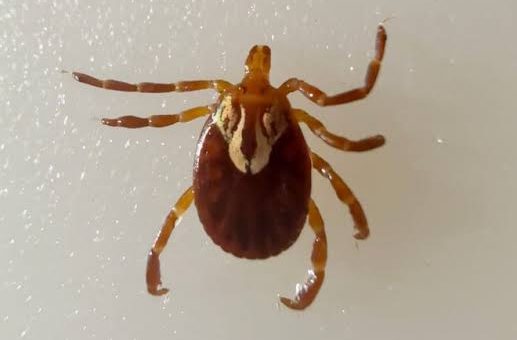
MONROE COUNTY – The first Gulf Coast tick has been found in Monroe County.
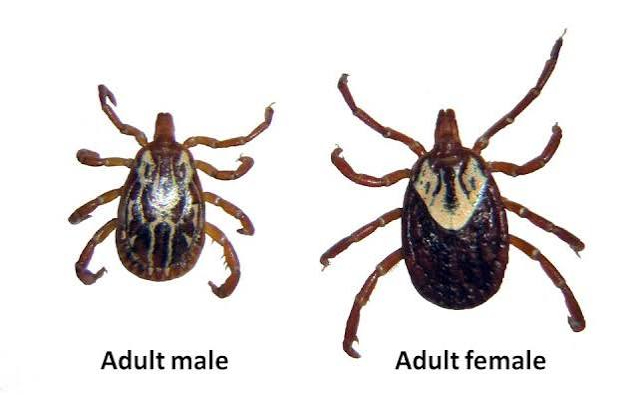
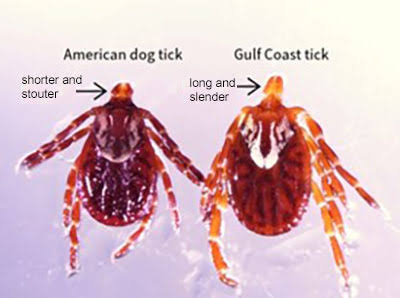
On June 26, Kody Clark, an environmental health specialist with the Monroe County Health Department, collected a female Gulf Coast tick (Amblyomma maculatum) during his regular tick surveillance activities. It was later positively identified as a Gulf Coast tick.
Because fewer than five ticks of the same life stage were collected, the IDOH website lists Monroe County as “reported” for Gulf Coast ticks rather than “established.” This status can be tracked on the IDOH tick-borne disease surveillance dashboard.
The Gulf Coast tick is native to coastal regions along the Gulf of Mexico and the Atlantic Ocean. However, over recent years, its range has steadily expanded northward. The species was first discovered in Indiana in 2018 in Gibson County, followed by a second discovery in 2019 near the Wabash River in Posey County.
Unlike woodland ticks, adult Gulf Coast ticks prefer tall grasslands, prairies, and brushy areas, particularly those located adjacent to wetlands. They are most active during the spring and summer months.
Health Risks and Diseases
The primary medical concern associated with the Gulf Coast tick is its ability to transmit Rickettsia parkeri, a bacterium that causes a form of spotted fever rickettsiosis.
- Symptoms of R. parkeri infection are similar to Rocky Mountain spotted fever and typically include fever, headache, muscle aches, and a characteristic dark scab (eschar) at the site of the tick bite.
- According to the IDOH, Rickettsia parkeri has been detected in Gulf Coast ticks collected primarily in southern Indiana counties.
- To date, no human cases of Rickettsia parkeri rickettsiosis have been reported in Indiana.
Ticks in Indiana: The Broader Landscape
Currently, six tick species in Indiana carry diseases and viruses capable of infecting humans:
- Blacklegged Tick (Deer Tick): Transmits Lyme disease, anaplasmosis, and Powassan virus.
- American Dog Tick: Transmits Rocky Mountain spotted fever and tularemia.
- Lone Star Tick: Transmits ehrlichiosis and Heartland virus and can trigger Alpha-gal syndrome (a red-meat allergy).
- Gulf Coast Tick: Transmits Rickettsia parkeri spotted fever.
- Brown Dog Tick: Transmits Rocky Mountain spotted fever (primarily in specific kennel environments).
- Asian Longhorned Tick: An invasive species recently monitored for potential livestock and public health impacts.
Prevention and Safety Tips
The best defense against tick-borne illnesses is avoiding bites altogether:
- Gear Preparation: Treat clothing and outdoor gear with 0.5% permethrin spray. Use EPA-registered insect repellents containing DEET, picaridin, or oil of lemon eucalyptus.
- Dressing Smart: Wear light-colored clothing to spot crawling ticks easily, tuck pant legs into socks, and stay on clear trails.
- Post-Outdoor Routine: Perform full-body tick checks after spending time in tall grass or brush. Showering within two hours of coming indoors helps wash off unattached ticks.
- Proper Removal: If a tick attaches, use fine-tipped tweezers to grasp it as close to the skin surface as possible and pull straight upward with steady pressure. Clean the site thoroughly with soap and water or rubbing alcohol.
For more information on state surveillance data and current tick locations, visit the official IDOH Tick-Borne Disease Surveillance Dashboard

