

INDIANA – Cases of a deadly, drug-resistant fungus spreading across the United States have hit Indiana, according to data from the Centers for Disease Control and Prevention (CDC).
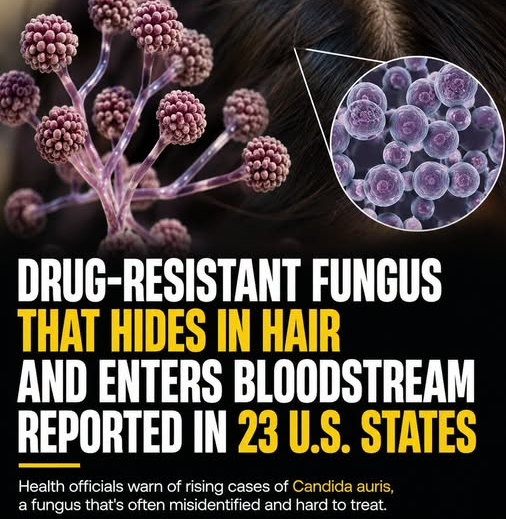
Candida auris (C. auris) is an emerging species of fungus that grows as a yeast. Capable of causing severe, multidrug-resistant infections in vulnerable hospital patients, the organism has now been detected in more than half of U.S. states.
National and Statewide Case Counts
Across the country, approximately 3,437 clinically confirmed cases have been reported in 27 states as of late July. While that total is roughly 1,000 fewer cases than during the same point last year, the overall pace of emerging infections puts the nation on track to top 2025’s full-year total of 4,290 cases before the end of 2026.
In Indiana, state public health surveillance logged 92 confirmed cases through late July.
Federal health data shows that C. auris cases have increased nationwide every year since 2019. The sharpest annual jump occurred between 2022 and 2023, when cases rose 53.7%. Although total yearly detected infections continue to grow, the CDC notes that the rate of increase has slowed down since that peak period.
Health officials also emphasize that higher case counts do not automatically translate to more actual infections overall; expanded screening programs and earlier diagnostic testing in healthcare facilities account for a significant portion of the increase.
Regionally, the Pacific West (including California, Washington, Oregon, Hawaii, and Alaska) has registered the highest case volume, driven largely by California’s 873 individual cases.
Indiana’s Response and Surveillance Guidelines
Because C. auris can persist on room surfaces for months and resists many common hospital-grade disinfectants, the Indiana Department of Health (IDOH) maintains strict reporting and infection-control guidelines:
- Mandatory Reporting: Candida auris is classified as a nationally notifiable condition. In Indiana, medical laboratories and healthcare facilities are legally required to report positive cases to state epidemiologists within one business day.
- Free Facility Screening: In partnership with the CDC and the Wisconsin State Laboratory of Hygiene, IDOH provides free screening swab kits to long-term care and acute care facilities in Indiana to catch asymptomatic colonization early.
- Advanced Lab Identification: Traditional yeast identification methods frequently misidentify C. auris. The Indiana Department of Health Laboratories utilizes advanced mass spectrometry (MALDI-TOF MS) and real-time PCR testing to rule out look-alike organisms.
- Inter-Facility Transfer Tracking: Indiana mandates that facilities use specialized transfer communications whenever a patient colonized or infected with C. auris is moved between acute hospitals, nursing facilities, or specialized care units to prevent undetected facility outbreaks.
What is Candida auris and Why Is It Dangerous?
Unlike common yeast infections or skin flora, C. auris does not naturally occur on the human body. It spreads primarily in high-acuity healthcare environments—such as long-term acute care hospitals and nursing homes—via direct contact with colonized individuals or contaminated surfaces.
Key Concern: A CDC analysis of outbreaks published in February found that 95% of C. auris samples were resistant to fluconazole, a standard first-line antifungal medication.
While healthy individuals with intact immune systems rarely fall ill from C. auris, immunocompromised or chronically ill patients face significant risks.
Primary Symptoms and High-Risk Groups
Because symptoms mimic many other systemic infections, clinical diagnosis requires laboratory testing. Symptoms include:
- High fever and severe chills
- Low blood pressure and body temperature
- Lethargy and elevated heart rate
- Localized ear pain or fullness (in ear infections)
Invasive infections can enter the bloodstream, surgical wounds, or ear canals, carrying an estimated mortality rate between 30% and 60%. However, because most affected patients are already dealing with severe underlying medical issues—such as mechanical ventilation, tracheostomies, or long-term catheters—determining the exact contribution of C. auris to patient mortality remains complex.
Public health officials stress that for the general public, risk remains low. Rigid adherence to hand hygiene, specialized surface disinfection, and proactive screening inside medical facilities remain the most effective tools to contain the superbug’s spread.