

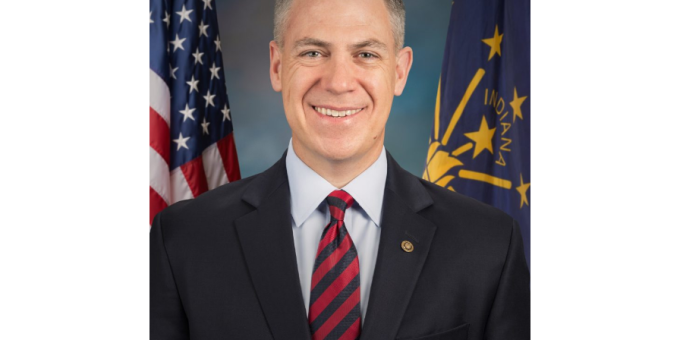
WASHINGTON, D.C. – Senators Jim Banks (R-Ind.) and Mark Warner (D-VA) introduced the Patient Matching in Certified Health IT (MATCH IT) Act, bipartisan legislation that would improve patient identification and health record matching. According to the American Health Information Management Association, patient-matching errors cost the average hospital $2.5 million and the U.S. healthcare system nearly $7 billion annually. The MATCH IT Act would standardize patients’ demographic data entered into electronic health records to reduce misidentification and help eliminate medical errors and waste.

Senator Jim Banks (R-Ind.) said, “Patient matching errors are a hidden tax on the healthcare system. This bipartisan bill would make sure doctors have the right patient’s records and reduce medical errors, speed up care, and reduce healthcare costs.”

Senator Mark Warner (D-VA.) said, “Patient misidentification is a serious problem that has led to medical mistakes and even patient death. My bipartisan bill would improve the interoperability between health care systems and decrease patient misidentification, while protecting patient privacy and leading to better patient care.”
Key Provisions of the MATCH IT Act:
- Direct the Department of Health and Human Services (HHS) to establish uniform demographic data standards and definitions to improve patient matching accuracy.
- Create a standardized minimum patient data set to support a national patient matching rate of at least 99.9 percent.
- Require Certified Electronic Health Record Technology (CEHRT) systems to adopt these standardized data elements.
- Establish a voluntary Medicare bonus for providers who meet a patient matching rate of 90 percent.
Background:
Patient matching—the ability to correctly link a patient with their medical records—is a foundational component of safe, efficient healthcare. Yet inconsistent demographic information across electronic health record (EHR) systems continues to result in duplicate records, treatment delays, unnecessary testing, billing errors, and in some cases patient harm.
According to the American Health Information Management Association, patient-matching errors cost the average hospital approximately $2.5 million annually and nearly $7 billion across U.S. healthcare systems. As artificial intelligence and digital health technologies become more integrated into clinical care, accurate patient identification is increasingly essential to ensuring these tools are safe, reliable, and effective.
The legislation is supported by the Patient ID Now Coalition, American Health Information Management Association (AHIMA), American Heart Association, Becton Dickinson (BD), College of Healthcare Information Management Executives (CHIME), Healthcare Information and Management Systems Society, Inc. (HIMSS), Intermountain Health, 4medica, Alliance of Community Health Plans (ACHP), American Academy of Ophthalmology, American Alliance of Orthopaedic Executives (AAOE), American College of Physicians, American Medical Informatics Association, Baptist Health, Civitas Networks for Health, Council of State and Territorial Epidemiologists (CSTE), DirectTrust, e4health, Harris Data Integrity Solutions, Imprivata, Medical Group Management Association, MyLigo, Inc, Nemours Children’s Health, OrthoVirginia, Parkland Health, Parkview Health, Robert Wood Johnson Barnabus Health, SynchroLink AI, Valley Children’s Healthcare, and Verato.

“Every patient deserves the certainty that the right information reaches the right provider at the right time. The MATCH IT Act is about making that expectation a reality. As a national healthcare leader, Indiana has one of the largest vested interests in ensuring our patients receive safe, high-quality care. The MATCH IT Act will strengthen patient identification, reduce the risk of medical errors, and improve the secure exchange of health information across providers. By advancing this legislation, we can help ensure every patient receives the exceptional level of care they deserve—no matter where they seek treatment,” said Lisa DesNoyers, MPH, RHIA, SME, President, Indiana Health Information Management Association.

“AI has the potential to transform healthcare, but its effectiveness depends on accurate, trusted patient data. As providers manage a historic volume of health information, the need for a national patient matching standard has never been more urgent. The MATCH IT Act will strengthen patient safety, protect patient privacy, and improve interoperability by ensuring health information is accurately matched to the right individual. By reducing duplicate records and eliminating costly, manual reconciliation processes, this legislation will create new efficiencies across the healthcare system while laying the foundation for safe and effective AI adoption,” said Russ Branzell, CEO of College of Healthcare Information Management Executives (CHIME).

“On behalf of HIMSS (Healthcare Information Management System Society), I applaud Senators Mark Warner and Jim Banks for their bipartisan leadership in introducing the MATCH IT Act in the Senate. Accurate patient identification is fundamental to safe, interoperable, and high-quality care. By addressing the persistent challenge of patient misidentification, the MATCH IT Act will help improve patient safety, strengthen privacy protections, and ensure providers have access to complete and accurate information for delivering informed care. We now urge Congress to advance this critical legislation,” said Hal Wolf, President and CEO of HIMSS.

“Medical care begins with the information found in a patient’s health record. However, patient misidentification within the healthcare ecosystem continues to threaten patient safety and privacy, which can lead to dire outcomes. With the introduction of the MATCH IT Act, we are one step closer to ensuring patients’ health information is complete and accurate. The American Health Information Management Association (AHIMA) commends Senator Warner and Senator Banks for leading the effort to address this critical issue,” said David D. Cella, CEO of the American Health Information Management Association (AHIMA).
Full bill text can be found here.