

INDIANA — A new analysis released by the American Federation for Children (AFC) reveals that 51.7 million children across the United States could benefit from the upcoming federal Education Freedom Tax Credit program.
The figures represent approximately 91.7% of the total K–12 student population in the nation, spanning public, private, and charter school systems.
The nationwide initiative is officially scheduled to launch for the 2027–2028 academic year, with federal tax credits becoming available for contributions made starting January 1, 2027.
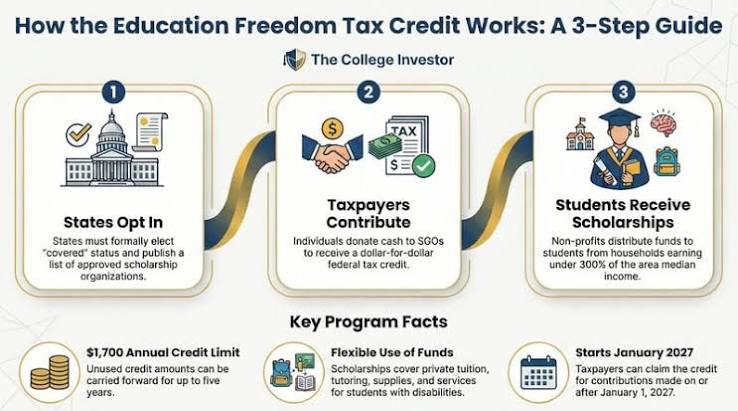
How the Tax Credit Works
Unlike traditional federal grants or vouchers, the Education Freedom Tax Credit relies on voluntary private donations rather than direct federal taxpayer spending:
- Individual Incentives: Individual donors and taxpayers can contribute cash to state-approved, non-profit Scholarship Granting Organizations (SGOs) and claim a dollar-for-dollar nonrefundable federal tax credit of up to $1,700 per year. Unused credits can be carried forward for up to five years.
- Household Eligibility: To qualify for scholarship funding, students must belong to a household with an income at or below 300% of the area median income (AMI), opening access to roughly 9 in 10 families.
- Flexible Uses: Scholarship funds can be applied broadly toward qualified K–12 expenses — including private school tuition, tutoring, special education therapies, books, educational technology, dual-enrollment courses, and transportation.
Indiana Joins 31 States Opting In
State participation is required for families to access state-administered scholarship distribution. To date, 31 states have opted into the program, collectively covering 30.9 million eligible children. Full nationwide participation will depend on whether the remaining states and Washington, D.C., choose to opt in before annual deadlines.
Indiana Governor Mike Braun officially opted the state into the program, aligning the federal initiative with Indiana’s existing school choice framework.
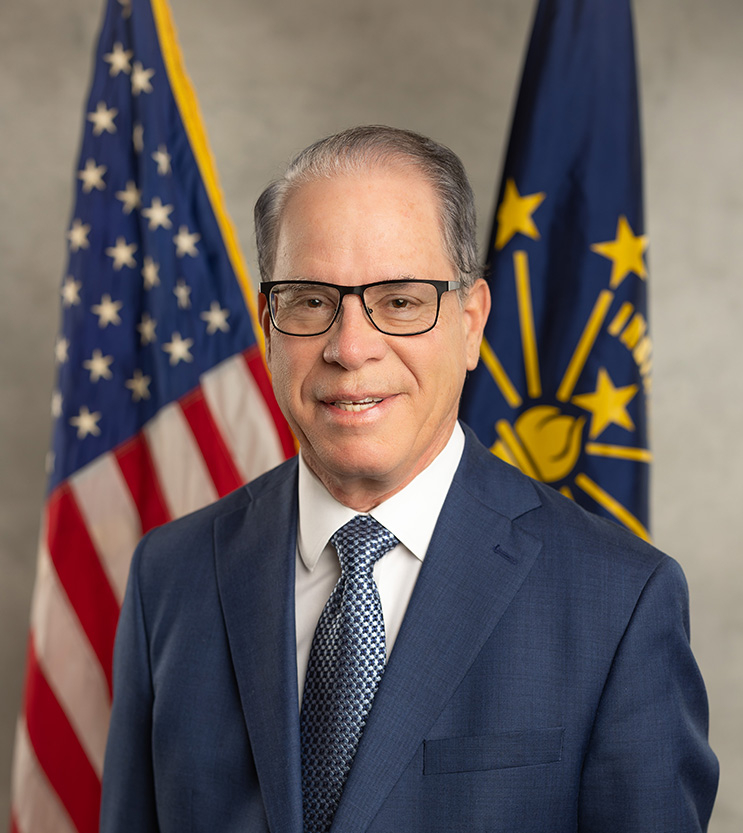
“Parents are in charge of their children’s education,” Gov. Braun stated during an event at Saint Philip Neri Catholic School in Indianapolis. “Under President Trump’s leadership, we welcome this increased focus on school choice at the federal level and are ready to leverage this additional federal tax credit to expand opportunities for students and families across our state.”
Indiana already operates robust state-level programs, including the Indiana Choice Scholarship (voucher) program and a 50% state tax credit for SGO donations. Federal tax credit scholarships will stack alongside state programs to further reduce out-of-pocket costs for Hoosier families.
Debate Over Impact on Public Education
While supporters praise the initiative as a landmark step toward universal educational access, critics and public education advocates express deep concerns:
- Proponents argue the program empowers lower- and middle-income families to choose the learning environment that best suits their child’s needs — breaking the link between residential ZIP codes and educational quality.
- Opponents contend that tax-credit-funded scholarships indirectly siphon vital funding, resources, and students away from traditional public schools. They also warn that non-public schools receiving these funds often lack federal and state oversight, standardized testing accountability, and strict civil rights protections.
As the 2027 rollout approaches, state leaders across the remaining 19 states face mounting pressure from both choice advocates and public school coalitions as they decide whether to opt in.

