

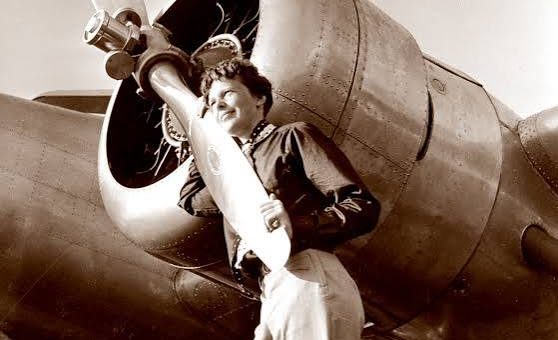
WEST LAFAYETTE — On Amelia Earhart’s 129th birthday, Archaeological Legacy Institute (ALI), Purdue Research Foundation (PRF) and Purdue University announced Friday (July 24) that the Taraia Object Expedition will depart in October in search of Earhart’s lost aircraft. The expedition seeks to help complete the historic journey that ended with her disappearance 89 years ago.
Initially announced in 2025, the expedition was postponed while final approvals were sought from the government of Kiribati, the Pacific Ocean island nation that includes Nikumaroro and other parts of the Phoenix Islands Protected Area. Today it was confirmed that the cabinet of the government of Kiribati (pronounced Keer-uh-BAHSS) has approved the Taraia Object Expedition, which is officially moving forward with plans to depart the first week of October.
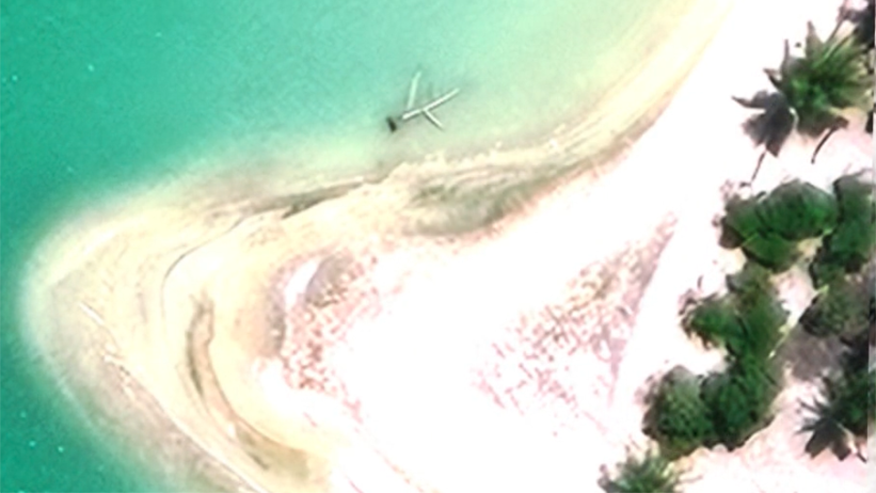
The expedition, led by Richard Pettigrew, ALI executive director, will investigate the Taraia Object, a visual anomaly located in a lagoon on Nikumaroro. Expedition members hope to determine whether the object is the remains of Earhart’s Lockheed Electra 10-E aircraft, which disappeared on July 2, 1937, while Earhart and navigator Fred Noonan attempted to circumnavigate the globe. The expedition is based on the Nikumaroro Hypothesis, which holds that Earhart and Noonan landed and were marooned on the remote island located between Hawaii and Australia after failing to reach their intended stop on Howland Island.
“We’re grateful for the patience and enthusiasm of everyone who has followed this journey with us,” Pettigrew said. “The evidence supporting the Nikumaroro Hypothesis remains compelling, and the only way to answer this question is to go to Nikumaroro, inspect the Taraia Object firsthand and follow the evidence wherever it leads.”
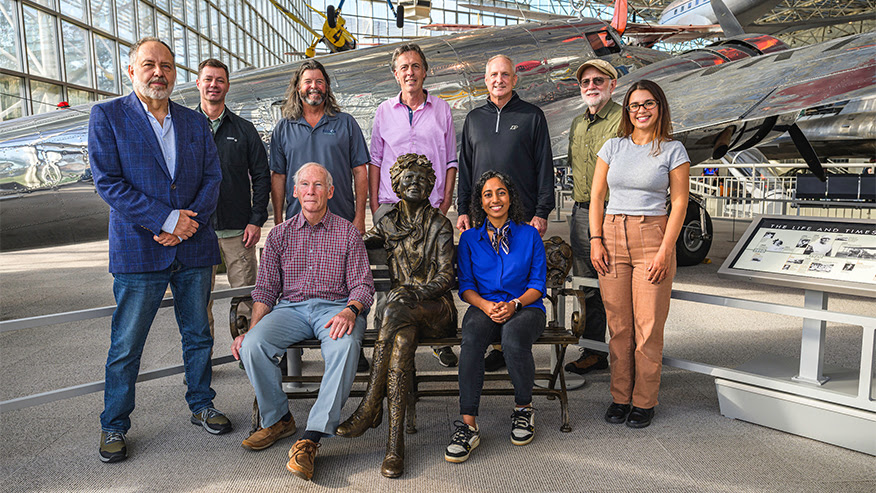
Some members of the expedition will fly out of the Amelia Earhart Terminal at the Purdue University Airport on Oct. 3 and join the entire 16-person team in Tarawa, Kiribati, on Oct. 6. The team — composed of archaeologists; filmmakers; logistics, scuba and safety personnel; and Kiribati representatives — will depart Tarawa by sea Oct. 7, sail approximately 830 nautical miles to Nikumaroro and then spend several days on the small island in the search effort.
Three Purdue representatives will be part of the crew: team lead Steve Schultz, the university’s senior vice president and general counsel, along with Sirisha Bandla and Marc Hagle — both alumni and members of Purdue’s Cradle of Astronauts. The expedition is supported by RECON Offshore; Kiribati National Shipping Line; The Niswonger Foundation; Columbia Sportswear; Forestry Suppliers; GreenGood Labs; The Museum of Flight; Alvantor; and the U.S. Embassy in Fiji, Kiribati, Nauru, and Tuvalu.
Earhart’s connection to Purdue dates to 1935, when she joined the university as a counselor on careers for women and an advisor to Purdue’s Department of Aeronautics. Through the Amelia Earhart Fund for Aeronautical Research, Purdue Research Foundation financed the purchase of Earhart’s Lockheed Electra, which she referred to as her “Flying Laboratory.” Earhart intended to return the aircraft to Purdue following her around-the-world flight to support future aeronautical research.
Nearly nine decades after her disappearance, Earhart’s legacy remains deeply connected to Purdue through its archives, aviation programs and the Amelia Earhart Terminal at the Purdue Airport.
“For generations of Boilermakers, Amelia Earhart has been more than a pioneering aviator; she has been part of the Purdue family,” Schultz said. “She challenged conventions, pushed the boundaries of what was possible and inspired countless others to do the same. As we prepare to embark on this expedition, we do so with a deep sense of responsibility to her legacy and a determination to seek answers that have eluded the world for decades.”
The Nikumaroro Hypothesis, as updated by ALI with new evidence for the Taraia Object, is based on documentary records, photographs and satellite images, physical evidence, and personal testimony, including these highlights:
- Radio bearings recorded from transmissions at the time by the U.S. Navy, the U.S. Coast Guard and Pan American World Airways, which converge on Nikumaroro
- A 2018 analysis of human bones discovered on the island in 1940, strongly suggesting they belong to a woman of Earhart’s stature
- Artifacts found on Nikumaroro including a woman’s shoe, a compact case, a freckle cream jar and a medicine vial — all dating to the 1930s
- The Bevington Object, a photographic anomaly on the Nikumaroro reef captured three months after the plane’s disappearance, which appears to represent one of the Electra’s landing gears
- The Taraia Object, first spotted in satellite imagery in 2020, but which appears to have been in the same location in the lagoon since 1938 based on contemporaneous photographic evidence
Additional updates will be released prior to departure. To learn more about the expedition and its mission, visit The Archaeology Channel’s Taraia Object page and PRF’s expedition page.

